Warning: Undefined variable $url in /home/undiscov/public_html/undiscovereditaly/wp-content/plugins/twitter-facebook-google-plusone-share/tf_display.php on line 365

Preserving Perricone

Preserving Perricone

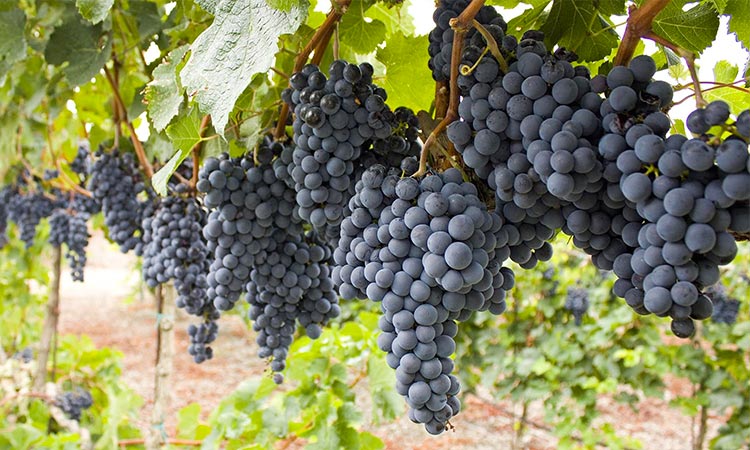
There are many grapes that live as vineyard problem children. Those that demand a vintner’s understanding, nurturing and determination to endure, season after season. Like parents, growers and winemakers sense potential and beauty that isn’t skin deep. Some, such as Nebbbiolo and Pinot Noir, grow up to become superstars. Others wait patiently to be discovered, enjoyed by a passionate few, unknown to the vast majority, biding their time. Such is the case with Sicily’s Perricone.

I first tasted the grape — also known as Pignatello — six years ago in a small Sicilian town in the shadow of the Madonie Mountains. Though I was intrigued enough to seek out more, I found hardly enough stateside to build expertise. As such, I turned to two believers for further insight: Federico Lombardo di Monte Iato of Firriato, whose LinkedIn page dubs him a “Sicily Evangelist”, and Marilena Barbera of Cantine Barbera, who describes this unique varietal as the “deep and intense soul of West Sicily.”

Both brought me up to date on Perricone’s history, which reads like scores of other long-forgotten indigenous varietals. Initially grown as a blending grape (most notably in Marsala Rubino) for its high concentration of anthocyanins, important for tannic retention and aging, and resveratrol, a natural self-respondent to bacteria and funghi, it has only recently been given a starring role.

Barbera points out that “when there was almost no Nero d’Avola to the west, Perricone was the only grape that farmers could use to make red wines with intense body and longevity.” Many, according to Lombardo di Monte Iato, switched to Nero d’Avola in the latter part of the 20th century, as it was easier to grow and more generous in output. “Remember,” he adds, “grapes were sold by weight, so farmers needed to have guaranteed production.”

federico
Federico of Firriato

Even those invested in Perrricone acknowledge the difficulties in bringing it from vine to bottle. If the polyphenol content is elevated, it can be abrasive, or, in Barbera’s words, “give birth to rustic and sometimes grouchy wines, especially in fresh and rainy vintages.” Since it ripens late, changes in normal weather patterns can be disastrous. Timing the harvest is vital to ensure the acidity level stays intact.

Then there are the commercial challenges. “Perricone is difficult,” Barbera tells me. “It’s not very productive and it takes patience and experience. Its tannins and thick skin require time and attention during fermentation, and a long refining is compulsory in most vintages.” Producing fresh, fruity wines then, aimed to be sold and drunk young, is a virtual impossibility. “Making a wine that needs a minimum of three years before it becomes friendly,” Barbera continues, “is not an option for the big industrial wineries in West Sicily.

At present there are about 365 acres of Perricone on the island — an astounding decrease from 85,000 in the early 1900s — representing just 0.3% of Sicily’s grapes. Of that minuscule amount, 95% is used to make bulk wine. “It’s a real pity,” Barbera sighs. “We Sicilians lost confidence in our quality, and following the market’s passing fancies seemed the only way out. Many started to abandon indigenous grapes in favor of international varieties, a trend that continues. Even today there are producers who plant Pinot Noir, Syrah… They say that nobody knows Perricone, that it’s inconceivable to promote a wine with such a difficult name to pronounce.”

Firriato’s evangelist is equally optimistic. “It’s difficult because Italy in general, and Sicily in particular, has a lot of native vines,” he notes. “So it’s quite challenging to help consumers understand Perricone, to identify it as a quality grape that makes wonderful wine. This isn’t only a winemaking challenge, but a marketing one.”

It’s not all bad, of course. Perricone relishes western Sicily’s warmth and a long, dry growing season countered by a diurnal temperature range that enhances ripening and balance. The resulting wines are full bodied and darkly pigmented, with fairly high alcohol levels. Strong, sometimes austere tannins serve as the foundation for intense cherries, plums and dark berries mixed with green herbs and peppery spices. They may have a rustic, earthy edge when young, but will develop balance and finesse as they mature.

Marilena Barbera
Marilena Barbera in the vineyard.

“Perricone that you find today is made by small producers, people who love their vineyards and respect the personality of their grapes and terroir,” Barbera says. “These people will keep it alive. Though they might not have the money or organization for worldwide promotion, I’m confident things are moving in the right direction.”

“Perricone will be our signature grape for many years to come,” she concludes. “The small group of winemakers to which I proudly belong will continue to toil, with dignity and passion, to offer the best expressions of Perricone at every vintage.”

Of Monsters and Montefalco

Of Monsters and Montefalco

[parallax-scroll id=”6014″]

It’s July 20-something, and the relentless midsummer sun is bearing down on the Northeast US. Rosé Season is in full swing. It’s the time of year when my brooding, prized behemoths normally slumber safely in the dark, dusty confines of my cellar, awaiting the return of fall and temperatures more appropriate for their masculine wiles. Yet here I sit, in the company of one of the baddest dudes on the planet: the fabled Sagrantino di Montefalco. As its singular, rugged aroma wafts out of the glass, intermingling with the redolence of pork seared alongside generous doses of fennel pollen, garlic and sage, I begin to realize that, in spite of Mother Nature’s attempts to dissuade me, this may be one of the better decisions I’ve made in some time.

Regardless of season or context (and ignoring for a moment the cooling embraces of my brand new HVAC system), this is one extraordinary wine. I could claim it’s the bold flavors of dark cherry, pipe tobacco, warm spices, resinous pine tar, anise and mocha that set it apart, but winespeak won’t do it justice. There’s something here I can’t put my finger on, a unique, special, even majestic aspect that separates it from the rest.

Sharing this moment with me is Frank Cipparone, the former lead Italian instructor at Philly’s Wine School and a fellow Sagrantino lover. “I was once asked,” muses Frank, “if I could only choose to save one grape, which it would be. It was an easy choice: Sagrantino.” I ask him what sets this grape apart. “What defines it for me,” he replies, “is the balance of complexity and subtlety, power and grace. When you inhale the seductive, earthy aromas of a well-made Sagrantino, you know it can only be Italian. As it opens up from one sip to the next, it represents what any Italian wine should be – authentic, uncompromising, and true to its place of origin. Chianti may be Italy’s most famous wine,” he continues, “but Sagrantino is the real thing.”

Italy’s Heartland

Often called il cuore verde d’Italia (the green heart of Italy), Umbria is a landlocked region that sits almost dead-center on the boot, with a similar climate to Tuscany, spotted with hill towns and lush, fertile valleys, a wonderful locale for much of Italy’s finest olive oil, truffles, game meats and, of course, grapes. (Those who can live with being further from Florence will find far lower rental prices and less crowded streets too, but that’s another conversation.)

If Umbria is the heart, Montefalco is the beat, located in the center of the center, and though its wines are perhaps not as well known to casual drinkers as Orvieto’s crisp whites or the famed Lungarotti family of Torgiano, it holds the trump card: Sagrantino.
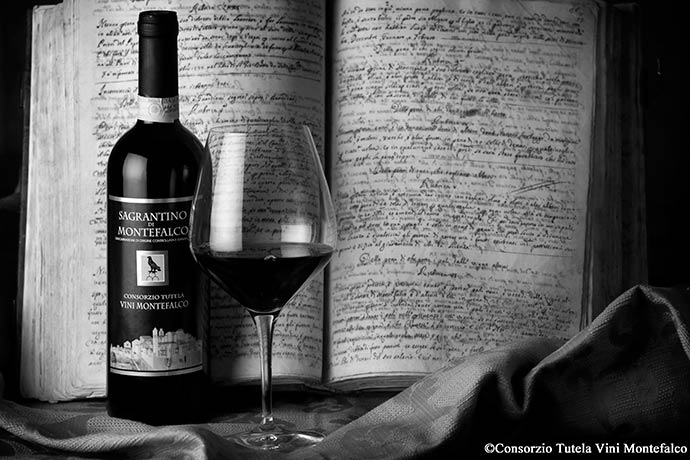
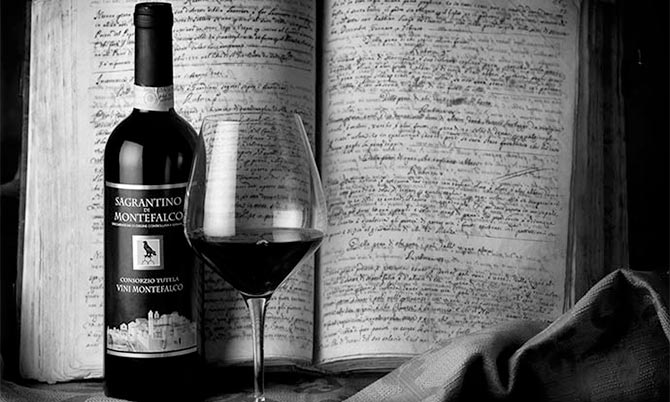
sagrantino-bottle

There’s a shroud of mystery over the origins of this grape; digging into to the topic will unearth tales of Pliny the Elder, St. Francis of Assisi, and the Saracens of Spain. Has it been here since the dawn of time? Does it matter? It’s here now, and it shines in this spot, above all others; a potent, rustic beauty for Umbria and Montefalco to claim as their own.

Much of Sagrantino’s unique personality is derived from its thick skins, which contain more polyphenols than any other vinefra (which in turn creates fiercely tannic wines). Historically, to combat this unrelenting bitterness, monks producing sacrament wine air-dried the fruit to concentrate sugars, then vinified it as sweet passito.

In the 1970s, as the grape neared extinction, a group of Montefalco-based winemakers began to experiment with dry Sagrantino, using modern techniques to tame the exuberant tannins. In particular, the success of the Arnaldo Caprai estate established worldwide interest in the grape and region, helping to create a DOC in 1979 and elevating the Sagrantino di Montefalco – wines made with 100% Sagrantino grapes – to DOCG status (the highest classification of Italian wine) in 1992.

In the 1990s – and even as recently as 5-7 years ago, to be honest – it was nearly unheard of to find a bottle of Sagrantino di Montefalco for less than $50, due to the grape’s rarity – only 250 acres were under vine in all of Montefalco. In the years since, however, the area has seen vast growth, nearing 2000 acres today. Between the years 2000 and 2008, Sagrantino production quadrupled, while the total surface area of DOCG vineyards has grown to 5 times its original size (although a reduction in the yield per hectare has also been implemented, to preserve quality).

Because of this expansion, as well as the addition of new producers, the market has opened for competition and allowed for more favorable consumer pricing. Always looking for these bottles myself, I’ve noticed lately that finding one under $20 – though still unlikely – isn’t the white whale it once was.

As such, it’s an exciting time to be a Sagrantino drinker. More competition, modern techniques, increased distribution and better pricing means it is easier to procure a great bottle of this wonderful wine than ever before.

[parallax-scroll id=”6018″]

My Week With Sagrantino

My midsummer Umbrian adventure – in Pennsylvania – begins with the Montefalco Rosso DOC, a red made with mostly Sangiovese and just a small amount of Sagrantino. Interestingly, just few weeks ago (late June 2015), the Montefalco Consortium’s board of directors voted to change the blending rules for this wine, removing the requirement for a third grape while encouraging the use of more Sagrantino (up to 25% from the current max of 15). This prioritization of terroir over all else is a bold statement in today’s world of modern, homogeneous winemaking.

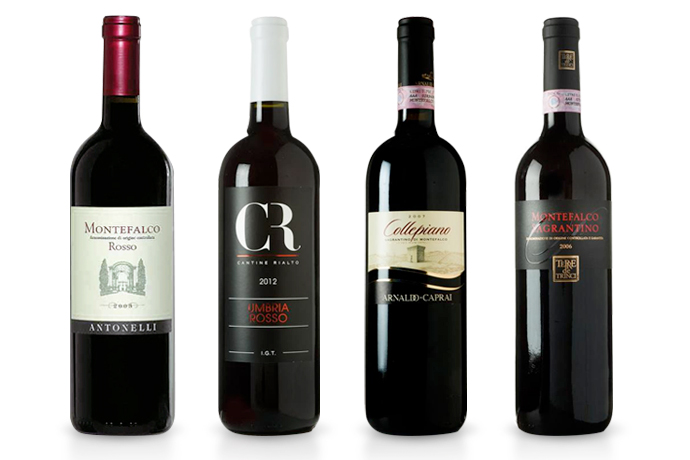
Since the wine I am drinking – Antonelli Montefalco Rosso – is from the 2010 vintage, it features the traditional blend of Sangiovese (70%), Sagrantino (15%), and, in this case, 15% Merlot. The strong foundation of Sangiovese makes for a wine that plays like other Central Italian reds: medium-bodied, fresh red fruits, hints of dirt and leather, food-friendly. The addition of Sagrantino, however – even just a little – adds a distinctly Umbrian robustness.

As I taste my nearly finished marinara sauce made from local tomatoes, I begin to worry that this particular heirloom variety might be too fruity for the Sagrantinian finish. And the wine has already been poured! Thankfully, the Sangiovese plays its role, staying light on its feet — and though tannins are certainly present, the firm acids from both Italian grapes play well off of the brightness of the sauce. This would clearly pair well with a wide variety of pastas, pizzas and similar first courses.

A few days later, a barbecue with friends brings out bottles of the Cantine Rialto Umbria Rosso 2012, another blend of Sangiovese, Sagrantino and Merlot, this time with Merlot in the lead role, thus its categorization as the more generic Umbria IGT, despite its obvious roots in Montefalco. This wine is perhaps the ultimate everyday Umbrian – Merlot delivering its soft, plum fruitiness up front, followed by Sagrantino mixing in a dash of its unmistakably spicy character on the finish. Finding a few bottles on sale for $8.99, it’s a no-brainer to stock up on for sausages hot off the grill, (and easy to open another when the last drop is poured).
sagrantino-bottles

Throughout this discussion, I’ve been alluding to the weather, the food, and the weight of the wine, how this all comes into play with regards to when and where we drink it. Especially now that we are eating healthier as a society, it’s interesting to think about the big, bold wines and what foods they pair with. Do they always need a big, fatty hunk of beef? A few months back, I came across an article in Saveur magazine about Umbria, and was particularly intrigued to see pairing suggestion of Arnaldo Caprai Sagrantino di Montefalco Collepiano – a giant in the space – with pork tenderloin, an extremely lean meat. Could this actually work?

More importantly, is there something in particular about Sagrantino that makes it work? In Ian D’Agata’s awe-inspiring tome Native Wine Grapes of Italy, consulting winemaker Emiliano Falsini opines that Sagrantino skins, “despite their wealth of polyphenols… can be put through even long macerations, because the tannins are usually smooth and polished.” This is in contrast to other grapes, which Falsini notes risk “leaching out very dry astringent tannins” with longer macerations. (page 426, hardcover edition)

The recipe in question – Filetto di Maiale con Bacche di Ginepro (Pork with Juniper Berries) – relies heavily on regional herbs and spices, namely juniper, fennel, sage, rosemary & thyme. (There’s some pancetta or guanciale too, in fairness, but not that much.) I give the wine, a 2007, about 3 hours of air before dinner, and it opens nicely by the time food hits the table. There’s this element of medicinal herbs to Sagrantino – which might sound odd when written, but is actually quite brilliant in juice form – that a dish like this teases out oh-so-perfectly.

Wow.

A bite of that pork, with the juniper, fennel, herbs, and then the wine. It’s like a symphony, one unified movement, flowing together, continuing long after the bite or sip has concluded. Simply gorgeous.

And the tannins? Nicely polished indeed, with lots of chocolate on the finish. They certainly make no attempt to thwart my enjoyment of the meal.

Finally, my food and wine journey concludes back where it started – with tomato sauce, but, this time – because how could I not – there’s pork involved. A ragu, to be specific. I’ve pulled a lower-priced Sagrantino DOCG, the Terre de Trinci Sagrantino di Montefalco 2006, which I somehow scored for less than 15 bucks a couple years ago, and have been patiently storing since, slowly coaxing its subtle charms into being. It brings all the classic notes of earth, anise, macchia, warm spice and bold cherry fruit, and though perhaps not as complex as the Caprai, it emboldens the soul next to a plate of pasta made with love.

What else does a guy need?

All images exc bottles © Consorzio Tutela Vini Montefalco
The Freshmaker

The Freshmaker

It was nearing the end of an exhausting afternoon at VinItaly & Slow Wine USA, the annual NYC spinoff of Italy’s legendarily massive flagship wine festival, and my cushy train seat and a voyage home beckoned. My palate and mind were weary, fatigued by too many tastes, despite having only made a dent in the full program. With taste buds reeling from the massive tannin wall of some too-young Barolo poured straight from the bottle, I searched for a better finale.

Meandering towards the exit, I spotted Stefano Almondo, a winemaker’s son whose scruffy charm was accentuated by his dirty blonde beard. More importantly, the bottle of Arneis perched in front of him. “Hit me with some of that,” I pleaded. He poured. A wave of crystalline cleanliness washed over my tongue, bright and alive. My buds awoke, restored and renewed. “Phew!” I sighed. “That really hit the spot.” Almondo’s smile emerged slowly, growing into an ear-to-ear number that emphasized his wine’s personality. He then uttered, in a thickly-accented Italian brogue, one single word that I’ll always remember: “Frrr-eshness.”

Though the detailed history of Arneis is disputed, most historians accept evidence of it from the 15th century in Piedmont. The grape was originally utilized as blending foil to the tannic beast Nebbiolo, so much so that it has occasionally been dubbed “white Barolo.” Rumors suggest it may have been planted alongside Nebbiolo vines because its sweet scent would attract snack-seeking birds, who in turn would forgo the more valuable red grapes. As production of 100% Nebbiolo wines became more fashionable, however, Arneis flirted with extinction, saved only by the perseverance of producers Bruno Giacosa and Vietti. Fortunately, the 1980s brought a renewed interest in whites from the region, leading to the more common vinification of Arneis as a varietal wine.

Literally the “little rascal”, Arneis is a tricky grape to grow due to naturally low acidity when fully ripe. As such, it fares best in cooler climates where maturation takes place over a longer period of time, allowing for wines that showcase both the telltale lush fruit as well as a crisp finish.

A finely-crafted Arneis may be the perfect bianco for red lovers, offering rich aromatics and explosive fruit, as refreshing as those bland, ubiquitous Italian whites without sacrificing taste. Because it can pack in the flavor, I like pairing Arneis with mid-weight foods, such as heartier chicken or fish dishes, and (not too spicy) Asian cuisine.

Tasting through a few bottles recently, I consistently encountered fruit flavors of pear and peach (of varying intensity levels), often augmented by fresh flowers and almonds. All were enjoyable, and any would would serve as a good introduction to the grape. My notes follow:

recit-arneisMonchiero Carbone ReCit Roero Arnies ($13.99)
Ripe, fruity notes leap from the glass, and continue to reign on the expressive palate. Though I typically think people serve whites too cold, this perks up with a chill; I’d store in the fridge and let it warm while serving. PLCB Chairman’s Selection buyer Steve Pollack called this the “perfect summer wine,” which is hard to dispute, especially considering the 12.5% ABV and delicious profile. Goes great with Chinese takeout.

Demarie Arneis Langhe DOC 2012 ($16.99)
Floral nose hints at melon. Palate fruits are moderated by herbs, saline and a sturdy dose of almond. Easygoing warm-weather wine to pair with oil-based pastas.

Ceretto Blange Roero Arneis 2010 ($22.99)
Nose displays herbal, resinous qualities. Typical Arnies fruits in a lighter, more elegant package lead to hints of toffee on the crisp finish. A lovely companion for al fresco happy hours or antipasto.

Bruno Giacosa Roero Arneis 2012 ($31.99)
One of the grape’s saviors proves worthy. Tight nose reveals herbs and honeysuckle to careful observers. There’s even a hint of mushroom & smoke, almost like a red wine. On the palate, lush honey, peach and apple explode into the mid, and the long finish boasts pockets of herbs and amaretto. Both full-bodied and crisp. Try it with grilled or roasted chicken and Mediterranean herbs. Winery pictured above.

Giovanni Almondo Roero Arneis Vigna Sparse 2011 (tasted Feb 2013)
Freshness!

Lovely Lagrein

Lovely Lagrein

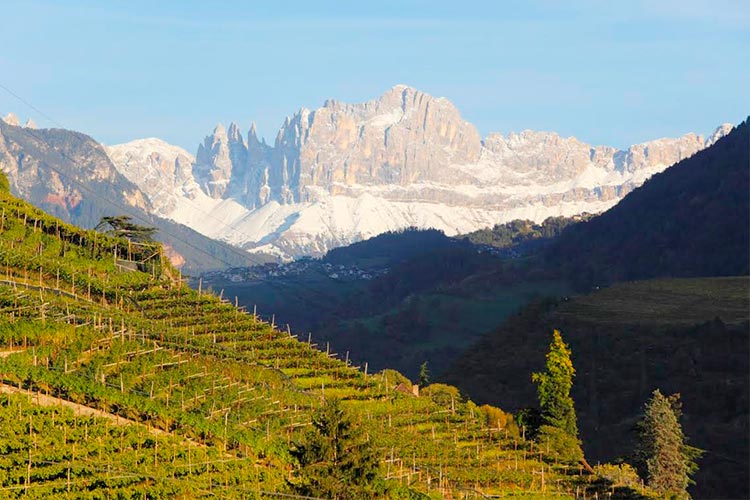
As we discussed in our piece on white wines of the Alto Adige (aka South Tyrol or Südtirol), this northernmost Italian region spent a long time within the Austro-Hungarian empire prior to WWI, and is still heavily influenced by that culture. (On wine labels, for example, German text often appears above or alongside the Italian, as many residents speak German natively.) Thus, given the opportunity to speak with Judith Unterholzner – who represents regional producers Terlano and Andriano – about wines made with Lagrein, a red grape grown almost exclusively here, my first question was whether the winemakers see it as Italian or Austrian. “Lagrein is much more Austrian than Italian in influence,” she told me. “But this is more due the impact of the mountains and the alpine microclimate than the culture.”

In other words, it’s all about terroir. Lagrein don’t care about wars, country borders, or any other man-made conflicts. It found a spot it likes, in a sometimes-unforgiving alpine climate, and it is thriving. In mountainous regions especially, there seems to be a strong bond between the climate and certain grapes, and Lagrein’s match with Alto Adige is no exception. We can come up with all sorts of other ways to describe terroir, but for me, that just about sums it up.

judith-terlano
Judith Unterholzner with Terlano Lagrein

The grape, pronounced “lah-grine” (rhymes with wine), was traditionally used for blending – with the lighter Shiava, mostly – or as a rosato, due to its rugged, bitter nature, and only found its true calling in the early 1980s. “In the decades before,” says Unterholzner, “many consumers wanted lighter, easy-drinking red wines. Then there was an upswing in demand for structured red wines, and more oak influence… Lagrein fulfilled both requests, being full of character and developing fine spicy notes with oak aging. For locals of the region, this became our first serious red wine.”

Tasting through several Lagreins recently, I discovered a refreshing typicity, especially with the non-riserva wines (those aged in large oak casks or steel). Though each wine offered something different – a few featured earthy, rustic notes, for example – there were characteristics that clearly identified every bottle as Lagrein. Aromatically, a violet, floral bouquet recalls Syrah (a cousin), but only just. (La Cucina Italiana identifies this scent as brunelle, a local name for wild orchids found in the region.) On the palate, bright plums and and blackberries lead the way, with black tea and more violet – or brunelle – notes. As it finishes, there’s an almost soapy aspect we’ll call lavender, lest you think it punishment for foul language, which it is most certainly not.

lagrein-alto-adige

Perhaps unsurprisingly, the riservas, or wines aged in small oak barrels – which can cost significantly more – tend to relinquish some of this typicity. Oak softens the floral nature of the aroma, and though spicy flavors on the palate can add intrigue, they also obstruct those special orchids & plums. Riservas are, of course, made for longer aging (10 years or so), but – and take this to heart coming from a lover of aged wine – I’m not sure, in this case, they offer more than the wines meant for everyday drinking.

Pairing-wise, Lagrein of course plays well with the foods of the region, including the legendary speck (smoked, cured ham), as well as beef or game stews. Polenta, mushrooms and root veggies are also common. I love it with fresh pork preparations too, such as grilled chops, roasted tenderloin, or stewed shoulder. Unterholzner suggests braised (in Lagrein, obviously) veal cheek on top of celery root puree.

lagrein-alto-adige

Reviewing my tasting notes, a few things are obvious:

1) Lagrein quality is consistent. Any bottle that’s 15-20 bucks, is certain to be both delicious and representative of the region and variety. In fact, I’ve yet to try one in this price range that wasn’t good, with the exception of one bottle that was cooked. (Which was hardly Lagrein’s fault!)

2) There’s less certainty with riservas. Added winemaker intervention (mainly through oak) means that these wines may represent the region well, but could also taste like modern red wines of indeterminate origin. Of course I only tried two – one of which was on the younger side for a riserva –  and though both were enjoyable, they were generally less appealing. (If anyone out there wants to prove this hypothesis wrong with a beautifully aged bottle, just tell me where and when…)

Without further ado, the notes:

Tiefenbrunner Turmhof Lagrein 2011 ($21)
Big fruit on the nose, alongside a touch of earth and smoke, as well as warm spice. Nice balance of freshness and funk. Good complexity, evolves in the glass. Rustic finish. (92 points)

Balter LagreinTramin Lagrein 2010 ($18)
My favorite nose of the bunch. Moss, forest floor, leather, fruit. Leaps out of the glass. Palate decent too, but almost a letdown after the nose. Still, quite good. (92)

Abbazia di Novacella Lagrein 2009 ($20)
Classic flavors mixed with the modern touch of sweet warm mulling spice and tobacco. Good acidity, big tannins, and intriguing complexity. (91)

Peter Zemmer Lagrein 2010 ($18)
The most typical of the group. This is the pure essence of Lagrein. Straightforward, with all the expected aromas and flavors. (91 points)

Azienda Agricola Balter Lagrein IGT 2010 ($18)
Nice balance of earth, spice and herbs to go alongside the plum and fig. Smooth. (90)

Andriano Tor di Lupo Riserva 2010 ($40)
Classic Lagrein notes are there, but made more subtle by warm spice and tobacco. Hints of earth and tar on the nose, especially with air. Big tannins, bitter on the finish. Should improve with age. (89+)

St. Paul’s Lagrein Gries 2010 ($21)
Rich, dense fruits with a discernable chocolate/cocoa element. Would benefit from air and/or little time. (88)

Terlano Lagrein Porphyr 2006 ($50)
The least Lagrein-like personality, perhaps due to overdone oak. Dark fruits, lots of warm spice, some fleeting earth. Not bad, but nothing special for the price. (87)

Killer Vees: Vacation and Verdicchio

positano coast

Right about now, Italians are gearing up for Ferragosto on August 15, a holiday of ancient origin that signaled a time of relaxation and feasting at the end of summer’s grueling agricultural labors. These days, it’s the green light for the start of vacation season. Across the land, restaurants and shops close down for a week or two. Seaside resorts are mobbed, and hotels packed, by hedonistic sun worshipers and revelers. The usual frenetic pace of traffic collides with critical mass on super highways and winding two lane roads. La dolce vita swaying to club beats.

So what are Giovanni and Chiara drinking during those languorous dog days and nights? Birra, especially the twenty-somethings. And, of course, vino – by the glass, bottle, or liter –  most of it white. Of the scores of varietals to choose from, it’s a safe bet that an ocean of Verdicchio will be consumed.

The signature grape of Le Marche may have been cultivated in the region as early as the 8th century B.C. Typically, it has a distinct, sometimes tart, “green” quality (hence its name from verde) of sour apple, herbs, quince, even a touch of lime. Savory, resin accented white fruit flavors can be discerned, and it often finishes with a pithy almond skin bitterness. Its two designated (DOC) production zones are centered on the towns of Jesi and Matelica, hard by the Esino River as it meanders to the Adriatic.

Jesi comprises hills of limestone and clay in a temperate, dry micro-climate barely 20 miles from the sea. The natural conditions slow down ripening and promote higher levels of acidity. Here, Verdiccchio tends to have lusher fruit flavors laced with salinity and minerals and a more floral aromatic profile.

Matelica is farther inland in a higher altitude Apennine basin swept by cool continental air flows which create the diurnal temperature variances that delay the grape’s maturation. Generally, Matelica wines are more aromatically complex, with concentrated and persistant flavors supported by a noticeable structure.

The good news is that you don’t have to be in Viareggio or Rimini, or even on vacation, to enjoy the simple pleasures of a well-made Verdicchio. Here’s an All Star lineup of well- regarded producers whose wines I’ve sampled recently:

sartarelli-verdicchioSartarelli “Tralivio” Castelli di Jesi 2007 ($17.49)
A lush, beautiful  expression of the grape, but not if you’re put off by bitterness in a white. Loads of almond and citrus pith set the tone for white stone fruits and melon, mildly tart citrus and stony minerals. A mouth filling classic, a day at the beach in a glass.

Brunori “Le Gemme” Castelli di Jesi Classico Superiore 2009 ($12.99)
Traditional Jesi style, aromas of ripe pear, minerals, salinity. Lush, concentrated white fruits bolstered by fresh acidity and a bracing rush of minerals that leads to a mildly bitter, nutty finish. Never loses its focus.

Ampelio Bucci Castelli di Jesi Classico Superiore 2009 ($26)
Restrained nose that is more floral than fruit-driven.  Tart citrus and green apple flavors dominate a smooth entrance, and a touch of almond scent emerges. A round, full texture doesn’t hold back a steady flow of savory minerals and lemony acidity. The finish is lively, clean and lengthy.

Stefano Mancinelli Castelli di Jesi Classico 2010
Well crafted, as are all the wines from this estate. White flowers and peaches up front. Somewhat similar to a Matelica but not as structured, though the invigorating saline acidity is all Jesi. Has a refreshing stony quality from start to finish.

Fontezoppa Matelica 2010
Atypical of this DOC in terms of density and structure. Waves of citrus and grapefruit scents accented by lemongrass and orange rind. High level of tart acidity in a chalky, citric mouthfeel. Sort of a crossover of the DOCs.

Colle Stefano Matelica 2012
This may not have the fullness and structure of its neighbors, but it’s packed with ripe, pure white fruit-green apple aromas and flavors. Tangy acidity enlivens every sip, adds a zippy bite to the texture. Flavors never fade, thanks to the persistent acidity. Close in style to a Jesi, but has more layers to peel and a fuller feel on the palate.

Bisci Matelica 2011 ($12.99)
Classic Verdicchio nose and sensory profile. Cleaner and more focused than the Matelica norm. All the requisite flavors have their say – peach, pear, green apple, tropical melons – complemented by their corresponding aromas. Stays fresh and keeps you wanting more. Almost as good as a Sartarelli.