Warning: Undefined variable $url in /home/undiscov/public_html/undiscovereditaly/wp-content/plugins/twitter-facebook-google-plusone-share/tf_display.php on line 365

The White-Headed Stepchild

pinot bianco

Reviewing my recent piece on Pinot Grigio’s lack of respect, Pinot Bianco might rightfully take issue with its cousin’s penchant for hogging the attention. While neither can boast widespread critical acclaim, at least the gray mutation of Pinot Noir is a best-seller. Bianco, on the other hand, is often relegated to background variety status.

Rarely grown in its native region of Burgundy, Pinot Blanc — as it’s called in most of the English-speaking world — has found more of a home in the Germanic regions of Alsace, Austria and throughout Germany. The majority of wines made here, as well as in the US in this style, are soft and round, sometimes off-dry in a way that might be described as Riesling Light. Jancis Robinson describes the grape as “useful rather than exciting,” as well as “gently rather than demandingly appealing,” having less character than the already tofu-like Chardonnay, as well as low body and acidity.

(I’ll wait while you rush out to buy some.)

All that said, one can understand why my expectations are relatively low when given the opportunity to taste through a bunch of Bianco from Italy’s Alto Adige, perhaps the only region in the world where the grape is highly regarded.

The first bottle I pop, the Cantina Terlano Nova Domus 2011, absolutely explodes with complexity, including honey, melon, minerals and, most notably, herbs. Because this particular wine is a blend (60% Pinot Bianco, 30% Chardonnay, 10% Sauvignon Blanc) — despite the fact that it is mostly Bianco — I find myself initially attributing the big flavors to Chard (melon) and Sauv Blanc (herbs). Still, the immensity of herbal flavor is a head-scratcher, if there’s only a splash of Sauvignon.

nova-domus pinot bianco

As I delve further, moving on to pure varietal bottlings, I begin to realize that this herbal, mineral quality is actually derived from the Bianco itself. In wines such as the Elena Walch Pinot Bianco 2015, this quality is intense, powerfully rippling through every aspect of the fresh, vibrant wine.

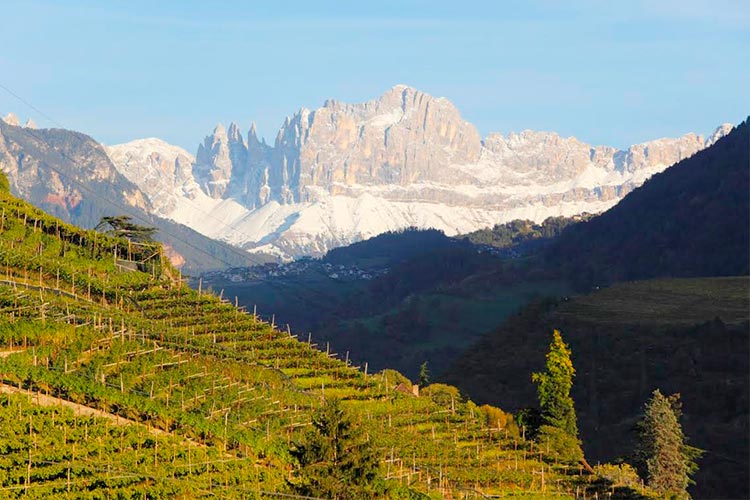
So what’s the deal here? How is this notoriously taciturn grape showing such exuberance and vitality? I turn to Cantina Terlano’s Judith Unterholzner for answers. “Especially when Pinot Bianco is cultivated in an Alpine climate, it can be surprisingly fleshy and rich in its herbal, honeyed yellow-fruit aromas and flavors,” she shares. In recent years, it turns out, the best Alto Adige winemakers have shifted their Bianco vines upward, moving from the valleys and lower slopes (which made more typical, tasteless wine) to upper elevations, starting at 1300 feet and running up to 2500. A reduction in yields as well as the introduction of guyot vine training (in addition to the traditional pergola method) has also helped make an impact.

In other words, much of the secret is location. “The unique aroma profile of our Pinot Bianco is due to the terroir of Terlano, which is responsible for scents of chamomile but also fresh flower meadows,” says Unterholzner. “The rich nose as well as the full and complex mouthfeel is markedly influenced by our eruptive soils, which also cause a powerful salty persistence.”

In the Alto Adige, there’s a seriousness regarding Bianco here that isn’t evident elsewhere. “Winemaking in Terlano traditionally involves the use of wooden casks,” continues Unterholzner. “Special emphasis is also placed on the sur lie method, with the wines often left to evolve on the yeast for years before being bottled, where they’re aged even further. The focus is on developing the complex secondary and tertiary aromas, which creates a specific character and complexity.”

pinot-bianco-grapes
© Udo Bernhart

Wines for Aging

It’s also fascinating how tightly-wound these wines are when young. Huge acidity — which often isn’t the case with Pinot Bianco from elsewhere — as well as those aggressive herbal and saline notes. The aforementioned Terlano Nova Domus, though quite complex and nuanced already, seems to be holding back, even at 5 years old. Though it can be decanted and enjoyed now, the winery suggests drinking no earlier than 8 years from the vintage date.

St. Pauls Passion Pinot Bianco Riserva is another beast, the 2012 offering a dank, feral nose, herbs and rocks belying slumbering fruit. I’d love to try it again in 3-5 years. Cantina Andriano Finado, a 2011 bottle, begins to showcase the benefits of age, with notes of honey and tropical fruit emerging to balance out the savory flavors.

“The aging potential of our wines is due to a combination of the high mineral content of the soils, old vines growing in complete harmony, carefully managed vineyards with low yields per vine, and the rigorous selection of healthy and fully mature grapes,” continues Unterholzner. “At several tastings back to the foundational years, our whites have proved to be liquid time machines, leaving their mark in memory as the supreme expression of a mineral terroir that is unique in this world.”

terlano-pinot-bianco
© Udo Bernhart

The Happy Ending

With wines this complex and intriguing, it’s hard to not wonder why more winemakers aren’t taking Bianco seriously. “Other regions have not believed in Pinot Bianco as an expressive variety with the ability to age,” agrees Unterholzner. “Thus it is difficult to compare our mature whites with those from other regions.”

Then again, it may just be one of those romantic, idealistic stories. Pinot Bianco, a rogue from Burgundy, sets off in search of itself, and finds an unlikely home in the Dolomites. Hallmark Channel here we come.

“Pinot Bianco has always been one of our main varieties,” concludes Unterholzner. “It’s a powerful expression of the terroir that brings the grapes to maturity in Terlano. Delicate, and above all minerally, Pinot Bianco wines are very much our trademark and Terlano’s ambassadors of longevity.”
Gray Matters

castelfeder-pinot-grigio-vineyard

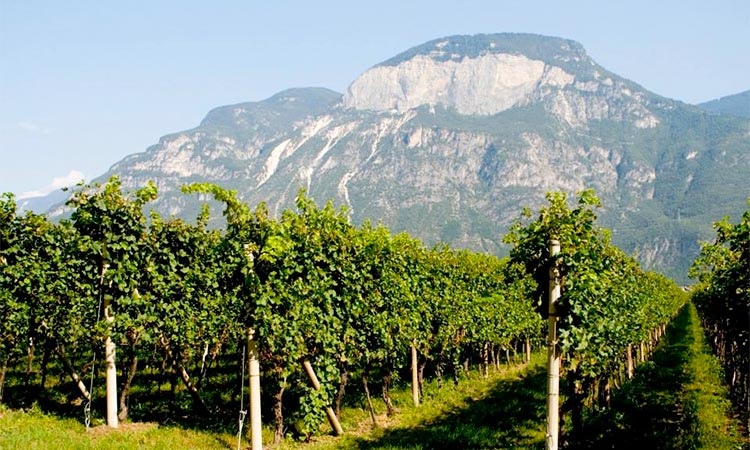
Pinot Grigio. One of the most well-known Italian grapes, it just might be the least respected among connoisseurs. This typically cheap white is, of course, inarguably one of the best-selling in the US, but rarely receives oenophile attention.

“It doesn’t really taste like anything,” says the wine specialist at my local store when I bring it up. This opinion is not a solitary one; it stems from the tide of bulk wine that flows out of the “delle Venezie” IGT (mostly Veneto and Trentino), made by wineries like Cavit, Bolla, and Mezzacorona. Pale and insipid, this juice can offer some freshness but not much else.

On the Esquire show Uncorked – which follows several Master Somm candidates as they prepare for their exam – one guy is shown rinsing with Grigio in place of brushing his teeth the morning of a blind tasting, so as not to throw off his palate.

At my local wine school, instructors suggest using Pinot Grigio to rinse the glass when transitioning to a new wine, as it will neither dilute the next pour like water nor affect the flavor like another wine. (The best rinse is actually the 2nd wine, but that’s another conversation.)

“Pinot Grigio is perceived by the market as a watery, super-light wine,”  Max di Lenardo of Friuli-Venezia Giulia’s Di Lenardo Vineyards confirms. “The grape has been successful, so now there are a lot of industrial wines that don’t taste like the real thing. In our region,” he continues, “we don’t have big cooperatives like this. We are a small area and almost all of our Pinot Grigio is family-owned, estate-bottled wine.”

Interestingly, Pinot Gris – the same grape, with French styling – receives none of the disrespect of its Italian twin. It’s quite highly regarded, in both Alsace and in Oregon. People rarely call it boring or plain; it can feature in some of the most exciting whites from those regions.

Despite carrying a healthy dose of skepticism for years, I recently find myself wondering if Grigio can ever match up to Gris. Is Italy’s version a lost cause, or can it actually be good?

My awakening begins with a bottle from Castelfeder in the Alto Adige that’s full-bodied and luscious, turning any and all previous notions of the Grige on their head. Of course, most of my experience up to this point has been of the Santa Margherita mold: well-known but not particularly good.

I start to seek wines made in the ramato-style – a copper-hued wine that’s been fermented briefly on its skins, imparting some of the color, flavor and tannin. Produced primarily in the Friuli-Venezia Giulia sub-region of Collio, they’re not only surprising in appearance but offer a completely different gustatory experience when compared to the stuff we all know and, er, don’t love.

Di Lenardo, who produces the ramato Gossip, says he enjoys vinifying a wine in this “special” way that the industrial cellars won’t, as well as helping to educate consumers that the Pinot Grigio grape is actually quite dark in color (Grigio means gray).

pinot grigio grapes

He also notes how this method can produce “bigger texture” as well as “distinctive aromatic power.” And while Gossip does feature varietally typical flavors of stone fruit and tart apple, there is absolutely more. Feral notes of hay and fuzzy peach showcase in the aroma, and a distinct bitter almond note coincides with the finish. Though softer than I’ve come to expect with Grigio, a nibble of tannin adds balance.

One of the finest ramato bottles I come across takes me out of Italy, across the border to Slovenia, specifically the region of Štajerska, which – although towards the eastern side of the country — is still as close to Collio as Verona. The winery Pullus (aka Ptujska Klet) has been around for a little bit, according to the label, which claims, no joke, “since 1239.” Regardless, they produce a killer ramato, lighter than Gossip but also sharper, redolent of strawberries and raspberries followed by a mineral and herb-tinged finish. With no disrespect meant to the surely wonderful folks of Štajerska, this is one fine Italian Pinot Grigio.

Though distinct, the ramato-style in and of itself neither equates to bigger or more serious. Take the wines of Fruili’s Attems. While their ramato offers up rose-like fruit alongside a touch of tannic dryness, the overall impression is gentle and elegant. Attems’ non-ramato Pinot Grigio – which is darker than plonk yet still a white wine – on the other hand, is rich and lush, showcasing deep fruitiness (tangerines!) alongside nutty complexity and mouthwatering salinity. Wow.

attems pinot grigio
Image via Attems FB page

Heading back up to the Alto Adige, Peter Zemmer Pinot Grigio is yet another standout. Perhaps the palest of the mentioned wines, it defies that with bold flavor. Huge herbal aromas act as an Alto Adige calling card, but opulent peach, pear and melon bring balance. Experiencing this abundant fruit’s coexistence with vibrant freshness, it’s hard to imagine this grape ever developing its reputation for blandness.

So why does it? Judith Unterholzner – who represents Alto Adige wineries Terlano and Andriano – suggests this phenomenon is mainly due to exaggerated yields. “Whenever producers fail to reduce quantities harvested per hectare to get higher quality primary fruit, Pinot Grigio cannot demonstrate its full potential,” she notes. “We cultivate our Pinot Grigio with the same production philosophy like all the other wine; by taking care of the vines. This creates a product of remarkable quality, balancing varietal typicity with the Alpine brightness our region is famous for.”

It also, of course, requires higher costs. “Low yields are the main reason for the high quality,” Unterholzer continues “which clearly has to have a certain price, since we invest on average 500 hours of manual work per hectare to get the best out of the vineyards.” Don’t fret, though. It’s still only about $20/bottle. Tough to compare on paper with Cavit at $8, perhaps… until the wines are tasted.

This story is, in the end, hardly surprising. Should we, for example, estimate the potential of California Cabernet by bottles of Woodbridge and Barefoot? Hardly. Nor should we judge Pinot Grigio based on bulk garbage.

Me, I began this quest intrigued yet skeptical about the potential of Pinot Grigio. Now here I sit, an unabashed fan. Are you finally ready to open your own mind?

Recommended Bottles:

  • Pullus Pinot Grigio
  • Di Lenardo Gossip Pinot Grigio Ramato
  • Attems Pinot Grigio & Pinot Grigio Ramato
  • Peter Zemmer Pinot Grigio
  • Castelfeder Pinot Grigio
  • Donna Alma Pinot Grigio Dolomiti

Top image via Castelfeder Facebook page.

#ItalianFWT
This post was featured in the July 2016 Italian Food, Wine & Travel group’s Twitter chat on orange wines. Check out a list of other posts from the group:

Lovely Lagrein

Lovely Lagrein

As we discussed in our piece on white wines of the Alto Adige (aka South Tyrol or Südtirol), this northernmost Italian region spent a long time within the Austro-Hungarian empire prior to WWI, and is still heavily influenced by that culture. (On wine labels, for example, German text often appears above or alongside the Italian, as many residents speak German natively.) Thus, given the opportunity to speak with Judith Unterholzner – who represents regional producers Terlano and Andriano – about wines made with Lagrein, a red grape grown almost exclusively here, my first question was whether the winemakers see it as Italian or Austrian. “Lagrein is much more Austrian than Italian in influence,” she told me. “But this is more due the impact of the mountains and the alpine microclimate than the culture.”

In other words, it’s all about terroir. Lagrein don’t care about wars, country borders, or any other man-made conflicts. It found a spot it likes, in a sometimes-unforgiving alpine climate, and it is thriving. In mountainous regions especially, there seems to be a strong bond between the climate and certain grapes, and Lagrein’s match with Alto Adige is no exception. We can come up with all sorts of other ways to describe terroir, but for me, that just about sums it up.

judith-terlano
Judith Unterholzner with Terlano Lagrein

The grape, pronounced “lah-grine” (rhymes with wine), was traditionally used for blending – with the lighter Shiava, mostly – or as a rosato, due to its rugged, bitter nature, and only found its true calling in the early 1980s. “In the decades before,” says Unterholzner, “many consumers wanted lighter, easy-drinking red wines. Then there was an upswing in demand for structured red wines, and more oak influence… Lagrein fulfilled both requests, being full of character and developing fine spicy notes with oak aging. For locals of the region, this became our first serious red wine.”

Tasting through several Lagreins recently, I discovered a refreshing typicity, especially with the non-riserva wines (those aged in large oak casks or steel). Though each wine offered something different – a few featured earthy, rustic notes, for example – there were characteristics that clearly identified every bottle as Lagrein. Aromatically, a violet, floral bouquet recalls Syrah (a cousin), but only just. (La Cucina Italiana identifies this scent as brunelle, a local name for wild orchids found in the region.) On the palate, bright plums and and blackberries lead the way, with black tea and more violet – or brunelle – notes. As it finishes, there’s an almost soapy aspect we’ll call lavender, lest you think it punishment for foul language, which it is most certainly not.

lagrein-alto-adige

Perhaps unsurprisingly, the riservas, or wines aged in small oak barrels – which can cost significantly more – tend to relinquish some of this typicity. Oak softens the floral nature of the aroma, and though spicy flavors on the palate can add intrigue, they also obstruct those special orchids & plums. Riservas are, of course, made for longer aging (10 years or so), but – and take this to heart coming from a lover of aged wine – I’m not sure, in this case, they offer more than the wines meant for everyday drinking.

Pairing-wise, Lagrein of course plays well with the foods of the region, including the legendary speck (smoked, cured ham), as well as beef or game stews. Polenta, mushrooms and root veggies are also common. I love it with fresh pork preparations too, such as grilled chops, roasted tenderloin, or stewed shoulder. Unterholzner suggests braised (in Lagrein, obviously) veal cheek on top of celery root puree.

lagrein-alto-adige

Reviewing my tasting notes, a few things are obvious:

1) Lagrein quality is consistent. Any bottle that’s 15-20 bucks, is certain to be both delicious and representative of the region and variety. In fact, I’ve yet to try one in this price range that wasn’t good, with the exception of one bottle that was cooked. (Which was hardly Lagrein’s fault!)

2) There’s less certainty with riservas. Added winemaker intervention (mainly through oak) means that these wines may represent the region well, but could also taste like modern red wines of indeterminate origin. Of course I only tried two – one of which was on the younger side for a riserva –  and though both were enjoyable, they were generally less appealing. (If anyone out there wants to prove this hypothesis wrong with a beautifully aged bottle, just tell me where and when…)

Without further ado, the notes:

Tiefenbrunner Turmhof Lagrein 2011 ($21)
Big fruit on the nose, alongside a touch of earth and smoke, as well as warm spice. Nice balance of freshness and funk. Good complexity, evolves in the glass. Rustic finish. (92 points)

Balter LagreinTramin Lagrein 2010 ($18)
My favorite nose of the bunch. Moss, forest floor, leather, fruit. Leaps out of the glass. Palate decent too, but almost a letdown after the nose. Still, quite good. (92)

Abbazia di Novacella Lagrein 2009 ($20)
Classic flavors mixed with the modern touch of sweet warm mulling spice and tobacco. Good acidity, big tannins, and intriguing complexity. (91)

Peter Zemmer Lagrein 2010 ($18)
The most typical of the group. This is the pure essence of Lagrein. Straightforward, with all the expected aromas and flavors. (91 points)

Azienda Agricola Balter Lagrein IGT 2010 ($18)
Nice balance of earth, spice and herbs to go alongside the plum and fig. Smooth. (90)

Andriano Tor di Lupo Riserva 2010 ($40)
Classic Lagrein notes are there, but made more subtle by warm spice and tobacco. Hints of earth and tar on the nose, especially with air. Big tannins, bitter on the finish. Should improve with age. (89+)

St. Paul’s Lagrein Gries 2010 ($21)
Rich, dense fruits with a discernable chocolate/cocoa element. Would benefit from air and/or little time. (88)

Terlano Lagrein Porphyr 2006 ($50)
The least Lagrein-like personality, perhaps due to overdone oak. Dark fruits, lots of warm spice, some fleeting earth. Not bad, but nothing special for the price. (87)

Alto Adige Ascension

abbazia-di-novacella

The Geography geek in me gets excited whenever we talk about Northeastern Italy, an area rife with annexations, takeovers and other conflicts of land ownership. The region – especially Trentino & Alto Adige, also known as South Tyrol – is one of the areas of Europe that has been passed back and forth so many times that languages and culture are permanently blurred. Much like Alsatian France is distinctly German, this area of Italy takes the lead from Austrian culture, as it was part of the Hapsburg Empire through World War I. In fact, so entrenched is the German language that it often takes prominence over the Italian on wine labels.

That said – as Frank is fond of saying – there really is no such thing as “Italian Wine”, because there is so much variation in both climate and culture as you move around the boot. Still, Italian white wine often fights the stigma that it all tastes the same, and doesn’t taste very good. Northeastern Italy is certainly to blame for that, with much bulk, inert Pinot Grigio coming out of the Veneto region, but that’s still only one perspective.

In Alto Adige, for example, although Pinot Grigio is widely grown and vinified, there’s a more serious focus on creating quality cool-climate white wines. Though many can be light and crisp due to the southern alpine growing conditions, there’s variety and quality here that is worth getting to know.

Recently I had the chance to drink through a number of wines from Abbazia di Novacella, a 12th century Augustinian abbey located less than 30 miles from the Austrian border in Alto Adige. The abbey – which, interestingly, is listed on Google maps as “Kloster Neustift”, the German name – has been crafting wine for more than 850 years, but has more recently garnered acclaim via their very own 2009 Italian winemaker of the year Celestino Lucin.

As the whites that I tried were vinified in stainless steel, there was a unity in style with regards to intense aromas and mouth-watering acidity of the cool climate grape, however they did also offer some noticeable variations in style.

The Muller Thurgau (SLO in PA, Code 71089, $20.69, minimum 12), for example, is probably lightest, with a bright, citrusy flavor and easy-going personality that screams summertime white. In contrast, the Gewurztraminer (only the 1996, strangely, is available in PA, SLO 59249, $16.49, min 12) is full-bodied, with lush notes of tropical fruits and Asian spice, perfect for Fall.

Novacella’s  Sauvignon (not available in PA) offers that austere, grassy note that Sauvignon Blanc is known for on the nose, but is nicely ripe and juicy on the palate. If the cat pee of Sauv Blanc turns you off, this will be no different, but it’s a very nicely done old-world style SB for those who appreciate the mouthwatering properties.

Lastly was the Kerner (SLO Code 527816, $19.99, min 1) a hybrid grape from Riesling and Shiava that drinks like a dry riesling – great aroma, bright acidity, and perhaps just a touch of sweetness on the palate.

In the end, each wine offered something different, yet all were mouthwatering and delicious, and I’d highly recommend picking up wines from AdN or others in the Alto Adige region if and when you come across them.

There are a few Abbazia di Novacella wines in PA stores, though your best bet may be the SLO (Special Liquor Order) program, with codes noted above. Wine Works in Marlton, NJ (just past Cherry Hill), Wine Library in Springfield, NJ (delivers to PA) and Wine.com (delivers to PA) also carry AbN wines.

Full disclaimer: Review samples of these wines were provided.