Warning: Undefined variable $url in /home/undiscov/public_html/undiscovereditaly/wp-content/plugins/twitter-facebook-google-plusone-share/tf_display.php on line 365

Pursuing Perricone

Pursuing Perricone

Encountering passionate evangelicals for a specific wine — as I did recently with Sicily’s Federico Lombardo di Monte Iato and Marilena Barbera — it’s easy to get caught up in their romantic ideals. Which is why, after my initial article on the origins and history of Perricone, I set out to find as much of the stuff as possible. Problem is, this particular wine is not exactly available in every Publix, Total Wine or package store. Finding some quality subjects, in this case, takes some hunting. I turned to man-about-wine Zach Morris, a former wine school colleague who — despite his newfound focus on coffee — I knew would be up for the challenge. And that he’d gladly support my sampling efforts.

What follows is the result of an afternoon spent getting to know this unique Sicilian native.

DeBartoli Rosso di Marco Terre Siciliane 2011

There’s a lot to like about this one, all warm, breezy and marked by fresh bursts of Mediterranean flavor. The ripe red fruit is a tad sappy, perhaps a product of the heat and lower elevations of southwest Sicily. Though somewhat refined and stylish, it manages to retain the grape’s herbal, rustic persona and features a mildly sour, earthy aftertaste that likely results from reductive, minimalist winemaking. Complex yet approachable, this has the goods to attract newbies to Perricone.

Feudo Montoni Vigna del Core Sicilia 2014

An easy contrast to the first; fuller, rounder, smoother. Our generic descriptors — complete, cohesive, seamless — are indicative of a well made, varietally faithful wine. The nose recalls an expensive, meaty Northern Rhône Syrah. Dark, fleshy fruit is more skin than pulpy flavor, but far from unpleasant. A noticeable lack of acidity keeps this from being refreshing, lending credence to an earlier observation that making a young, ripe Perricone may not be possible. Our verdict: developing, not ready for prime time but with enough going on to sense potential.

Caruso & Minini Sachia 2008

This may be what the last one will become when it grows up: beautiful, with ripe aromas and mature, sensory fullness. A nose of hot, dry Mediterranean aromatics segues into savory Syrah-like scents of dark fruit and game. The grape’s rough and tumble edginess hides in the background, subtly integrated with the added depth and complexity of age. Based on past experience with younger vintages of Sachia, this seems at or near its peak, a serious wine that can hold its own with any dusty, cellar-worthy prize.

Guccione “P” 2012

Could this be the archetype? Dark and intriguing, its allure challenges the drinker’s patience as it transforms in the glass, even after hours of decanting. Restraint is rewarded with an honest, old-school wine, a primal expression that speaks for itself. The aromatics ring true, a green herbal tang with underlying sanguine iron minerals and a subtle, terroir-driven macchia that balances savory with vegetal. This is a singular wine, feral but easy to dig, a result of great winemaking that showcases its uncompromising, assertive attitude. Revisiting it over three days, the evolving depth is remarkable, as is an unexpected vein of raisin and fig that’d fit right into a Valpolicella ripasso.

Firriato Ribeca 2011

A vibrant Perricone that could, like Rosso di Marco, have wide-ranging appeal. Fresh and inviting, it effortlessly combines varietal identity with power and tannic structure. Using the barrel to tone down some of its wilder nature doesn’t keep the nose from showing its skunky old-world aromas, a heady combo of scorched earth, cedar, curing tobacco and the full-bore meat and cooked game one often finds in — guess what? — Syrah. The intensity and purity of this fruit, however, elevates this lush and concentrated farmhouse wine without going too far.

Il Censo Njuro Terre Siciliane 2011

Awkward and clumsy, uncomfortable even, we find our one outlier. There’s a studied eccentricity a la Frank Cornellisen, a nerdiness more stimulating to the brain than the senses. Offensively sharp and herbal aromatics feature an astringent odor of drying geraniums and a briny, oily dose of canned cat food. (Ed note: Yum!) The mellower palate incorporates a dose of light sour cherries, alongside a lingering vinous sensation, as if it was still fermenting in the bottle. After some time, a second sampling shows riper fruit but is no less unsettling. Though it might appeal to the most adventurous drinkers, this one is certainly too strange to recommend as an intro to an otherwise lovely grape.

In the end, our session left us with the obvious conclusion that further Perricone “study groups” are sure to come. Among the dozens of rediscovered native grapes of Italy, it’s one I’m rooting for.

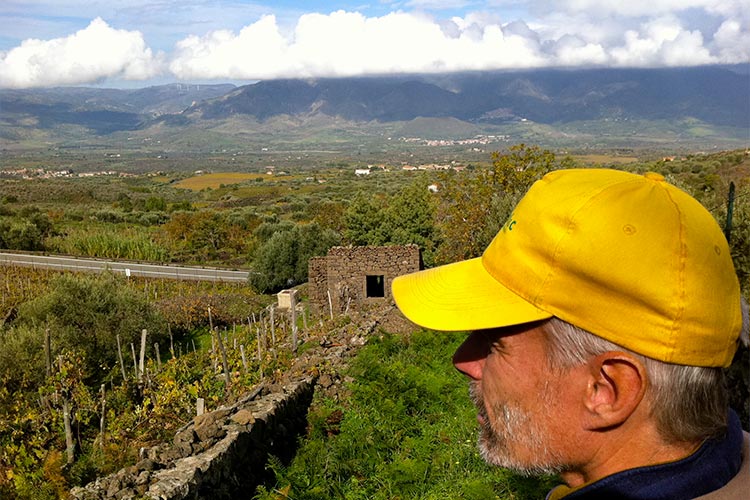
Featured image of De Bartoli Vineyards © Marco Belli.
Preserving Perricone

Preserving Perricone

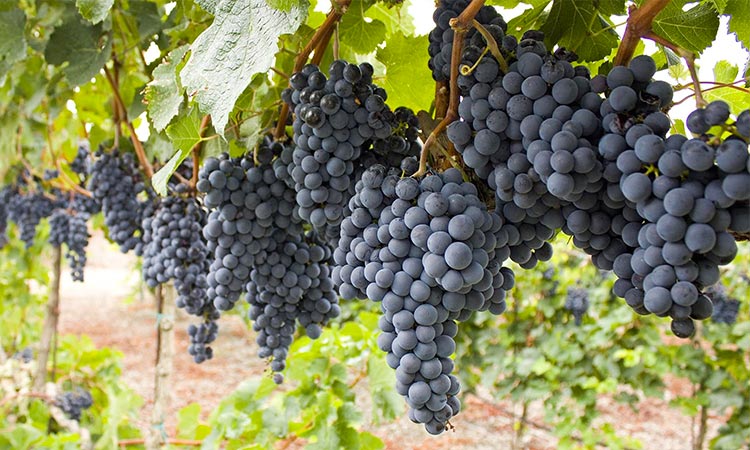
There are many grapes that live as vineyard problem children. Those that demand a vintner’s understanding, nurturing and determination to endure, season after season. Like parents, growers and winemakers sense potential and beauty that isn’t skin deep. Some, such as Nebbbiolo and Pinot Noir, grow up to become superstars. Others wait patiently to be discovered, enjoyed by a passionate few, unknown to the vast majority, biding their time. Such is the case with Sicily’s Perricone.

I first tasted the grape — also known as Pignatello — six years ago in a small Sicilian town in the shadow of the Madonie Mountains. Though I was intrigued enough to seek out more, I found hardly enough stateside to build expertise. As such, I turned to two believers for further insight: Federico Lombardo di Monte Iato of Firriato, whose LinkedIn page dubs him a “Sicily Evangelist”, and Marilena Barbera of Cantine Barbera, who describes this unique varietal as the “deep and intense soul of West Sicily.”

Both brought me up to date on Perricone’s history, which reads like scores of other long-forgotten indigenous varietals. Initially grown as a blending grape (most notably in Marsala Rubino) for its high concentration of anthocyanins, important for tannic retention and aging, and resveratrol, a natural self-respondent to bacteria and funghi, it has only recently been given a starring role.

Barbera points out that “when there was almost no Nero d’Avola to the west, Perricone was the only grape that farmers could use to make red wines with intense body and longevity.” Many, according to Lombardo di Monte Iato, switched to Nero d’Avola in the latter part of the 20th century, as it was easier to grow and more generous in output. “Remember,” he adds, “grapes were sold by weight, so farmers needed to have guaranteed production.”

federico
Federico of Firriato

Even those invested in Perrricone acknowledge the difficulties in bringing it from vine to bottle. If the polyphenol content is elevated, it can be abrasive, or, in Barbera’s words, “give birth to rustic and sometimes grouchy wines, especially in fresh and rainy vintages.” Since it ripens late, changes in normal weather patterns can be disastrous. Timing the harvest is vital to ensure the acidity level stays intact.

Then there are the commercial challenges. “Perricone is difficult,” Barbera tells me. “It’s not very productive and it takes patience and experience. Its tannins and thick skin require time and attention during fermentation, and a long refining is compulsory in most vintages.” Producing fresh, fruity wines then, aimed to be sold and drunk young, is a virtual impossibility. “Making a wine that needs a minimum of three years before it becomes friendly,” Barbera continues, “is not an option for the big industrial wineries in West Sicily.

At present there are about 365 acres of Perricone on the island — an astounding decrease from 85,000 in the early 1900s — representing just 0.3% of Sicily’s grapes. Of that minuscule amount, 95% is used to make bulk wine. “It’s a real pity,” Barbera sighs. “We Sicilians lost confidence in our quality, and following the market’s passing fancies seemed the only way out. Many started to abandon indigenous grapes in favor of international varieties, a trend that continues. Even today there are producers who plant Pinot Noir, Syrah… They say that nobody knows Perricone, that it’s inconceivable to promote a wine with such a difficult name to pronounce.”

Firriato’s evangelist is equally optimistic. “It’s difficult because Italy in general, and Sicily in particular, has a lot of native vines,” he notes. “So it’s quite challenging to help consumers understand Perricone, to identify it as a quality grape that makes wonderful wine. This isn’t only a winemaking challenge, but a marketing one.”

It’s not all bad, of course. Perricone relishes western Sicily’s warmth and a long, dry growing season countered by a diurnal temperature range that enhances ripening and balance. The resulting wines are full bodied and darkly pigmented, with fairly high alcohol levels. Strong, sometimes austere tannins serve as the foundation for intense cherries, plums and dark berries mixed with green herbs and peppery spices. They may have a rustic, earthy edge when young, but will develop balance and finesse as they mature.

Marilena Barbera
Marilena Barbera in the vineyard.

“Perricone that you find today is made by small producers, people who love their vineyards and respect the personality of their grapes and terroir,” Barbera says. “These people will keep it alive. Though they might not have the money or organization for worldwide promotion, I’m confident things are moving in the right direction.”

“Perricone will be our signature grape for many years to come,” she concludes. “The small group of winemakers to which I proudly belong will continue to toil, with dignity and passion, to offer the best expressions of Perricone at every vintage.”

Crazy Good Wines on Mount Etna

Crazy Good Wines on Mount Etna

Writers (such as myself) love to discover characters in the wine industry we can deem “crazy.” In a good way, of course. Crazy like a wine savant. And though I’ve yet to meet Frank Cornelissen, all accounts suggest that he may just be the prototypical wine crazyman, a guy who couldn’t do what he does if he was normal. This, of course, has resulted in Cornellissen becoming somewhat of a cult figure in the industry.

In the excellent book Palmento – which includes stories from the author’s time in Sicily, and is a must for any Italian wine lover – Robert Camuto writes:

Cornelissen was the first winemaker I visited because I suspected he might be close to insane – in every positive sense of the word. Why else would a middle-aged northern European choose to plant himself [on Mt. Etna in Sicily] and make wine from vineyards that had been neglected or abandoned by the locals for most of a century? Why else would anyone choose to scratch out a life with little help on land so perilously placed within spitting distance of one of the world’s most active volcanoes?

Cornelissen has gained some notoriety for his minimalist approach to grape growing, notably his refusal to use sulfur or copper sulfate to treat the vines, to the point that Wine Spectator’s Matt Kramer commented that his “‘no nothing’ approach makes biodynamic agriculture, with its various homeopathic sprays and fetishistic composting, seem downright interventionist.” (Kramer’s piece on the vintner is also worth a read, for those interested in a deeper backstory.)

In his early days especially, this created some weird results. Cornelisson himself admitted (to Camuto) that he’s made some “off wines.” Kramer called his 2007 Munjebel #4 White “awful.” Considering, though, that the guy moved across Europe with hardly any experience, is this surprising?

Nowadays, he seems to have gotten past those early days of big mistakes and is creating consistently excellent wines. They may not be for everyone, of course, but certainly those who seek out the interesting and different should try them at least once.


frank-cornelissen-rosso-contadino-11Seemingly harder and harder to find in today’s wine world is the red that’s both elegant and complex. Light, yet nuanced. It seems that, so often, bigger is seen as better, and many wine makers have adjusted as such. Even as the pendulum has begun to swing towards more balanced styles, medium-bodied is about the best one can often do.
Enter Frank Cornelissen Rosso del Contadino Terre Siciliane No. 11. I tasted this alongside two other reds − Cornelissen’s Munjebel 2013 and Munjebel CS 2013 − which are both big, brawny beasts, and at first, the Contadino seemed simple. Especially when I first tasted the Munjebel, which exploded out of the bottle with aromas of mulled spice, mulch, chocolate and plums, just raring to go, the Contadino was overpowered.

The longer I spent with the Contadino, however, the more excited I got. This is a subtle, elegant, and profound wine. Deceptively complex. Perfect for lighter foods. There’s a ton going on here: red cherries and plums, mandarin orange, roses, five spice, tobacco, smoke, and a hint of pepper on the finish.

I found it a stellar pairing for dishes featuring tomato and eggplant, but it seems versatile enough to stand up to mild spice, proteins from hearty seafood to mid-weight meats and everything in between.

I don’t mean to take anything away from the Munjebel and Munjebel CS; they just don’t seem as unique. They are serious wines that make no mistake as to why they are coveted worldwide. Deep and rich, featuring darker cherry and prune fruits, they manage to maintain elegance despite their immense alcohol content (label says 15%, but it must be more). As mentioned above, the regular Munjebel was roarin’ to go right out of the bottle, whereas the CS took some more time and air to show, and would probably do better with a few years on its side. That said, with food − especially, strangely, a pastrami sandwich with caraway seeds − the finish lasted seemingly forever.


#ItalianFWT
This post is part Italian Food, Wine & Travel’s volcanic wines theme. Below are the other posts from the group.

What’s Old is New (Regarding Chocolate)

What’s Old is New (Regarding Chocolate)

Warning: preg_match(): Compilation failed: invalid range in character class at offset 11 in /home/undiscov/public_html/undiscovereditaly/wp-content/plugins/wysija-newsletters/helpers/render_engine.php on line 526

Warning: preg_match(): Compilation failed: invalid range in character class at offset 11 in /home/undiscov/public_html/undiscovereditaly/wp-content/plugins/wysija-newsletters/helpers/render_engine.php on line 526

Warning: preg_match(): Compilation failed: invalid range in character class at offset 11 in /home/undiscov/public_html/undiscovereditaly/wp-content/plugins/wysija-newsletters/helpers/render_engine.php on line 526

Fatal error: Uncaught Exception: Template 'templates/form/web/widgets/#type.html' not found ! in /home/undiscov/public_html/undiscovereditaly/wp-content/plugins/wysija-newsletters/helpers/render_engine.php:723 Stack trace: #0 /home/undiscov/public_html/undiscovereditaly/wp-content/plugins/wysija-newsletters/helpers/render_engine.php(454): WYSIJA_help_render_engine->_loadTemplate() #1 /home/undiscov/public_html/undiscovereditaly/wp-content/plugins/wysija-newsletters/helpers/render_engine.php(169): WYSIJA_help_render_engine->_parse() #2 /home/undiscov/public_html/undiscovereditaly/wp-content/plugins/wysija-newsletters/helpers/form_engine.php(756): WYSIJA_help_render_engine->render() #3 /home/undiscov/public_html/undiscovereditaly/wp-content/plugins/wysija-newsletters/helpers/form_engine.php(638): WYSIJA_help_form_engine->render_web_body() #4 /home/undiscov/public_html/undiscovereditaly/wp-content/plugins/wysija-newsletters/views/front/widget_nl.php(160): WYSIJA_help_form_engine->render_web() #5 /home/undiscov/public_html/undiscovereditaly/wp-content/plugins/wysija-newsletters/widgets/wysija_nl.php(285): WYSIJA_view_front_widget_nl->display() #6 /home/undiscov/public_html/undiscovereditaly/wp-content/plugins/wysija-newsletters/helpers/front.php(256): WYSIJA_NL_Widget->widget() #7 /home/undiscov/public_html/undiscovereditaly/wp-includes/shortcodes.php(433): WYSIJA_help_front->scan_form_shortcode() #8 [internal function]: do_shortcode_tag() #9 /home/undiscov/public_html/undiscovereditaly/wp-includes/shortcodes.php(273): preg_replace_callback() #10 /home/undiscov/public_html/undiscovereditaly/wp-includes/class-wp-hook.php(324): do_shortcode() #11 /home/undiscov/public_html/undiscovereditaly/wp-includes/plugin.php(205): WP_Hook->apply_filters() #12 /home/undiscov/public_html/undiscovereditaly/wp-includes/post-template.php(256): apply_filters() #13 /home/undiscov/public_html/undiscovereditaly/wp-content/themes/accelerate/content.php(48): the_content() #14 /home/undiscov/public_html/undiscovereditaly/wp-includes/template.php(812): require('/home/undiscov/...') #15 /home/undiscov/public_html/undiscovereditaly/wp-includes/template.php(745): load_template() #16 /home/undiscov/public_html/undiscovereditaly/wp-includes/general-template.php(206): locate_template() #17 /home/undiscov/public_html/undiscovereditaly/wp-content/themes/accelerate/archive.php(82): get_template_part() #18 /home/undiscov/public_html/undiscovereditaly/wp-includes/template-loader.php(113): include('/home/undiscov/...') #19 /home/undiscov/public_html/undiscovereditaly/wp-blog-header.php(19): require_once('/home/undiscov/...') #20 /home/undiscov/public_html/undiscovereditaly/index.php(17): require('/home/undiscov/...') #21 {main} thrown in /home/undiscov/public_html/undiscovereditaly/wp-content/plugins/wysija-newsletters/helpers/render_engine.php on line 723