Warning: Undefined variable $url in /home/undiscov/public_html/undiscovereditaly/wp-content/plugins/twitter-facebook-google-plusone-share/tf_display.php on line 365

Il Ciavarro di Ripatransone

ciavarro

Perhaps the most fascinating and wonderful aspect of studying Italian cuisine is how it varies so widely, not only region to region but town to town. As one explores the countryside, uphill, then downhill, one hilltop battlement to the next, there’s always some delicacy, secret recipe or traditional dish to discover.

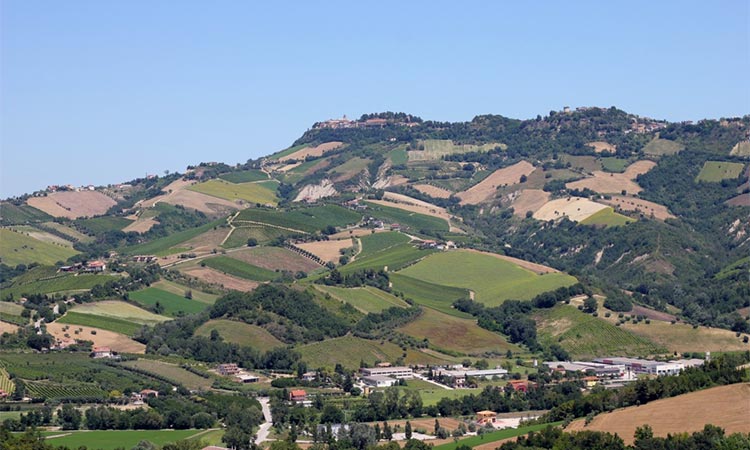
As recounted in Positively Piceno, I recently spent some time in Ripatransone, a hill town located in southern Marche, beautifully situated between the Adriatic coast and the inland mountains. Here I discovered lu ciavarre (or ciavarro), a traditional vegetable dish that speaks to the tradition and toil of this small area.

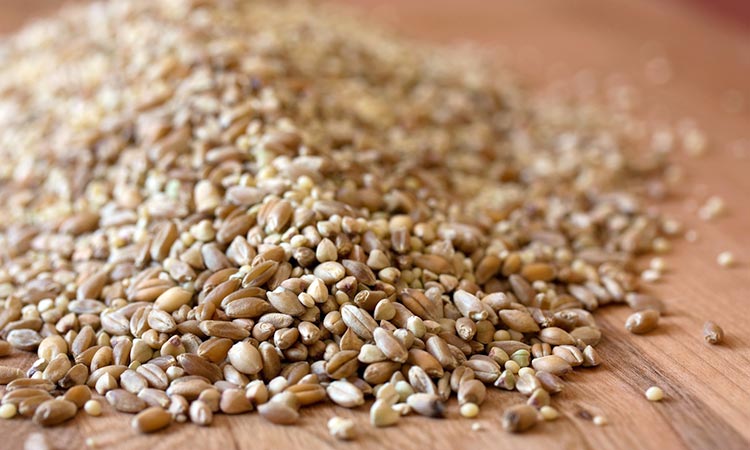
Made primarily from a variety of legumes and grains, lu ciavarre, like so many other recipes, evolved out of necessity. In the spring season, as new crops begin to produce, farmers needed to make space in their stores, so they cooked a simple stew of the previous year’s leftovers. (The word ciavarro, in the local dialect, essentially means a set of different things with each other.)

Historically, ciavarro was eaten on May Day, or May 1st, a longtime European holiday or festival to celebrate the arrival of spring, now Labor Day in Italy. Today, it’s prepared in town during La Passatella, a food & wine walk that takes place on some summer Friday nights.

My own first taste took place at Ristorante Lu Cuccelò (the snail), a small pizzeria near the center of town. We went for lunch thinking pie, only to find that the lunch menu didn’t include it, something that’s relatively common in Italy and (I suppose) sensible considering the heat of a wood oven at midday. Instead, I found myself digging into a hearty, soul-affirming bowl of ciavarro, blown away by its depth of flavor and comforting essence.

ciavarro from lu cuccello

Though I wasn’t aware at the time, Lu Cuccelò owner/chef Paola is known around these parts as an expert in the dish, and she was kind enough to share the technique with me.

Basic ingredients:

  • Grains such as bulgar wheat, barley, polenta, corn, farro.
  • Legumes such as chickpeas, field peas, peas, kidney beans, white beans and lentils.
  • Paola suggests about 50g of each ingredient per person, 200g for 4 people.

Other ingredients:

  • 200gr of lean pork (Many recipes call for bacon or “pork rinds”, though ground pork can also work well)
  • 400gr soffrito (mirepoix; finely chopped onion, carrot and celery)
  • 200ml dry white wine
  • 400g peeled tomatoes
  • Some recipes also call for adding a bit of garlic, bay leaf, chili to the sauce

Technique:

The legumes and grains should be soaked in different containers and boiled in different pots, cooked to their own directions. (In a pinch you can use canned, cooked beans.) Save some of the bean water to use in the sauce to achieve the proper texture.

  • Brown pork in a large stockpot with some EVOO
  • De-glaze pan with white wine
  • Add tomatoes (crush if not already)
  • Add cooked legumes and grains (plus some extra water)
  • Simmer for 15-30 minutes to thicken and combine

Serve with warm bread, hard cheese and a nice Rosso Piceno (such as Rupe Nero Gold).

Here’s a video from an Italian-language cooking show of Paola preparing the dish:
Positively Piceno!

ripa-griffoni

Even as the proprietor of a site called Undiscovered Italy, Ascoli Piceno – the southernmost province within Marche – was not particularly high on my list of must-visit Italian locales. Despite off-the-beaten-path cache, it’s simply not on the radar for many Americans. Luckily for me, I befriended a wine importer named Jack who specializes here because his family hails from the region. He also happens to own an apartment in the little hill town of Ripatransone that was, fortuitously, available for my family to use.

Though there’s certainly more of Italy that I haven’t seen than have, I would consider myself relatively well traveled on the boot. Most of the big cities are covered, as well as many of the famous secondary spots, like Tuscany’s Val d’Orcia and the Amalfi Coast. I don’t share this to brag, only to point out the importance of this next statement: I was completely unprepared for the beauty that awaited us in Marche.

From Jack’s rooftop terrace at the top of Ripatransone’s hill, a glance to the left shows blue as far as the eye can see, the lovely azzuro of the Adriatic. To the right looms Gran Sasso, the highest peak in the Apennine mountains that form the country’s spine, looming over the rolling Tuscan-style hills that dot the area that’s been recently ravaged by earthquakes. It’s all here, especially from a culinary perspective. Fresh fish from the sea, mountain meats and cheeses, hillside wines. And gorgeous doesn’t even begin to describe the views.

ripatransone-view

Relishing Ripatransone

Affectionately known as Ripa, it’s a medium-sized hill town, far smaller than an Orvieto or Montepulciano but large enough to be a destination for those passing through the area. Inhabited since prehistoric times, it was first unified as a town in 1096. Though it lacks the grandiose central piazza of more famous countryside towns, strolling the cobbled streets and medieval walls is a lovely pastime, as is pausing at the central cafe for an espresso, pastry or gelato and gazing up at the main cathedral.

And, for those who revel in giant ball of twine or Cadillac Ranch-style attractions, Ripa has its own: il vicolo più stretto d’Italia, the narrowest alley in all of Italy. This tiny little passageway located just off the town’s largest piazza is just 43cm wide at the entrance, narrowing yet further to 38cm at its thinnest point. Though it might seem silly, squeezing oneself down it is a fun, free and memorable activity for all ages.

ripatransone-sign

ripatransone-alley

Nearby Towns

A few km down the hill on the sea is Grottammare, a more modern town that wouldn’t be particularly memorable if not for its lovely shorefront. Marked by a wide promenade that’s perfect for walking, biking or just a leisurely stroll, it’s also great for people watching during the high season, when beaches packed with Italians suggest that this place is hardly undiscovered in Italy.

If crowded beaches don’t sound like a good time, head to Chalet Fabio towards the southern end of the walkway, just past the red clay tennis courts. Rent an umbrella and chairs from this family-friendly spot and spend a lazy day staring out at the sea, bathing in the calm waters and enjoying Fabio’s shellfish on the terrace.

Not far from Ripa is Offida, another quaint hill town worth a quick visit. Highlights include the magnificent church of Santa Maria della Rocca, whose brooding facade is accentuated by the ravine that falls drastically off the other three sides. (Which is, amazingly, said to have occurred after the church was built.)

Further afield is the town of Ascoli Piceno itself, known for travertine churches.

Wineries to Know

Though there are, not surprisingly, many wineries in the Ascoli Piceno region, for now I’ll focus specifically on those located in and around Ripatransone.

View of the Adriatic from Le Caniette

Perhaps the finest – in terms of wine – is Le Caniette, run by Giovanni Vagnoni, a fourth-generation winemaker. Though all the wines here were delicious, one standout was Io Sono Gaia (non sono Lucrezia), a name created by Vagnoni’s younger daughter. “Our Passerina is called Lucrezia, after my eldest daughter,” he tells me. “So people were always asking Gaia, my youngest, if she was Lucrezia. When I asked her to design a label for my new wine, this is what she gave me.”

iosonogaia

Cinabro, a red made exclusively from Bordò — an ancient biotype of Grenache that still grows in Marche — is the most notable red from Le Canniete (among a cadre of greats). Beyond the fascinating story of this grape — which I’ll save for another time — it is an elegant, nuanced and beguiling wine that’s both unique and unmistakably Italian.

The area’s important area winery is Tenuta Cocci Grifoni, former home of the late Guido Cocci Grifoni, the man known for bringing back the Pecorino grape from the edge of extinction and the driving force behind the growing Offida DOCG focused on said grape.

A brilliant glass-enclosed tasting room and balcony greets guests, who can sample Cocci Grifoni’s excellent line of Pecorino and red blends alongside locally-made salumi and other tasty snacks. We felt particularly honored to taste the first vintage (2013) of Guido Cocci Grifoni Pecorino, made from grapes grown exclusively in the “mother vineyard” where Cocci Grifoni began his Pecorino experiments.

griffone-bottles

Lastly is Colli Ripani, the large co-op in the region that produces both widely-available, supermarket-level wines as well as higher-end bottles worth seeking. Though not a particularly exciting place to visit (for the most part it is just another industrial wine factory), they do offer regular dinners and other wine events. Otherwise, be sure to order a bottle at one of the many cafes and trattorias in the nearby towns. In particular, the muscular Leo Ripanus red can hold its own with plenty of Napa Cabs, at about a quarter of the price.

#ItalianFWT

This post was part of the November #ItalianFWT twitter group, hosted by Danielle Oteri, on the topic of unique towns of Italy. Check out the other posts below:

Small-batch Italian Wines? Smart!

Small-batch Italian Wines? Smart!

Warning: preg_match(): Compilation failed: invalid range in character class at offset 11 in /home/undiscov/public_html/undiscovereditaly/wp-content/plugins/wysija-newsletters/helpers/render_engine.php on line 526

Warning: preg_match(): Compilation failed: invalid range in character class at offset 11 in /home/undiscov/public_html/undiscovereditaly/wp-content/plugins/wysija-newsletters/helpers/render_engine.php on line 526

Warning: preg_match(): Compilation failed: invalid range in character class at offset 11 in /home/undiscov/public_html/undiscovereditaly/wp-content/plugins/wysija-newsletters/helpers/render_engine.php on line 526

Fatal error: Uncaught Exception: Template 'templates/form/web/widgets/#type.html' not found ! in /home/undiscov/public_html/undiscovereditaly/wp-content/plugins/wysija-newsletters/helpers/render_engine.php:723 Stack trace: #0 /home/undiscov/public_html/undiscovereditaly/wp-content/plugins/wysija-newsletters/helpers/render_engine.php(454): WYSIJA_help_render_engine->_loadTemplate() #1 /home/undiscov/public_html/undiscovereditaly/wp-content/plugins/wysija-newsletters/helpers/render_engine.php(169): WYSIJA_help_render_engine->_parse() #2 /home/undiscov/public_html/undiscovereditaly/wp-content/plugins/wysija-newsletters/helpers/form_engine.php(756): WYSIJA_help_render_engine->render() #3 /home/undiscov/public_html/undiscovereditaly/wp-content/plugins/wysija-newsletters/helpers/form_engine.php(638): WYSIJA_help_form_engine->render_web_body() #4 /home/undiscov/public_html/undiscovereditaly/wp-content/plugins/wysija-newsletters/views/front/widget_nl.php(160): WYSIJA_help_form_engine->render_web() #5 /home/undiscov/public_html/undiscovereditaly/wp-content/plugins/wysija-newsletters/widgets/wysija_nl.php(285): WYSIJA_view_front_widget_nl->display() #6 /home/undiscov/public_html/undiscovereditaly/wp-content/plugins/wysija-newsletters/helpers/front.php(256): WYSIJA_NL_Widget->widget() #7 /home/undiscov/public_html/undiscovereditaly/wp-includes/shortcodes.php(433): WYSIJA_help_front->scan_form_shortcode() #8 [internal function]: do_shortcode_tag() #9 /home/undiscov/public_html/undiscovereditaly/wp-includes/shortcodes.php(273): preg_replace_callback() #10 /home/undiscov/public_html/undiscovereditaly/wp-includes/class-wp-hook.php(324): do_shortcode() #11 /home/undiscov/public_html/undiscovereditaly/wp-includes/plugin.php(205): WP_Hook->apply_filters() #12 /home/undiscov/public_html/undiscovereditaly/wp-includes/post-template.php(256): apply_filters() #13 /home/undiscov/public_html/undiscovereditaly/wp-content/themes/accelerate/content.php(48): the_content() #14 /home/undiscov/public_html/undiscovereditaly/wp-includes/template.php(812): require('/home/undiscov/...') #15 /home/undiscov/public_html/undiscovereditaly/wp-includes/template.php(745): load_template() #16 /home/undiscov/public_html/undiscovereditaly/wp-includes/general-template.php(206): locate_template() #17 /home/undiscov/public_html/undiscovereditaly/wp-content/themes/accelerate/archive.php(82): get_template_part() #18 /home/undiscov/public_html/undiscovereditaly/wp-includes/template-loader.php(113): include('/home/undiscov/...') #19 /home/undiscov/public_html/undiscovereditaly/wp-blog-header.php(19): require_once('/home/undiscov/...') #20 /home/undiscov/public_html/undiscovereditaly/index.php(17): require('/home/undiscov/...') #21 {main} thrown in /home/undiscov/public_html/undiscovereditaly/wp-content/plugins/wysija-newsletters/helpers/render_engine.php on line 723