Warning: Undefined variable $url in /home/undiscov/public_html/undiscovereditaly/wp-content/plugins/twitter-facebook-google-plusone-share/tf_display.php on line 365

One Great Bottle: Fiamberti Oltrepò Pavese Bonarda 2012

bonarda-bricco-della-sacca

I’ve never been a huge fan of Lambrusco, mainly because it can tend towards a cheap candy (think Cherry Chan) flavor profile. Having been exposed to other wine writers and lovers gushing about the sparkling red stuff, however, I’ve tried my best to keep an open mind and sample as many as I can. Perhaps that’s why I took a flyer on this bottle of (non-Lambrusco) frizzante red, just $12.99 at Wines from Italy (out of stock as of this writing).

Confusingly, Bonarda dell’Oltrepò Pavese is made from Croatina grapes, not the variety with which it shares a name. And though a still ‘Bonarda’ can also be made in this new (since 2010) Lombardian DOC, the most common version is naturally sparkling – though only slightly – and features, as the winery puts it (with perhaps something lost in translation) “a peculiar red foam.”

Regardless, Fiamberti Bonarda dell’Oltrepò Pavese Bricco della Sacca 2012 is a fascinating wine on every level. On the nose it comes across as pure old world, with savory, earthy notes, yet on the palate it’s fruity, almost jammy, with a bright freshness accentuated by a touch of effervescence.

Though commonly served with first courses, especially salumi, I went rogue and paired it with chili. That’s right, one of the most difficult wine pairings known to man. Incredibly, perhaps – or knowingly, due to my personal pairing, uh, genius – this wine was an excellent choice for the complex and spicy flavors, as the slight sweetness and refreshing bubbles helped clean my palate after each bite.

#ItalianFWT

This post was part of the May 2017 Italian Food Wine Travel topic on Italian sparkling wine. Here are the other participants:


Q&A: Anthony Vietri of Va La Vineyards

Q&A: Anthony Vietri of Va La Vineyards

As much as I love all things Italy, especially with regards to food & drink, there’s also something abundantly Italian about supporting and utilizing local purveyors, regardless of nationality. The idea of shipping some delicacy halfway across the world, on the other hand, seems to go against the core principles of Italian food culture – local, fresh, seasonal.

This is the circuitous way of saying I support east coast wineries as much as possible, even if my vinous heart lies in Italy. Thankfully, there’s one Southeastern PA vintner – Anthony Vietri – who can offer the best of both worlds. Nestled in the heart of Kennett Square mushroom country (which produces the vast majority of US-grown fungi), Vietri’s Va La Vineyards grows mostly Italian varietals while carrying on the winemaking traditions of his family.

For a more detailed background on the winery, I highly suggest reading Jeff Alexanders wonderful piece, “Grapes and Ghosts of Chester County Wine Country,” which we published here at Undiscovered Italy last week. (Seriously, go. I’ll wait.)

As for now – we recently caught up with Vietri to ask him a little more about his Italian heritage, and how it influences his winemaking and beyond. His responses follow:

Where is your family from in Italy?
My maternal family is from Liguria & Piemonte (Giusvalla+ Malvicino). My paternal family is from Campania (Vietri sul Mare).

What are some of your favorite characteristics of each area?
The food is just wonderful. Wild mushrooms, truffles, chestnuts, and wild game in the north, and the fish, incredible fruits, vegetables, and crystal clear waters in Campania.

What are some of the traditions you still honor from this area and your family?
All of our cooking, although we lean toward the northern influences. Our farming is heavily focused on Piedmontese varieties, chestnuts, etc.

Describe an undiscovered Italian wine region you love.
I lived for a while in a village called Riomaggiore, in Liguria, before there was a road for cars, and I very much loved it there. At the time (1980s), it was still the 19th century. Folks hung from ropes to pick some of the grapes on the cliff terraces. Every morning women would scale the steep hillsides with baskets balanced on their heads, filled with fruit, wine, cheeses, and bread for the men tending to the vines on the terraces.

How about some undiscovered Italian foods ?
Strangely enough, my maternal family was big into Mate, because some of our folk had migrated to Argentina and brought this custom back with them. They foraged wild greens to make it. They also made a sheep cheese called formagiatto, which I remember hanging in a bag over the sink whenever I washed my hands. Also, as farmers, the family foraged a lot, and ate a lot of small wild birds on polenta. To this day, we love to pick a wild green in the spring called poke, which we serve scrambled into eggs or in omelets.

What’s a favorite food pairing with one of your wines?
I love to have La Prima Donna with wild local goose, and oyster mushrooms. Silk with prosciutto crudo, or fresh warm bread dipped in sauce cooking on the stove. Mahogany with lamb chops from Meadowset Farms in Landenberg, PA. Roasted rabbit, and chestnuts from our yard with Cedar. Sorry, I could go on all day…

You grow many Italian grapes (including some rare ones). Were you inspired to do this because of your heritage or because you felt they were best suited to this climate?
Both I suppose, but that is a very long story!

Which grape has surprised you most?
I love all of our babies, but to be honest I would have to say that out of all the varieties that we have grown, Nebbiolo is the one that truly haunts me.

Photos by Jeff Alexander

Grapes and Ghosts of Chester County

vala fog

This article, written by fellow wine writer and friend Jeff Alexander, was originally posted September 28, 2011 on the now-defunct Examiner.com. As I am currently working on an updated interview with Va La’s Anthony Vietri, it seemed a good time to resurrect this wonderful piece from failed website purgatory. Some of the details have changed but the essence remains the same… Enjoy! ~ MM

The email message is simple. It makes me smile. Still does. The note is a response to an inquiry – my request to visit a Chester County winery I’d heard the good word on, repeatedly. It is brief, honest and bereft of showbiz.

“My name is Anthony and I farm the wines here. We’re not really comfortable talking about ourselves, but I would like to meet you and say hello. I am unfortunately chained to my tractors most every day.”

Already, I like this winemaker. It is what he didn’t say in those three sentences. This guy is no absentee owner with a gilded checkbook. He’s about action and dirt.

I am thankful to find that, in person, Anthony Vietri is willing to talk about himself, his family and his history with the farm-vineyard tucked into a residential area of Avondale. He appears in the upstairs tasting room of the charming, homey barn that houses the public space of the winery, covered in black: Long sleeves, pants and broad rim hat despite the late summer heat. The infrequent breeze through the door offers a thick notion of manure from an adjacent lot. Welcome to mushroom country, home of Va La Vineyards.

Vietri is a benevolently intense grower whose passion for the business is palpable – as any observer to his 10-minute ramble about specialized row tractors can validate. Trailing his gently modulated voice, he walks among ranks of grapes and recalls the multiple generations of family who worked the farm, purchased in 1928, after immigrating from the tiny Italian village called Giusvalla (which is Liguria, northwest of Genoa near the Piedmont border). They were laborers who landed in the greater Wilmington area to risk their lives manufacturing gunpowder and, later, transitioned to mushroom farming, a heritage they imported from the homeland.

The tale of his teenage winery is one of trial and error. The first 15 years were dedicated to planting, cultivating and sussing out which vines were happy in specific areas of the vineyard. “The difficult part about this is it will never be finished in my lifetime,” Vietri laments when describing his experiments with a variety of grape clones, root stocks and approaches to planting. “You just keep getting better and better and refining it.”

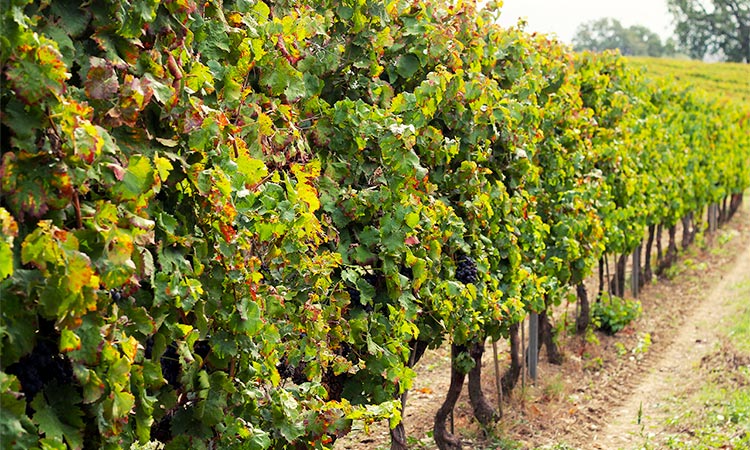
Va La has six-plus acres of vines yielding about 25 different varieties including some uncommon grapes like Charbono, Malvasia and Lagrein. More than a couple staffers tout the terroir of the site that draws from the mineral riches and micro-climates blessing the plot. At the highest point, a hilly nob, the land drops off in four directions to constitute a geological booty of rock-filled clay soils well suited for grapes.

Another factor is the steamy fog that emanates from a compost lot next door and drifts over the vineyard. Dubbed “the ghost” by the Va La crew, Vietri claims immeasurable benefit from its temperature-leveling effect. Case in point: The Nebbiolo grape, a lover of slopes and fog, thrives at Va La. “Nebbiolo is planted all over the world and it fails everywhere. It doesn’t even work in Italy,” said Vietri. Almost disbelievingly, he confirmed, “It loves this soil, it loves [the manure-induced phantasm].”

vala anthony

Stopping occasionally to clap away thieving birds that plague his vines, Vietri expounds on the winery’s portfolio. “We essentially make four wines [Silk, Prima Donna, Cedar and Mahogany]… they’re made in different amounts, which makes it difficult because we didn’t just divide the vineyard up four ways and say, ‘OK, equal parts.’ It’s about the soils, the declination to the sun, how the vines grow… They’re separate personalities and they make four completely different wines.”

The serious, painstakingly honed wines are the primary draw at Va La, though the supporting touches shouldn’t be overlooked. Expect a cheery and knowledgeable staff with a flair for cheekiness (a once-over of the website illustrates this point). Food is a central theme and tastings are complimented by locally produced cheeses and chocolate. The Wood Fired Pizza Truck is a regular on site, with customized pies to match the wines. Overall, the apparent intention is to make the visitor feel welcome to relax with good eats, friends and the surroundings – even past closing time if there’s a sunset to ooh over or a bottle to tap. As a bonus, the winery steers busloads of bachelorette partiers – and others of that stripe – elsewhere.

Va La’s bottlings, available solely at the winery, are micro-produced – less than 750 cases annually – and made for food. I sampled them all and have chosen a couple to spotlight here. I’ll also note that my friend and I enjoyed the Cedar and Mahogany selections with our truck-fired pizza wedges, and I purchased a bottle of the latter to cellar at home – which I expect to enhance the payoff.

2009 La Prima Donna “White Label” I loved this zingy, delicious white. During fermentation, Vietri kept the skins – which are red – in the juice for about three weeks, which imbued a golden, almost orange hue he referred to as vin orange. “Makes a much more rich wine,” noted Vietri. “I grew up making whites that way…I don’t care that it’s not clear and white and all that.” This is a standout, an alive and invigorating wine that should appeal to anyone who appreciates a racier style or is looking to take a walk away from the mild side. A blend of Fruliano, Malvasia Bianco, Petit Manseng, Pinot Grigio and Viognier.

2008 Silk This barely tannic lovely is the beneficiary of a gentle process. The grapes – Barbera, Corvina, Carmine, Merlot, Petit Verdot and Nebbiolo – aren’t pressed. Rather, they’re allowed to crush under their own weight in order to minimize tannic infusion from seed and stem damage. The result is a complex wine with a rich aroma, spice and a slight, pleasant funk that will blow off with some air. Aged in stainless steel then briefly kept in oak, it’s smooth as advertised, light and nearly pink. Silk is best when slightly chilled and decanted for an hour or two. Its gentle acidity would fare well with a Thanksgiving spread, fried chicken or fish in a pan.

In spirit, Va La is about “passing it on.” It’s word of mouth, generation to generation. As the wine farmer said, “Everything’s just a constant improvement.” He bottles that notion, year over year, and the staff hand sells it, one on one, taking time to explain the off-color white and the esoteric grapes. Visitors can buy into it or not. It hardly seems to matter as demand outpaces supply. Anthony Vietri will continue to work his land, obsessing over the leaf canopy, fiddling with petite, jerry-rigged tractors and pacing the lanes between his vines. Look closely and you’ll spot him, the optimist man in black, lording over the grapes he knows are meant for Chester County.

vala vineyards

Photos via Va La’s Facebook Page
Colomba di Pasqua

colomba

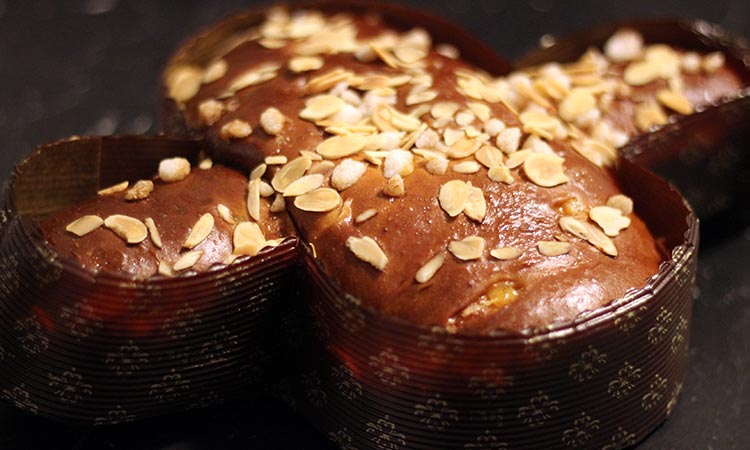
When I heard the April theme for #ItalianFWT was Easter (Pasqua in Italian), I had momentary delusions of grandeur of baking my own Colomba, the traditional Easter bread/cake that’s shaped like a dove. But I quickly came to my senses, as baking is not my forte and I generally lack the time and patience for such an endeavor. Thankfully, a fortuitous trip to my local Italian store, Carlino’s, brought me face to face with a freshly baked Colomba instead. For the low price of just $12.99, fruity, cakey goodness arrived without hassle or strife.


Though the history of Colomba di Pasqua – or Colomba Pasquale, literally “Easter Dove” – like so many other traditional Italian dishes, is disputed, it’s not hard to deduce that the dove shape (which, let’s be honest, this just barely resembles) represents peace. Also without dispute is the fact that Milanese baker Angelo Motta – best known for industrializing the production of Panettone in the 1920s – is responsible for the widespread enjoyment of Colomba.

Other than the obvious difference in shape and lack of raisins, Colomba’s yeast dough is similar to Panettone. For a layman, the flavor profile – candied citrus, mostly – and texture are virtually identical, though levels of sweetness can vary. For an added burst of flavor, the Easter Dove is traditionally topped with almonds and pearl sugar crystals.


Colomba’s arrival at table typically signals the end of Easter lunch — where it can be enjoyed straight up, or perhaps with some berries, whipped cream or chocolate. If there’s a knock on this treat (and Panettone), it’s that the insides dry out easily and can often seem stale. That’s why, for me, the best way to eat either is some butter and a few minutes on the griddle, or even as French Toast, if the particular loaf isn’t too sweet.

I know what I’ll be eating Easter Morning…

#ItalianFWT

This post was featured in the Italian Food, Wine & Travel group’s April theme, Easter in Italy. Here are the other posts: