Warning: Undefined variable $url in /home/undiscov/public_html/undiscovereditaly/wp-content/plugins/twitter-facebook-google-plusone-share/tf_display.php on line 365

New Wines in Old Country

New Wines in Old Country

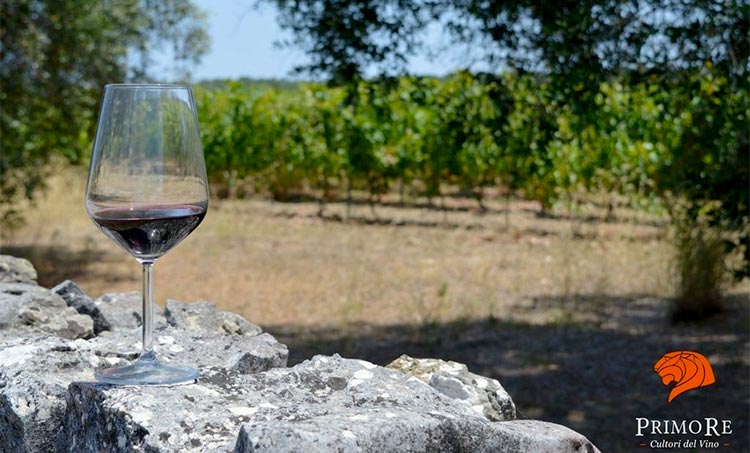
I recently connected online with Natalia Pezzone, who –along with her husband Nicola — is in the process of opening Cantina Primo Re, a boutique winery in the Salento region of Puglia that’s focused (for now) on indigenous reds. As so many wineries in Italy have been around for many years (sometimes centuries!), I thought it would be a good opportunity to learn about the trials and tribulations of opening a new one. Our conversation follows…

When was the idea for Cantina Primo Re originally conceived?
Since Nicola and I met in 2009 [in Argentina, where Natalia is from], we’ve always dreamed of having a small business to run together, and to avoid working for other companies. Because of Nicola’s strong passion for wine (that I quickly learned to share), it was an easy decision to open a winery. We had the [family] vineyards, we had the qualifications and international experience (Nicola holds a master degree in Viticulture and Enology), and we had the spirit. But we didn’t have the money!

A financial crisis was hitting southern Italy quite hard at the same time, and it was almost impossible to secure a job there. We traveled and lived in several different countries, working hard to save our money. As soon as we had enough, we moved back to Italy to realize our dream. It took us more than 5 years, but we did it! (Well, we’re almost there…)

As a non-Italian, what has your experience been with the infamous Italian bureaucracy?
Everybody thinks it is hard in their own country, but I’ve lived on several different continents, and can say without question that nothing comes close to Italian bureaucracy! Honestly, it’s the worst part of being in Italy.

Our wines are ready to go, carefully aging in barrels until the day we bottle and launch them in the market. Which was supposed to happen in August. Then in September. Then we had to say October. Do you know when we’ll be able to finally put our wines in the market? MARCH 2017. For several reasons – hard to understand and even harder to explain – we won’t have the authorization for starting the commercial activity until next spring. We HOPE.

A funny note: the only easy thing we had to do before launching our wines was getting registered by The Vegan Society. Do you know why was it simple? Because they’re British!!!!! Whatever step does not include Italians is a piece of cake!

cantinaprimore-view

Apart from the bureaucracy, what were your biggest challenges?
Another challenge for us was launching organic wines that were suitable for vegans and vegetarians.

We’re not the only ones that produce organic wines in Puglia, but we’re one of the few organic wineries in the area. It’s not the same to produce 20 different wines, of which one is organic, than to be completely organic. In our case, not only the vineyards but our olive trees, our vegetable lands, and even the aromatic herbs I grow in the garden. We produce ONLY organic food. I don’t understand these industrial wineries that launch an organic line of wines. What’s the point of growing one hectare of organic vineyard, if the other ones are not? It shows that they don’t actually believe in sustainable agriculture; they just do it for commercial reasons.

So the big challenge is to help our customers understand this difference, and how dedicated we are to all details and producing only high quality, healthy wines.

Why is it important to you to have vegan wines?
We shouldn’t have to talk about “vegan wine”; it’s like talking about “vegan lettuce”. Wine is a grape derivative, so shouldn’t it always be ok for vegans and vegetarians?

Yet we do, because many wineries – and this is something that a lot of people ignore – use additives and ingredients of an animal origin to produce wines: albumin, gelatin, isinglass, some lysozymes, etc. So a vegetable product, a derived from grapes, becomes something else. This forces us to demonstrate that our wines had none of these additives inside, because we want to ensure to everybody – not only vegans; we’re not even vegan ourselves – that our wines are made from grapes and nothing else. That’s why we registered our products with The Vegan Society, the oldest and only international association that created the word “vegan” in the ‘40s.

primo-re-grapes

Though there’s certainly a winemaking tradition in Puglia, one could argue it’s more known for bulk wines than fine wines. What is your take on the area as an up-and-coming spot?
We have in Puglia one of the largest areas of vineyards of all of Italy, and it’s true that traditionally wine growers have chosen quantity upon quality. Historically, many northern Italian wines were blended with juice from Puglia, which offers high natural sugar levels and adds structure, body and flavor to wine produced in colder areas.

This situation, however, started to change around 20 years ago, when many producers from Puglia began to understand that that our land has everything to produce high quality wines. Now there are many excellent wineries that produce only fine wines, and people are recognizing them more and more.  And we’re proud to be part of this movement!

You originally went to Veterinary School. Did you ever think you’d be opening a small winery in southern Italy?
Absolutely no! Wine wasn’t even that important for me until I met Nicola. What I did now is that my previous career wasn’t making me happy. I used to be a researcher who worked in laboratories, and staying inside a lab all day was killing me. I dreamed to work in the fields, with livestock, but it’s very difficult to get a job like that when you’re a woman, at least in Argentina.

One day I just decided that my life so far wasn’t the kind of life I wanted to live, and gave up everything. I quit my jobs and started a journey – literally and spiritually as well – that took me to live in different countries, with different people and made me realize that what I really wanted was to have something of my own to grow and take care of. Something that represents a real challenge where it’s up to me (or us, in this case) whether it succeeds or not. That’s what Primo Re Winery is today: a big challenge and the more important project so far in my life, where I can put all my effort and knowledge.

primo-re

What, if anything, from your previous career are you able to apply to this new one?
A lot of things! Obviously not my knowledge of medicine, but as a Vet I was quite atypical anyway. I used to write a lot of projects, papers, presentations, and learned English as all researchers must do. I’ve been writing since I was a kid and it’s one of the things I enjoy the most (as you can see….!). I also have strong computer skills and I’m very practical and love problem solving – a consequence of my previous career. Vets have to solve problems quickly and effectively, as there is rarely time to lose.

So for Primo Re, I created the whole brand concept, the graphic & marketing material, and developed the website and e-shop. I also manage all the social networks and wrote 100% of the words that you will read about us. We saved a lot of money actually because we split all the tasks: Nicola works in the vineyards and the winery, and I do all the brand and communication. So far it’s working!

What’s the most surprising thing that happened along the way?
We were amazed – and still are every day — by the great response we’ve gotten from people that believe in us and joined this project since the beginning. I’m talking specially about our Wine Club (“Cultori del Vino” — wine lovers), that we have developed through our social networks. It’s a different concept; a wine club where the emphasis is not on sales but on building a community of wine enthusiasts.

I posted things like “Do you love wine and writing? If yes, contact us“, and started to receive emails from the curious. I didn’t know what to expect, but I could not believe the large number of emails I received! I explained early and often that it wasn’t a job offer, so people that wrote me were just looking for fun, not money. I even met one of our film reviewers thanks to this post, and coincidentally she lives in a town near to mine. We’ve become friends.

There’s much more that you’ll see when our full website goes live; stories of wine and food, content about related books, music and movies. The key concept is that ALL this content is created BY wine drinkers themselves, not FOR them. This is not for selling wine, but for creating a club of people that shares our love for wine — 300 so far and we still don’t have a bottle to sell. I knew it was a good idea — I’m passionate about the sharing economy — but I’m extremely surprised and satisfied about how fast this idea was understood. I guess people like our ideas!

primo-re-natalia-nicola

#VirtualSagra

sagra amatriciana

Update (10/19): World Pasta Day 2016 (October 25) falls on the 2 month anniversary of the Central Italy Earthquake that shook the Rieti province and completely destroyed the historical city of Amatrice. A NYC-based company called Eatiamo is celebrating and helping to keep the donations coming… for more info, read their 5 Ways You Can Make a Difference.


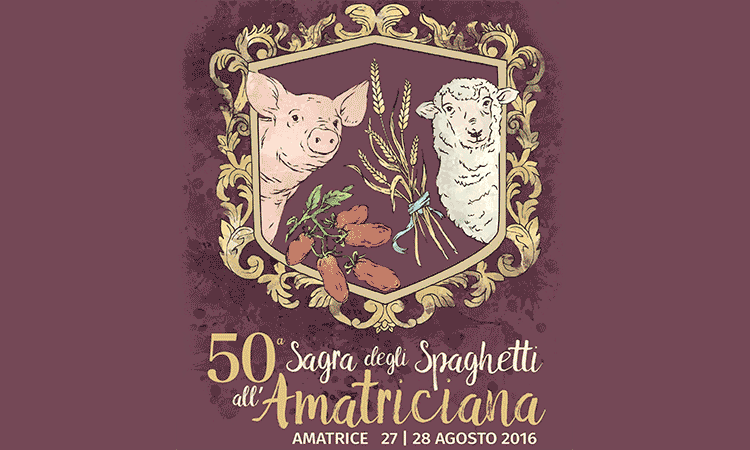
This weekend (August 27-28, 2016) would’ve been the 50th (!) Amatriciana Festival in Amatrice, the Italian town most affected by this devastating earthquake. To show our support, my idea is that we participate in a #VirtualSagra this weekend. Interested? Read the steps below and share with friends and contacts! Let’s make this happen!

The weekend is over and #VirtualSagra was a huge success! If you didn’t participate, that’s ok. The affected areas need long-term support, so please continue to cook Amatriciana and donate funds!

Steps to Join in:

  1. Donate to earthquake relief – suggestions:
  2. Cook Amatriciana, or order it at a restaurant — This great post by Judy discusses the technique
  3. Open any Central Italian red wine (or appropriately-themed beverage)
  4. Take photo
  5. Share as widely as possible on social media with #VirtualSagra

#VirtualSagra Coverage:

This Tagboard shows some of the social media posts supporting the cause.

Bloggers came together to celebrate and donate. Here are a few of the great posts that covered the event:

Plus, these media outlets promoted the fundraiser:

Thanks to everyone who donated!

The White-Headed Stepchild

pinot bianco

Reviewing my recent piece on Pinot Grigio’s lack of respect, Pinot Bianco might rightfully take issue with its cousin’s penchant for hogging the attention. While neither can boast widespread critical acclaim, at least the gray mutation of Pinot Noir is a best-seller. Bianco, on the other hand, is often relegated to background variety status.

Rarely grown in its native region of Burgundy, Pinot Blanc — as it’s called in most of the English-speaking world — has found more of a home in the Germanic regions of Alsace, Austria and throughout Germany. The majority of wines made here, as well as in the US in this style, are soft and round, sometimes off-dry in a way that might be described as Riesling Light. Jancis Robinson describes the grape as “useful rather than exciting,” as well as “gently rather than demandingly appealing,” having less character than the already tofu-like Chardonnay, as well as low body and acidity.

(I’ll wait while you rush out to buy some.)

All that said, one can understand why my expectations are relatively low when given the opportunity to taste through a bunch of Bianco from Italy’s Alto Adige, perhaps the only region in the world where the grape is highly regarded.

The first bottle I pop, the Cantina Terlano Nova Domus 2011, absolutely explodes with complexity, including honey, melon, minerals and, most notably, herbs. Because this particular wine is a blend (60% Pinot Bianco, 30% Chardonnay, 10% Sauvignon Blanc) — despite the fact that it is mostly Bianco — I find myself initially attributing the big flavors to Chard (melon) and Sauv Blanc (herbs). Still, the immensity of herbal flavor is a head-scratcher, if there’s only a splash of Sauvignon.

nova-domus pinot bianco

As I delve further, moving on to pure varietal bottlings, I begin to realize that this herbal, mineral quality is actually derived from the Bianco itself. In wines such as the Elena Walch Pinot Bianco 2015, this quality is intense, powerfully rippling through every aspect of the fresh, vibrant wine.

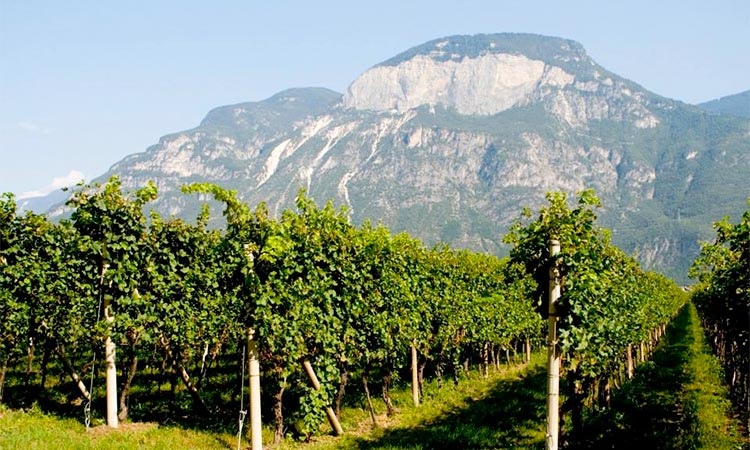
So what’s the deal here? How is this notoriously taciturn grape showing such exuberance and vitality? I turn to Cantina Terlano’s Judith Unterholzner for answers. “Especially when Pinot Bianco is cultivated in an Alpine climate, it can be surprisingly fleshy and rich in its herbal, honeyed yellow-fruit aromas and flavors,” she shares. In recent years, it turns out, the best Alto Adige winemakers have shifted their Bianco vines upward, moving from the valleys and lower slopes (which made more typical, tasteless wine) to upper elevations, starting at 1300 feet and running up to 2500. A reduction in yields as well as the introduction of guyot vine training (in addition to the traditional pergola method) has also helped make an impact.

In other words, much of the secret is location. “The unique aroma profile of our Pinot Bianco is due to the terroir of Terlano, which is responsible for scents of chamomile but also fresh flower meadows,” says Unterholzner. “The rich nose as well as the full and complex mouthfeel is markedly influenced by our eruptive soils, which also cause a powerful salty persistence.”

In the Alto Adige, there’s a seriousness regarding Bianco here that isn’t evident elsewhere. “Winemaking in Terlano traditionally involves the use of wooden casks,” continues Unterholzner. “Special emphasis is also placed on the sur lie method, with the wines often left to evolve on the yeast for years before being bottled, where they’re aged even further. The focus is on developing the complex secondary and tertiary aromas, which creates a specific character and complexity.”

pinot-bianco-grapes
© Udo Bernhart

Wines for Aging

It’s also fascinating how tightly-wound these wines are when young. Huge acidity — which often isn’t the case with Pinot Bianco from elsewhere — as well as those aggressive herbal and saline notes. The aforementioned Terlano Nova Domus, though quite complex and nuanced already, seems to be holding back, even at 5 years old. Though it can be decanted and enjoyed now, the winery suggests drinking no earlier than 8 years from the vintage date.

St. Pauls Passion Pinot Bianco Riserva is another beast, the 2012 offering a dank, feral nose, herbs and rocks belying slumbering fruit. I’d love to try it again in 3-5 years. Cantina Andriano Finado, a 2011 bottle, begins to showcase the benefits of age, with notes of honey and tropical fruit emerging to balance out the savory flavors.

“The aging potential of our wines is due to a combination of the high mineral content of the soils, old vines growing in complete harmony, carefully managed vineyards with low yields per vine, and the rigorous selection of healthy and fully mature grapes,” continues Unterholzner. “At several tastings back to the foundational years, our whites have proved to be liquid time machines, leaving their mark in memory as the supreme expression of a mineral terroir that is unique in this world.”

terlano-pinot-bianco
© Udo Bernhart

The Happy Ending

With wines this complex and intriguing, it’s hard to not wonder why more winemakers aren’t taking Bianco seriously. “Other regions have not believed in Pinot Bianco as an expressive variety with the ability to age,” agrees Unterholzner. “Thus it is difficult to compare our mature whites with those from other regions.”

Then again, it may just be one of those romantic, idealistic stories. Pinot Bianco, a rogue from Burgundy, sets off in search of itself, and finds an unlikely home in the Dolomites. Hallmark Channel here we come.

“Pinot Bianco has always been one of our main varieties,” concludes Unterholzner. “It’s a powerful expression of the terroir that brings the grapes to maturity in Terlano. Delicate, and above all minerally, Pinot Bianco wines are very much our trademark and Terlano’s ambassadors of longevity.”

Gray Matters

castelfeder-pinot-grigio-vineyard

Pinot Grigio. One of the most well-known Italian grapes, it just might be the least respected among connoisseurs. This typically cheap white is, of course, inarguably one of the best-selling in the US, but rarely receives oenophile attention.

“It doesn’t really taste like anything,” says the wine specialist at my local store when I bring it up. This opinion is not a solitary one; it stems from the tide of bulk wine that flows out of the “delle Venezie” IGT (mostly Veneto and Trentino), made by wineries like Cavit, Bolla, and Mezzacorona. Pale and insipid, this juice can offer some freshness but not much else.

On the Esquire show Uncorked – which follows several Master Somm candidates as they prepare for their exam – one guy is shown rinsing with Grigio in place of brushing his teeth the morning of a blind tasting, so as not to throw off his palate.

At my local wine school, instructors suggest using Pinot Grigio to rinse the glass when transitioning to a new wine, as it will neither dilute the next pour like water nor affect the flavor like another wine. (The best rinse is actually the 2nd wine, but that’s another conversation.)

“Pinot Grigio is perceived by the market as a watery, super-light wine,”  Max di Lenardo of Friuli-Venezia Giulia’s Di Lenardo Vineyards confirms. “The grape has been successful, so now there are a lot of industrial wines that don’t taste like the real thing. In our region,” he continues, “we don’t have big cooperatives like this. We are a small area and almost all of our Pinot Grigio is family-owned, estate-bottled wine.”

Interestingly, Pinot Gris – the same grape, with French styling – receives none of the disrespect of its Italian twin. It’s quite highly regarded, in both Alsace and in Oregon. People rarely call it boring or plain; it can feature in some of the most exciting whites from those regions.

Despite carrying a healthy dose of skepticism for years, I recently find myself wondering if Grigio can ever match up to Gris. Is Italy’s version a lost cause, or can it actually be good?

My awakening begins with a bottle from Castelfeder in the Alto Adige that’s full-bodied and luscious, turning any and all previous notions of the Grige on their head. Of course, most of my experience up to this point has been of the Santa Margherita mold: well-known but not particularly good.

I start to seek wines made in the ramato-style – a copper-hued wine that’s been fermented briefly on its skins, imparting some of the color, flavor and tannin. Produced primarily in the Friuli-Venezia Giulia sub-region of Collio, they’re not only surprising in appearance but offer a completely different gustatory experience when compared to the stuff we all know and, er, don’t love.

Di Lenardo, who produces the ramato Gossip, says he enjoys vinifying a wine in this “special” way that the industrial cellars won’t, as well as helping to educate consumers that the Pinot Grigio grape is actually quite dark in color (Grigio means gray).

pinot grigio grapes

He also notes how this method can produce “bigger texture” as well as “distinctive aromatic power.” And while Gossip does feature varietally typical flavors of stone fruit and tart apple, there is absolutely more. Feral notes of hay and fuzzy peach showcase in the aroma, and a distinct bitter almond note coincides with the finish. Though softer than I’ve come to expect with Grigio, a nibble of tannin adds balance.

One of the finest ramato bottles I come across takes me out of Italy, across the border to Slovenia, specifically the region of Štajerska, which – although towards the eastern side of the country — is still as close to Collio as Verona. The winery Pullus (aka Ptujska Klet) has been around for a little bit, according to the label, which claims, no joke, “since 1239.” Regardless, they produce a killer ramato, lighter than Gossip but also sharper, redolent of strawberries and raspberries followed by a mineral and herb-tinged finish. With no disrespect meant to the surely wonderful folks of Štajerska, this is one fine Italian Pinot Grigio.

Though distinct, the ramato-style in and of itself neither equates to bigger or more serious. Take the wines of Fruili’s Attems. While their ramato offers up rose-like fruit alongside a touch of tannic dryness, the overall impression is gentle and elegant. Attems’ non-ramato Pinot Grigio – which is darker than plonk yet still a white wine – on the other hand, is rich and lush, showcasing deep fruitiness (tangerines!) alongside nutty complexity and mouthwatering salinity. Wow.

attems pinot grigio
Image via Attems FB page

Heading back up to the Alto Adige, Peter Zemmer Pinot Grigio is yet another standout. Perhaps the palest of the mentioned wines, it defies that with bold flavor. Huge herbal aromas act as an Alto Adige calling card, but opulent peach, pear and melon bring balance. Experiencing this abundant fruit’s coexistence with vibrant freshness, it’s hard to imagine this grape ever developing its reputation for blandness.

So why does it? Judith Unterholzner – who represents Alto Adige wineries Terlano and Andriano – suggests this phenomenon is mainly due to exaggerated yields. “Whenever producers fail to reduce quantities harvested per hectare to get higher quality primary fruit, Pinot Grigio cannot demonstrate its full potential,” she notes. “We cultivate our Pinot Grigio with the same production philosophy like all the other wine; by taking care of the vines. This creates a product of remarkable quality, balancing varietal typicity with the Alpine brightness our region is famous for.”

It also, of course, requires higher costs. “Low yields are the main reason for the high quality,” Unterholzer continues “which clearly has to have a certain price, since we invest on average 500 hours of manual work per hectare to get the best out of the vineyards.” Don’t fret, though. It’s still only about $20/bottle. Tough to compare on paper with Cavit at $8, perhaps… until the wines are tasted.

This story is, in the end, hardly surprising. Should we, for example, estimate the potential of California Cabernet by bottles of Woodbridge and Barefoot? Hardly. Nor should we judge Pinot Grigio based on bulk garbage.

Me, I began this quest intrigued yet skeptical about the potential of Pinot Grigio. Now here I sit, an unabashed fan. Are you finally ready to open your own mind?

Recommended Bottles:

  • Pullus Pinot Grigio
  • Di Lenardo Gossip Pinot Grigio Ramato
  • Attems Pinot Grigio & Pinot Grigio Ramato
  • Peter Zemmer Pinot Grigio
  • Castelfeder Pinot Grigio
  • Donna Alma Pinot Grigio Dolomiti

Top image via Castelfeder Facebook page.

#ItalianFWT
This post was featured in the July 2016 Italian Food, Wine & Travel group’s Twitter chat on orange wines. Check out a list of other posts from the group:

Ferrara’s Tender Torte

Ferrara’s Tender Torte

I was researching a story on build-your-own pizza joints in the bustling college town of West Chester, PA., stuffed from cheese and dough but desperately needing a coffee fix. After typing “espresso west chester” into my phone, sure enough, a gelato joint beckoned from just around the corner, pouring local favorite La Colombe. (It was bitterly cold and I wasn’t hungry, but that doesn’t mean the idea of gelato wasn’t also tempting.)

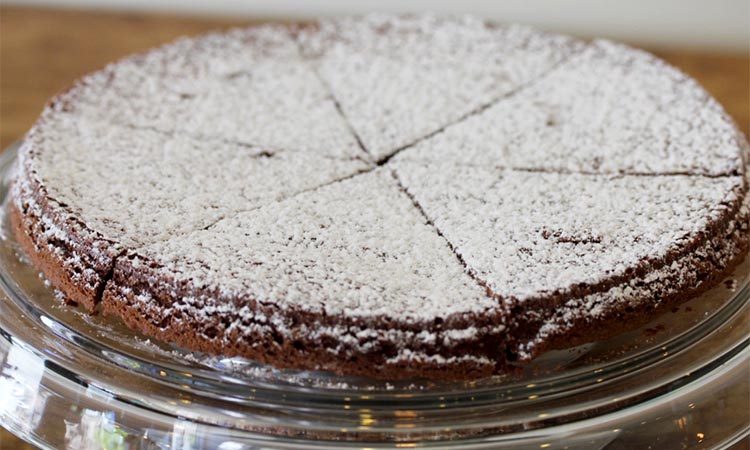
While waiting for my coffee, I perused the other sweets on offer at Gemelli, a self-described “dessert cafe”. And though the regular suspects were all there – cannoli, panna cotta, biscotti, etc. – what dominated my attention was the Torta Tenerina. A thin chocolate cake dusted with powdered sugar, it was noted as being a specialty of Vincenzo’s hometown (the baker, I presumed). After slugging my espresso, I procured a piece to go, taking care to keep its mascarpone drizzle cool until I could enjoy it later.

Truth be told, with regards to birthday-style cakes, I’m not a fan. Too sweet. Too airy. But Torta Tenerina isn’t like that at all. Perhaps closer to a brownie — if one had to find a comparison — the texture is unique. Literally “tender cake,” it somehow manages to taste rich and chocolatey while remaining soft and light.

torta-tenerina-closeup

I soon returned to Gemelli, this time with an appointment to get to know its owner, Vincenzo Tettamanti. Born and raised in Ferrara — a city of about 130K that lies an hour north of Bologna – he moved to the states in 2009 to be with his future wife, an American. Though initially a digital marketer (as he was in Italy), his daydreams lured him towards the gap between traditional Italian fare and Italian-American food, alongside a growing realization that he possessed both the knowledge and passion for building a more authentic experience in the Philly ‘burbs. “Around here, Italian dining is chicken parm, Alfredo pasta, Caesar salad,” he says, noting foods from disparate areas. “In Italy, it doesn’t work like that. Every region has its specialties.”

“I wasn’t ready for a full restaurant,” he continues. “Instead, I wanted to build a place that’s like something I’d find at home, where people come to hang out, have coffee, talk with friends. Walk into any piazza in Italy, there’ll be cafes with chairs out, serving gelato and pastries. That’s what we’re going for.”

gemelli-cinammon-biscotti

That said, Tettamanti’s philosophy is expansive enough to apply broadly. “In America, pizza and ice cream are junk food,” he says. “In Italy, that’s not the case. For pizza, as an example, there’s fresh mozzarella, dough that’s been rising all day so it is light and airy, and tomato sauce. That’s it. It’s a good meal.

What we make here, it’s the same thing. These are the ingredients: chocolate, sugar, butter. I don’t have bags of other stuff. Everything’s from scratch. Sure, there is sugar, maybe some mascarpone, but we prepare each item with fresh, whole ingredients, so they are not as bad for you. And I’m not just making that up because I sell it. It’s the Italian way.”

The gelato certainly is delicious. Tettamanti’s training and focus on quality above novelty shine through with every flavor. Even as one who tends to stick to the cioccolato, I can’t help but be tempted by the freshness of local goat cheese & raspberry or ricotta & fig varieties, for example.

gemelli-gelato

But let’s get back to the Torta Tenerina. It too is simple, with just a few ingredients. “I mean, it’s a chocolate torte,” Tettamanti jokes. “But it is also traditional and specific to Ferrara, and – especially because many Americans are used to the food of Southern Italy – it’s nice to showcase my region.”

The cake’s initial incarnation (under the name Torta Montenegrina) celebrated Elena Petrović, Princess of Montenegro, shortly after her fin-de-siècle wedding to Italian king Vittorio Emanuele III. While many of the queen’s new subjects referred to her as the “sweet wife with the tender heart,” the Ferrarese one-upped everyone else by producing a dessert to match. Languidly soft with a melty interior, some still call it Torta Tacolenta — “sticky cake” in the Ferrarese dialect — due to its proclivity to cling to lucky tasters’ palates.

My initial attempt at replicating Tettamanti’s technique was not particularly successful. Delicious, yes, but also dry and crumbly. I then made a few modifications to a common online recipe to get a moister, more flavorful version. In place of mascarpone cream, I served it alongside salted caramel gelato.


Mike’s Modified Tender Cake (Gluten-Free, if desired)

Ingredients:

  • 200 grams dark chocolate (~70%)
  • 65 g unsalted butter
  • 40 g extra virgin olive oil
  • 100 g sugar
  • 2 eggs, separated
  • 1 T white flour (or 1-2T almond flour)
  • 1 T cocoa powder
  • Sprinkle coarse sea salt on top (optional, before baking)
  • Sprinkle of powdered sugar (optional, after baking)

Process:

Preheat oven to 300F

Melt chocolate and butter together, over very low heat or a double-boiler. Take off heat and mix in EVOO.

tenerina-meltychoc

Beat egg yolks with sugar, then mix that with the chocolate.

Tettamanti adds almond flour next, keeping it gluten free. (Wheat flour is traditionally used, but as there’s only a small amount, it’s easy to substitute. You can also use some cocoa powder to amp up the chocolate flavor.)

After whipping the egg whites to stiff peaks, fold them gently into the batter to maintain the fluffy structure. (This is the most difficult and crucial step.)

tenerina-mixing

Put into a springform pan and bake for 25 minutes, and it’s done.

tenerina-bake

A sprinkle of powdered sugar adds visual appeal but isn’t necessary.

torta tenerinatorta tenerina

For more info on Vincenzo and his dessert cafe, visit http://www.gemelligelato.com/

On Decanting

On Decanting

We’re sitting in the Còlpetrone tasting room when I ask the question. It’s a beautifully designed space – marble countertops, bright, open air feeling, thanks to the plentiful windows overlooking the Umbrian countryside, alongside various hues of natural wood. It echoes the modern, state-of-the-art feeling I got touring the winery’s backstage area, as if no expense was spared to show that this winery is with the times, on the cutting edge.

But back to my question. Even though I had already visited several wineries in the area, and this debate is often on my mind when discussing wine, for whatever reason I asked Còlpetrone’s Marco Castignani first. Maybe it was the huge flavors of the 2010 Sagrantino di Montefalco. Perhaps it was the fact that we were comparing a 2006 “Sacer” Sagrantino with the 2010, and the ’06 was, amazingly, tighter.

Do you typically decant these wines?

Marco chuckled. He’s got one of those infectious smiles, full of passion and enthusiasm that’s hard to evade. He shook his head, pensive. “I think…” he started. Then paused, still smiling. I could tell he was looking for a diplomatic way to respond. “This is a decanter,” he finally stated, holding up the glass. “I don’t think you need anything else.”

Fast-forward a few weeks; I’m back home in the US. The Montefalco Consortium is holding a virtual tasting via UStream. There are tweets and chats going on, people all over asking questions as the winemakers taste through and discuss various aspects of Sagrantino. Someone participating in the chat asks the question.

Do you recommend decanting?

It’s reasonable to ask. Pretty much anyone who does would decant Sagrantino, the most tannic of all grapes, especially when young, fierce and possibly unyielding. I’ve heard of people decanting them all day. But what do the winemakers do?

As soon as the question was asked, Marco’s smile emerged. He shook his head. I had to wonder if he was recalling our recent conversation. He looked to his right, however, seeking out a fellow participant to save him from having to, perhaps, repeat himself.

Liù Pambuffetti jumped in. She had a similar opinion – that it’s preferred to spend time with the wine as it evolves, in the glass. She discussed how much she enjoys following a wine over several days, seeing its progress, how it will evolve and open. The other winemakers at the table nodded in agreement. It’s a very winemakery answer.

That said, it doesn’t do a lot for the average consumer. Are we going to follow a wine for days, just to see how it evolves? Or are we popping it open to share with family and friends for dinner? Though the winemaker perspective makes sense, especially from someone who needs to know how a wine is evolving as it ages, in a way it avoids the real question:

If a bottle is going to be consumed in one sitting, should it be decanted?

There’s a reason I described the Còlpetrone winery the way I did, in the first paragraph. All throughout my Umbrian visit, I noticed how much the winemakers and wineries knew about the latest technology in winemaking. Some are more, shall we say, rustic than others, while some are slick and polished, but the winemakers themselves are all keenly aware of the latest tips and tricks, the proven ways to make the best wine from superior grapes.

When it comes to serving and drinking wine, on the other hand, Montefalco seems more conservative. Umbria in general is known as a place that’s slow to change, it being the only region in all of Italy that’s neither bordered by water nor another country. They do things the old way here. Which may be why everyone shuns those hoity-toity decanters.

I walked into a wine shop in the center of Montefalco, on a 90+ degree day in September. The room was not air conditioned. I noticed that the finest wines – the pricey Sagrantino, the older vintages, were all stored on top shelves, out of reach from grabby tourists. But how long have they been there, I couldn’t help but wonder, steaming in this heat? Though these temps were out of character for mid-September, it was just recently August, and July. This was the norm. And these brilliant wines were likely taking a beating.

Another night, we dined at one of the town’s finest restaurants. Housed in an old stone building, it seemed like the type of place that’d have a natural cellar perfect for wine storage. But our bottle of Sagrantino arrived warm to the touch, the product of another humid night and open flames in the kitchen.

Europeans sometimes shake their heads at Americans with all our wine refrigerators, but most of us don’t have old, naturally controlled cellars to take advantage of. We should all be able to agree, however – thanks to UC Davis studies, among others − that wine ages far faster in warmer temperatures, and that it just doesn’t taste as good when it’s served warm.

Does this have anything to do with decanting? Maybe it’s conceptually the same, the old way versus the new way. In this case, however, there’s no definitive study that proves the worth of decanting (or lack thereof), so instead the debate rages on, in tasting rooms, message boards and blogs like this. I’m not sure I got any closer to an answer in Umbria.

Personally, I am a believer in decanting, especially for young, bold wines like Sagrantino. Though there isn’t any scientific backing, based on my own anecdotal evidence, it helps the wine open and develop more complexity.

But what do I know?

Do you decant? Let us know in the comments.

Featured image by Didriks