Warning: Undefined variable $url in /home/undiscov/public_html/undiscovereditaly/wp-content/plugins/twitter-facebook-google-plusone-share/tf_display.php on line 365

Il Ciavarro di Ripatransone

ciavarro

Perhaps the most fascinating and wonderful aspect of studying Italian cuisine is how it varies so widely, not only region to region but town to town. As one explores the countryside, uphill, then downhill, one hilltop battlement to the next, there’s always some delicacy, secret recipe or traditional dish to discover.

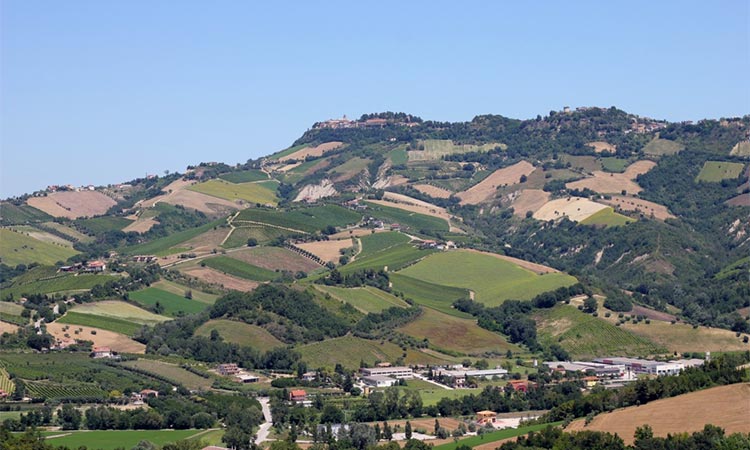
As recounted in Positively Piceno, I recently spent some time in Ripatransone, a hill town located in southern Marche, beautifully situated between the Adriatic coast and the inland mountains. Here I discovered lu ciavarre (or ciavarro), a traditional vegetable dish that speaks to the tradition and toil of this small area.

Made primarily from a variety of legumes and grains, lu ciavarre, like so many other recipes, evolved out of necessity. In the spring season, as new crops begin to produce, farmers needed to make space in their stores, so they cooked a simple stew of the previous year’s leftovers. (The word ciavarro, in the local dialect, essentially means a set of different things with each other.)

Historically, ciavarro was eaten on May Day, or May 1st, a longtime European holiday or festival to celebrate the arrival of spring, now Labor Day in Italy. Today, it’s prepared in town during La Passatella, a food & wine walk that takes place on some summer Friday nights.

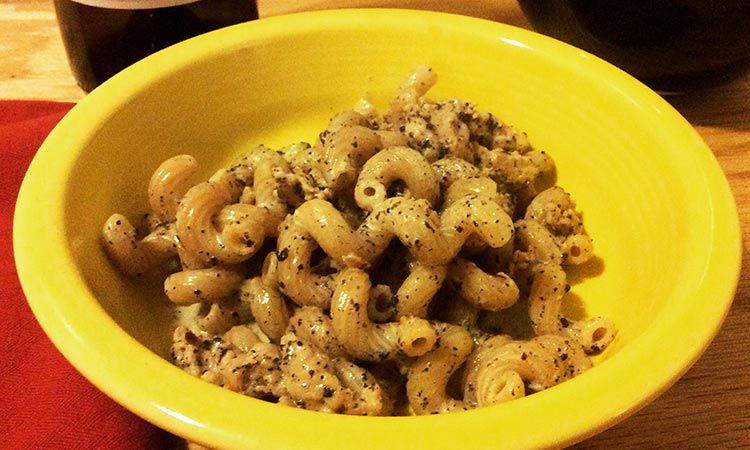
My own first taste took place at Ristorante Lu Cuccelò (the snail), a small pizzeria near the center of town. We went for lunch thinking pie, only to find that the lunch menu didn’t include it, something that’s relatively common in Italy and (I suppose) sensible considering the heat of a wood oven at midday. Instead, I found myself digging into a hearty, soul-affirming bowl of ciavarro, blown away by its depth of flavor and comforting essence.

ciavarro from lu cuccello

Though I wasn’t aware at the time, Lu Cuccelò owner/chef Paola is known around these parts as an expert in the dish, and she was kind enough to share the technique with me.

Basic ingredients:

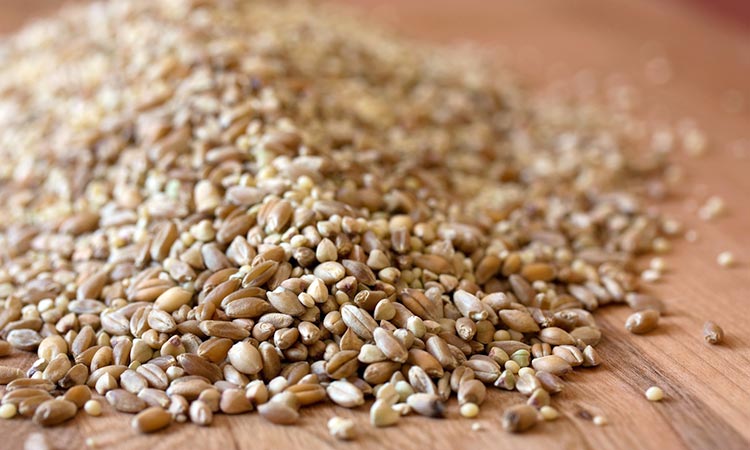
  • Grains such as bulgar wheat, barley, polenta, corn, farro.
  • Legumes such as chickpeas, field peas, peas, kidney beans, white beans and lentils.
  • Paola suggests about 50g of each ingredient per person, 200g for 4 people.

Other ingredients:

  • 200gr of lean pork (Many recipes call for bacon or “pork rinds”, though ground pork can also work well)
  • 400gr soffrito (mirepoix; finely chopped onion, carrot and celery)
  • 200ml dry white wine
  • 400g peeled tomatoes
  • Some recipes also call for adding a bit of garlic, bay leaf, chili to the sauce

Technique:

The legumes and grains should be soaked in different containers and boiled in different pots, cooked to their own directions. (In a pinch you can use canned, cooked beans.) Save some of the bean water to use in the sauce to achieve the proper texture.

  • Brown pork in a large stockpot with some EVOO
  • De-glaze pan with white wine
  • Add tomatoes (crush if not already)
  • Add cooked legumes and grains (plus some extra water)
  • Simmer for 15-30 minutes to thicken and combine

Serve with warm bread, hard cheese and a nice Rosso Piceno (such as Rupe Nero Gold).

Here’s a video from an Italian-language cooking show of Paola preparing the dish:

Redefining Avignonesi

avignonesi vineyard tuscany

For most of her life, Virginie Saverys followed her predestined path: working in the family shipping business – one of Belgium’s most prominent – as a lawyer, brokering large mergers and acquisitions. Today she’s a leader in Italy’s biodynamic, sustainable wine movement. How did she go from there to here? It’s a story worthy of Diane Lane.

The first time I went to Italy I was 18, and I immediately fell in love with the country, the people and the language. As a matter of fact, during my student years I spent almost all my holidays in Italy… and once I was married with kids, I continued to visit because I had developed friends all over the country. That’s when I discovered Tuscany; I knew that one day in my life I would have something in this region.

Around 2003, we bought a ruin near Montalcino. We began to renovate but that of course takes time. In 2006, I resigned from my daily activities at my company because I was bored. So I quit, figuring something else would come my way. I definitely wasn’t planning to stay home and do nothing.

When the house in Tuscany was ready, we had a party and I invited friends of my partner’s from all over the world (it was his 50th birthday) as well as some Italians I knew. One person who came was the owner of Avignonesi. I remember, he was sitting to my right, talking about all the problems he and his brother were having, that they weren’t agreeing anymore. A few weeks later he called me and said his brother wants to sell his shares, which were 30%. I saw this as an investment in real estate mainly, because it was a small percentage, and I saw it as a way for me to learn about something that I’ve always liked, namely good wine.

So in spring 2007 we purchased 30%. Both my partner and I being lawyers, we made a very strict shareholders agreement, so despite being minority owners we had a lot of veto rights, etc.

Well it would not be Italy if, just a few months after we purchased, our partner was not respecting our end of the deal, and we had to go around the negotiating table again. Basically there was winery owned by Avignonesi in Puglia, but we agreed that winery would not be part of our share, because it was losing money, and we thought it was enough for us to focus on the problems in Tuscany. But the owners were not holding up that agreement. So we negotiated again, and left with 90%, the plain being that the current owner would stay on for another 5 years or so, time for him to pass on his knowledge to us on how to run a winery in Tuscany.

But that didn’t work out either… and, to make a long story short, in 2009 we found ourselves as sole owners of the winery. On day one a bunch of people with legacy knowledge left the company and we were now running this winery while basically knowing nothing about doing so. It certainly made for a fascinating first few years.

Fortunately we speak Italian, otherwise it would’ve been impossible. As would be expected, despite all the due diligence we had done – which was mostly on the financial side, not of the land, the soil the quality of the wines – it turned out we had been told a lot of lies.

Because the brothers had been fighting, they hadn’t been investing any money in the company, and both were very good at sucking out whatever they could for their own benefit. They were happy to buy new cars for themselves on the winery, but no new tractors, equipment etc. Though the brand was well established, it was going downhill due to lack of investment.

It was a huge effort for us to put Avignonesi back on track. Drastic changes were needed. But I am a very determined person, and when I want something I will do whatever is in my power to obtain it and have it the way I want it.”

virginie saverys avignonesi

One of the very early decisions Saverys made was to move to organic viticulture, which essentially involved a reboot of the entire vineyard and all of its processes.

I’ve always tried to buy organic food, to live healthily, and when I saw how my tractor drivers and people in the fields had to dress to protect themselves, and when I saw how dead the soils were – like a moon landscape – I knew something needed to be done.

When you are a wine producer, you are not making an essential product for people, it is an item people like to have but do not need. And we owe it to this planet to make it better by not polluting it for no reason. It’s a question of respect for the land. I had this amazing chance to buy a beautiful property in Tuscany, and I felt I owed it to future generations, whoever will run this after I am long gone, to do things right.

The other very important element for me is the people who work for us. Again it is a question of respect. These people give the best of their years to Avignonesi, they work very long hours. I owe it to them to provide an environment that is as healthy as possible.

Last but not least, there’s the consumer who will be drinking our wine. We must show them respect as well, so they know what to expect from a bottle of Avignonesi, that there is no residue of pesticide in the wine.

Another key change was to move to 100% Sangiovese for Avignonesi’s Rosso and Vino Nobile di Montepulciano wines, a progressive choice for the region.

Around the year we took over, the Vino Nobile consortium decided to increase the percentage of other varietals allowed in VNdM from 20 to 30%. Basically this was a request from one of the larger producers who had too much Merlot in their vineyards, and rather than replant, they wanted to be allowed to use that. I thought this was a very stupid decision. The Brunello winemakers had just voted NOT to allow other grapes in their wine, something that was applauded by the industry and the press, and here we go in Montepulciano deciding to increase it to 30%.

It’s more of a challenge for the winemakers to make 100% Sangiovese, I know, especially in a bad year when the grapes can have trouble ripening. But I like challenges. Even in 2014, a cold and wet year, we have a very nice wine, with none of those vegetal green afternotes. If you work well in your vineyards and in your winery I think you can always make good Sangiovese. We do of course have different estates around the region that we can blend together, which is a great luxury.

After we decided to go 100% Sangiovese, others began to follow. If this trend continues, we can start to send a clearer message about our region’s wine profile. We have wonderful terroir that’s very different from Brunello and Chianti, so we can make our own unique expression of Sangiovese. And for me – of course I will say this, but – it is the brightest. the most elegant. Brunello is a man’s wine, rough. Vino Nobile, when well made, is a more delicate, elegant expression.

I want Avignonesi to play a leading role in putting VNdM to the place it belongs in the wine-loving community. There’s enormous potential here. It’s also a way to drink great Sangiovese at half the price of Brunello!

avignonesi-vineyard tuscany

As an outsider, Saverys introduced a massive amount of change over a short period of time, an amazing accomplishment in such a change-averse place like Italy. I asked her about that experience.

People in general don’t like change, and Italians hate change more than any other nation in the world, so convincing them to do things differently is painstakingly difficult. On the other hand, I’ve spoken to other producers who are also going biodynamic and while they’ve reported having a very hard time convincing their workers to do this, I haven’t had a single problem. I’ve never heard my workers say they prefer how it was before.

The administration, the bureaucracy in Italy, however, seems out to kill every entrepreneur in this country, so I learned quickly that our improvements would take a long time. As one example, we need to build a logistics center where we’ll manage our bottling, packaging processes, as well as hold our aging cellars, etc. I started negotiating for this in July 2013, and was told it would take a few weeks to get the paperwork together, and, with a little bit of luck, the warehouse would be ready by harvest 2014. We signed the preliminary agreement to buy the land in April 2016! Almost 3 years later, and we still have to obtain a building permit, which they are now telling me will take 6 weeks.

There’s a nice expression in Italy – la speranza muore per ultimo – which means ‘hope dies last.’ They always believe. When their car maker says a car will arrive next week, they believe the salesman. Me, I understand the car will be there maybe in a month, if they’re lucky. Everything is like that. So the Italians who work for me, they believe! I keep saying guys, forget it, we won’t have that permit in 6 weeks. They say we’ll have it by the summer, and then we can start building. Me, I think if I have it by Christmas I’ll be happy.

It’s a wonderful country, of course. That’s why I am here. You just have to take the problems with the great things.

Looking forward, Avignonesi hopes to strengthen their position as a sustainability leader, and expand the brand to new regions and audiences.

I would love to reach the point where we will not need to use any copper or even sulfur in the vineyards. Since 2011, we’ve been experimenting with copper alternatives, and each year new products come out. So in a few years time I’d like to be able to say I am not using a single ounce of copper in the vineyards anymore. I think we will get there.

We’re also working on a second brand, that will be led by my daughter, aimed at a younger crowd. The branding will be more fun, and the wines straightforward. Still organic, well-made, dry wines, that’ll say ‘produced and bottled by Avignonesi’ on the label. But more for people that are just getting into wine, learning about it, want to drink the bottle they bought at the store right away.

Wines to Try

avignonesi-bottles

In general Avignonesi wines under Saverys have moved in a more modern direction, with emphasis on pure fruit, clean flavors and bright acidity. (Earlier vintages, especially of VNdM, show a more savory emphasis.) That said, they still can be characterized as definitively Tuscan, torch bearers of the new Montepulciano terroir.

Cantaloro
An easy-drinking, food-friendly wine made from “a blend of Italian and international varieties”. Great pizza and pasta quaff.

Rosso di Montepulciano
Saverys suggests drinking this lighter-bodied red slightly chilled, and matches its vibrant freshness with it with a wide variety of vegetarian cuisine, spicy fare, grilled fish, even oysters.

Vino Nobile di Montepulciano
Bold fruit flavors include notes of cherry and strawberry, with hints of leather and herbs as it opens. Smooth tannins pair with tingly acidity that should allow for aging.

Desiderio
Though there’s a wisp of tar in the aroma, this Merlot-based wine is all about fruit. Raspberries, dark cherries, plums and even blueberries all make an appearance, followed by notes of chocolate and paprika on the extended finish.
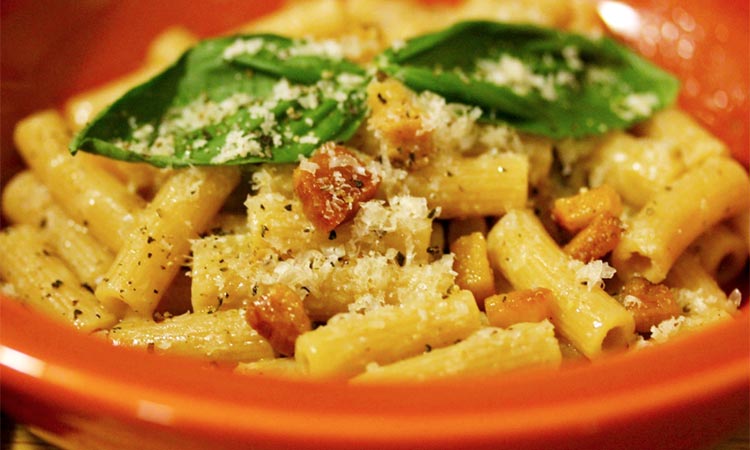
Pasta alla Norcina

pasta alla norcina

A silver lining related to the tragedy of recent earthquakes in Central Italy, though devastating, has been the food world’s response to said events, promoting historic local dishes and raising money for the affected towns. I was particularly impressed by the response to my #VirtualSagra post, and immensely enjoyed watching all the photos and stories as cooks around the world made Amatriciana for Amatrice.

Since then, two additional quakes have struck the same area, most notably near the Umbrian hamlet of Norcia. Uniquely located on a wide, flat plain at the base of the Apennine mountains — the central spine of Italy’s mainland and a hotbed of earthquake activity — the town’s position is based on proximity to historically important mountain pass.

Though easy access to the Sibillini National Park has helped build a deserved reputation for scenery and outdoor activities, Norcia is even more famous for its cuisine. A popular area for hunting, it produces some of the finest boar-based salumi (known internationally as norcineria) and truffles in all of Italy.

In keeping with our idea of promoting traditional dishes for the continued #VirtualSagra — such as Rigatoni alla Gricia, the basis for Amatriciana — here we highlight a recipe from Norcia that warrants wider acclaim. I discovered it in a cookbook called Umbrian Home Cooking by Wendy Aulsebrook, the chef and food educator at Antonelli San Marco winery in the Montefalco area. An Australian expat who’s lived in the region for years, Aulsebrook has collected a plethora of everyday recipes from local home cooks, highlighting the simplicity of Italian cooking. Paging through the book, Pasta all Norcina jumped out in particular, well, because of its ingredients. Pork sausage. Truffles. Cream. How could I go wrong?

I was particularly intrigued by a note at the bottom of the recipe, offering the substitution of truffle sauce for the actual tubers. Though rather easy to come by in Umbria, truffles are not exactly abundant in Pennsylvania. My local Wegmans, however, does carry at least two brands of that pesto-like truffle sauce, and I’m always looking for new ways to use it. (My preferred brand is La Rustichella.)

blacktrufflepate

Unsurprisingly, The recipe delivers, producing a rich, hearty pasta perfect for the cooler weather. Obviously not light on calories, it is satisfying without sitting too heavily in the stomach.

In terms of wine pairings, the traditional truffle match in Umbria is the white wine Grechetto, but the addition of sausage here means this lighter quaff probably is not the best choice. Instead I went with a Montefalco Rosso, a blend of Sangiovese and Sagrantino that’s distinctly Umbrian and relatively versatile with food.

RECIPE

Ingredients for 4

Champignon Mushrooms (or another kind) 200g
Garlic clove 1
Black Truffle Spread 2-3 T
Olive Oil 2 T
Italian Pork Sausage, removed from skins 250g
Chili Flakes, pinch
Dry White Wine 100ml
Cream 125ml
Short extruded pasta, such as penne 320g

Technique

  1. Cook pasta to al dente per package directions
  2. Clean mushrooms and chop finely
  3. Cook mushrooms & garlic in pan with 1 T oil, over medium heat for 7-8 minutes, then remove from pan
  4. Cook sausage & chili in same pan with the remaining oil, until sausage is browned, about 10 mins
  5. Add wine and cook until it is evaporated
  6. Add cooked mushrooms
  7. Add cream and heat until the sauce just comes to a simmer
  8. Remove from heat. Stir in truffle paste.
  9. Immediately add cooked pasta to sauce, mixing in a bit of pasta water to desired consistency.

Thanks to Wendy Aulsebrook for the recipe. For those interested in a copy of her cookbook, you can email her via Wendy at Antonellisanmarco.it. And be sure to stop by the winery and kitchen when in Umbria.

Donate to Earthquake Relief

Here are some worthy suggestions for your consideration — every euro counts!

Further Reading

For even more about Norcia’s rich culinary scene, check out Norcia: Gastronomic Delights and Tragic Earthquake on Paradise of Exiles.

Positively Piceno!

ripa-griffoni

Even as the proprietor of a site called Undiscovered Italy, Ascoli Piceno – the southernmost province within Marche – was not particularly high on my list of must-visit Italian locales. Despite off-the-beaten-path cache, it’s simply not on the radar for many Americans. Luckily for me, I befriended a wine importer named Jack who specializes here because his family hails from the region. He also happens to own an apartment in the little hill town of Ripatransone that was, fortuitously, available for my family to use.

Though there’s certainly more of Italy that I haven’t seen than have, I would consider myself relatively well traveled on the boot. Most of the big cities are covered, as well as many of the famous secondary spots, like Tuscany’s Val d’Orcia and the Amalfi Coast. I don’t share this to brag, only to point out the importance of this next statement: I was completely unprepared for the beauty that awaited us in Marche.

From Jack’s rooftop terrace at the top of Ripatransone’s hill, a glance to the left shows blue as far as the eye can see, the lovely azzuro of the Adriatic. To the right looms Gran Sasso, the highest peak in the Apennine mountains that form the country’s spine, looming over the rolling Tuscan-style hills that dot the area that’s been recently ravaged by earthquakes. It’s all here, especially from a culinary perspective. Fresh fish from the sea, mountain meats and cheeses, hillside wines. And gorgeous doesn’t even begin to describe the views.

ripatransone-view

Relishing Ripatransone

Affectionately known as Ripa, it’s a medium-sized hill town, far smaller than an Orvieto or Montepulciano but large enough to be a destination for those passing through the area. Inhabited since prehistoric times, it was first unified as a town in 1096. Though it lacks the grandiose central piazza of more famous countryside towns, strolling the cobbled streets and medieval walls is a lovely pastime, as is pausing at the central cafe for an espresso, pastry or gelato and gazing up at the main cathedral.

And, for those who revel in giant ball of twine or Cadillac Ranch-style attractions, Ripa has its own: il vicolo più stretto d’Italia, the narrowest alley in all of Italy. This tiny little passageway located just off the town’s largest piazza is just 43cm wide at the entrance, narrowing yet further to 38cm at its thinnest point. Though it might seem silly, squeezing oneself down it is a fun, free and memorable activity for all ages.

ripatransone-sign

ripatransone-alley

Nearby Towns

A few km down the hill on the sea is Grottammare, a more modern town that wouldn’t be particularly memorable if not for its lovely shorefront. Marked by a wide promenade that’s perfect for walking, biking or just a leisurely stroll, it’s also great for people watching during the high season, when beaches packed with Italians suggest that this place is hardly undiscovered in Italy.

If crowded beaches don’t sound like a good time, head to Chalet Fabio towards the southern end of the walkway, just past the red clay tennis courts. Rent an umbrella and chairs from this family-friendly spot and spend a lazy day staring out at the sea, bathing in the calm waters and enjoying Fabio’s shellfish on the terrace.

Not far from Ripa is Offida, another quaint hill town worth a quick visit. Highlights include the magnificent church of Santa Maria della Rocca, whose brooding facade is accentuated by the ravine that falls drastically off the other three sides. (Which is, amazingly, said to have occurred after the church was built.)

Further afield is the town of Ascoli Piceno itself, known for travertine churches.

Wineries to Know

Though there are, not surprisingly, many wineries in the Ascoli Piceno region, for now I’ll focus specifically on those located in and around Ripatransone.

View of the Adriatic from Le Caniette

Perhaps the finest – in terms of wine – is Le Caniette, run by Giovanni Vagnoni, a fourth-generation winemaker. Though all the wines here were delicious, one standout was Io Sono Gaia (non sono Lucrezia), a name created by Vagnoni’s younger daughter. “Our Passerina is called Lucrezia, after my eldest daughter,” he tells me. “So people were always asking Gaia, my youngest, if she was Lucrezia. When I asked her to design a label for my new wine, this is what she gave me.”

iosonogaia

Cinabro, a red made exclusively from Bordò — an ancient biotype of Grenache that still grows in Marche — is the most notable red from Le Canniete (among a cadre of greats). Beyond the fascinating story of this grape — which I’ll save for another time — it is an elegant, nuanced and beguiling wine that’s both unique and unmistakably Italian.

The area’s important area winery is Tenuta Cocci Grifoni, former home of the late Guido Cocci Grifoni, the man known for bringing back the Pecorino grape from the edge of extinction and the driving force behind the growing Offida DOCG focused on said grape.

A brilliant glass-enclosed tasting room and balcony greets guests, who can sample Cocci Grifoni’s excellent line of Pecorino and red blends alongside locally-made salumi and other tasty snacks. We felt particularly honored to taste the first vintage (2013) of Guido Cocci Grifoni Pecorino, made from grapes grown exclusively in the “mother vineyard” where Cocci Grifoni began his Pecorino experiments.

griffone-bottles

Lastly is Colli Ripani, the large co-op in the region that produces both widely-available, supermarket-level wines as well as higher-end bottles worth seeking. Though not a particularly exciting place to visit (for the most part it is just another industrial wine factory), they do offer regular dinners and other wine events. Otherwise, be sure to order a bottle at one of the many cafes and trattorias in the nearby towns. In particular, the muscular Leo Ripanus red can hold its own with plenty of Napa Cabs, at about a quarter of the price.

#ItalianFWT

This post was part of the November #ItalianFWT twitter group, hosted by Danielle Oteri, on the topic of unique towns of Italy. Check out the other posts below:

Harvest in Montefalco

enologica-montefalco dancers

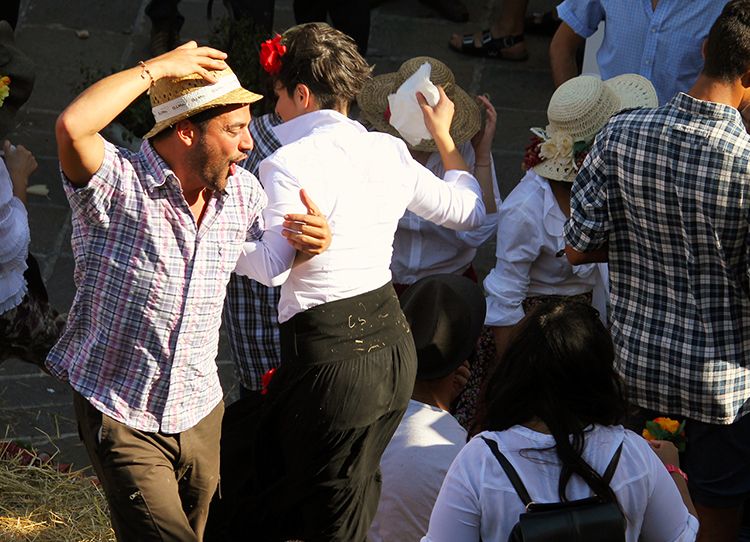
As I weave through the packed Piazza del Comune in the center of Montefalco, joy – in the form of food, wine and their spoils – engulfs and consumes me. To my right, an old man is slicing prosciutto by hand from the leg, while hungry onlookers wait their turn for a slice. A few tractors over (that’s right, tractors), townsfolk sandwich salumi between wedges of fresh bread, handing out makeshift panini as fast as they can make them. As I spot an eager man slurping soup, even while the steamy sun beats down upon us – probably the only way to get a vegetable on this day – a woman thrusts a makeshift platter of biscotti in my face, desperate for takers.

festival1

A few yards away, tweens in flowing burlap dresses with sunflowers in their hair dance innocently, alongside an impromptu acoustic guitar jam. Onlookers reach for cameras to document younger girls pressing grapes the old fashioned way, rose-colored juice trickling between their toes into nearby pitchers. Sweaty boys engage in an intense soccer match with an invisible ball, darting in and out of longer legs. The teenagers, they’re roaming the backstreets, celebrating a day of freedom. Finally the old folks, wizened faces showing the toll of many vendemme, yet incapable of fully hiding that immortal sense of wonder.

It’s the culmination of Enologica 2015, the region’s annual harvest festival. A weeklong celebration that includes wine tastings, cooking demonstrations, seminars and more. The early part is more geared towards press and trade, with serious presentations, panels – one of which, on Sagrantino around the world, included yours truly, representing the ol’ US of A – and the like.

As interesting as tastings and discussions are, the jewel of the event is clearly the vendemmia, an old school, traditional festival that brings out locals and tourists alike. (Having just spent the week getting to know this amazing town, I must, of course, admit to looking down at the day-trippers with disdain.)

enologica montefalco vendemmia tractor

At 3pm on Sunday – actually a few minutes before, the only thing that ever started on time in Italy – tractors begin to enter the square, one by one, each representing a locality of grape growers in the region, 18 in all, plus one horse-pulled carriage and several donkeys. They’re decorated uniquely and carry anywhere from a few members of the tribe to a whole bunch of revelers.

As they creep into the square, horns blaring and motors revving, each tractor tries to outdo the next with bravado, cheer, daring or creativity. Singing is more about vocal histrionics, loud and enthusiastic if not on key. From our vantage at one of the cafes that line the square – where we camped out early to secure a spot (not free but worth it) – I notice a young boy’s terrified-yet-excited face as he sits on his dad’s lap, leading the tractor into town for the first time. Then comes a man we affectionately nickname “the Don,” sporting a shit eating grin, arms spread wide riding on the front of the tractor as it rolls in.

test

enologica montefalco vendemmia tractor

The towns with many children tend to be more mellow, sharing smiles and waves, while those without kids prove more raucous, “clinking” their plastic cups, slurring words (at 3pm), swaying back and forth. It’s a wonder if these people make it to sundown.

enologica montefalco vendemmia tractor

Once everyone’s had their turn to preen and showboat, food is served – no charge for anyone who’s there – as described above, alongside liberal amounts of Sagrantino wine (also gratis). The square becomes a wild, wonderful, free-for-all, onlookers and explorers sampling a variety of fare, enjoying a sunny, warm day, and sharing in the revelry. It’s a simple celebration, hearkening back to days of yore, a community celebrating its very lifeblood, and successful survival of another year.

Surely other towns in Italy (and beyond) welcome the harvest in a similar manner, but, standing in the middle of this mass of people, sharing smiles, cries of joy, and a shared purpose, it’s hard not to think — at least for a moment — that this is the most important one.

enologica

This post was my entry in the #ItalianFWT group’s #FallinItaly theme for October 2016. Check out the other entries below:

Rigatoni alla Gricia

pasta alla gricia

#VirtualSagra‘s recent spotlight on the eternal Spaghetti all’Amatriciana got me thinking about the holy trinity of Roman dishes: Amatrice’s famous contribution of course, alongside Carbonara and Cacio e Pepe. All quintessentially Roman with their balance of simplicity and flavor, classic recipes that naturally attract a certain amount of fervor and devotion. (And don’t even get me started about the additions!)

On my last visit to Rome, however, I tried another typical Roman pasta for the first time: Rigatoni alla Gricia. A dish that some — quite sensibly, in fact — refer to as the foundation for both Carbonara and Amatriciana. Others call it Amatriciana in Bianca. Me, I see it more as a cross between Carbonara and Cacio e Pepe. Either way, it simple and comforting yet rich, intense flavor fits the mold quite well.

Gricia is, essentially, Cacio e Pepe with guanciale. Carbonara without egg. Or Amatriciana without tomato. (I’ve fallen into the same trap!) In actuality, the latter is probably the most accurate, since many believe it was the precursor to the red sauce, before tomatoes were abundant available in the region. The name is also thought to come from Grisciano, a town just north of Amatrice.

guanciale

Gricia involves only a few ingredients. Pork (preferably guanciale, though pancetta is a reasonable substitute), Pecorino cheese, black pepper and pasta. That’s all. So simple, yet so luscious. As the Romans do best.

Another famously Roman aspect of this dish is controversy over its ingredients. Onions? White Wine? Italians take these seemingly minor ingredient suggestions as sacrosanct. Last year, when celebrity chef Carlo Cracco suggested adding onions to the dish on MasterChef Italia, it became headline material across the country. (It didn’t help that he’d, horrifyingly, suggested adding garlic to Amatriciana just days before.)

guanciale2

If we put those blasphemous additions aside for the moment, the technique is quite simple:

  1. Cook pasta
  2. Brown the guanciale over medium heat. (If you like you can add some EVOO or lard to get the process going, though it isn’t entirely necessary.)
  3. Add black pepper to pan.
  4. Add a ladel of pasta water to the pork.
  5. Mix in some grated hard Pecorino (I prefer an aged version other than Romano, which can be too salty.)
  6. Add pasta and cheese and mix. Use more pasta water if it sticks.
  7. Serve with more cheese on top.

As with our findings related to pairing wine with Carbonara, looks can be deceiving here. Just because it’s light in color doesn’t mean it’ll match to white wine. The fatty pork and the aged cheese suggest — nay, demand — a hearty red. Any quality Central Italian should do the trick; in our case, an IGT rosso from Montefalco matched quite well.

rigatonia alla gricia