Warning: Undefined variable $url in /home/undiscov/public_html/undiscovereditaly/wp-content/plugins/twitter-facebook-google-plusone-share/tf_display.php on line 365

Pairing Pesto

Pairing Pesto

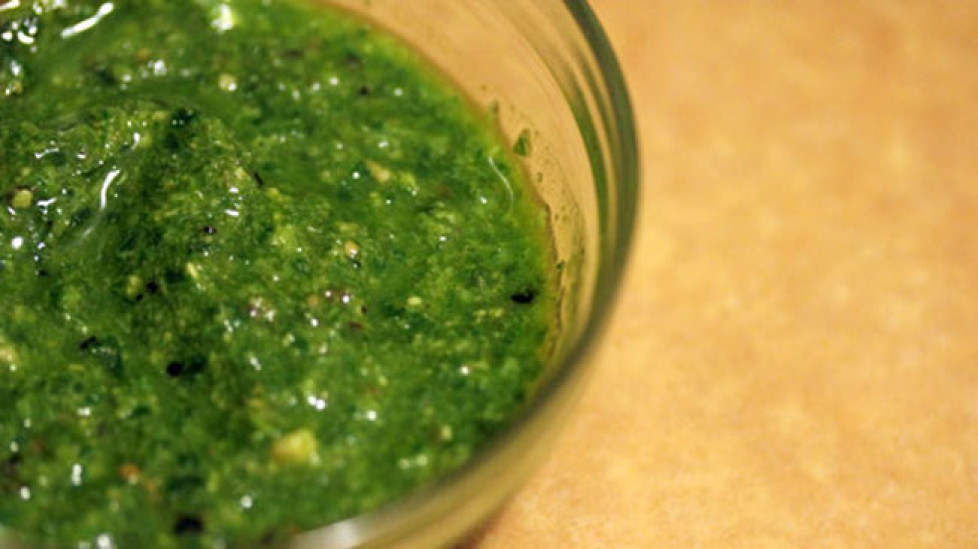
One of my absolute favorite things about summer is fresh basil from the garden. I use it widely, but mostly with fresh tomato sauce, pizza, sandwiches, and, of course, pesto. But, it’s also getting to be that time of year when I notice that my basil plants are getting a bit old and tough, and that they probably should have been harvested weeks ago. Luckily, it’s not too late. Though using young, soft leaves that are shorter than three inches at the spine is best for authentic Genovese pesto, giving older leaves a quick blanch and soak in ice water can still bring deliciousness. (If you’re in the Philly area, you might also check out my Great Pesto Challenge piece over at Small Food.)

Pairing pesto with wine can be difficult. (For clarity, we are talking about a traditional pesto of basil, garlic, pine nuts, EVOO and Parmesan.) The sauce is both pungent, with assertive flavors from the garlic and cheese, and delicate, as basil has quite a bit of nuance. Generally, whether looking for white or red wine, young, fruity, aromatic wines are far better than anything aged, overripe, oaky, or flabby. Good pesto is bright and fresh, so you want to find a wine that exhibits similar traits. Of course, another key consideration is what you are serving with the dish. A simple pasta dish dressed with pesto, for example, will probably work better with a white wine, but the addition of heartier ingredients such as sausage or tomatoes make red a viable option.

argiolas-costamolinoAs is the case for most Italian food, the safest bet with any pairing is to follow the rule “if it grows together, it goes together”. Genoa, pesto’s homeland, is in Liguria, a small region on the Mediterranean coast just northwest of Tuscany. The indigenous white grape here is Vermentino, which makes lovely wines that offer rich flavors of tropical fruit but also bring great acidity, matching the dual personality of its sister sauce. Ligurian Vermentino is not exactly easy to come by in our area, but Sardinia’s Argiolas makes an excellent option – Costamolino ($14.99) – which is widely available and delicious for the price. Of course, other aromatic northern Italian whites can also work well, including Ligurian Pigato and Bianchetto Genovese, plus Arneis, Gavi and Soave.

On the red side, we can look to the simple red wines of neighboring regions Tuscany and Piedmont for good pesto partners. Think a young, inexpensive Chianti or Barbera that is bright and fruity, with perhaps a touch of earth.

If Italian wine is not your thing, we can use the same principles to pair international varieties to the sauce. Chardonnay’s tendency to be oaky and buttery, for example, means it is probably worth avoiding, unless you know you are getting an acidic, un-oaked version. Sauvignon Blanc, on the other hand, has that bright, herbal character that could work here. Southbank Estate Sauvignon Blanc Marlborough, for example, features a strong citrus note that could bring out the best of the pungent sauce. Vibrant whites from Northwest Spain, such as Albarino and Godello, are also worthy of consideration. The Martin Codax Albarino ($14.99), which is widely available, has a touch of oak for softness (as the grape can be very austere), but enough acidity to cut through any richness.

New world red wines can be difficult because of their tendency to be ripe, concentrated and oaky, all of which would clash with pesto’s soul. Looking to France, however, could yield dividends, especially young, fresh Pinot Noir, Cru Beaujolais (try a Henry Fessy), or Loire Cab Franc (maybe even one from Long Island), all of which bring great acidity and herbal character. In California, a cool-climate Zinfandel or Pinot Noir with similar characteristics could pair nicely, especially if some meat is involved.

Lastly, let’s not forget about Rose. It goes with everything, especially over the summer. Not much more to say there.

What have you paired with pesto? What worked and what didn’t? Comment below.

Killer Vees: Vacation and Verdicchio

positano coast

Right about now, Italians are gearing up for Ferragosto on August 15, a holiday of ancient origin that signaled a time of relaxation and feasting at the end of summer’s grueling agricultural labors. These days, it’s the green light for the start of vacation season. Across the land, restaurants and shops close down for a week or two. Seaside resorts are mobbed, and hotels packed, by hedonistic sun worshipers and revelers. The usual frenetic pace of traffic collides with critical mass on super highways and winding two lane roads. La dolce vita swaying to club beats.

So what are Giovanni and Chiara drinking during those languorous dog days and nights? Birra, especially the twenty-somethings. And, of course, vino – by the glass, bottle, or liter –  most of it white. Of the scores of varietals to choose from, it’s a safe bet that an ocean of Verdicchio will be consumed.

The signature grape of Le Marche may have been cultivated in the region as early as the 8th century B.C. Typically, it has a distinct, sometimes tart, “green” quality (hence its name from verde) of sour apple, herbs, quince, even a touch of lime. Savory, resin accented white fruit flavors can be discerned, and it often finishes with a pithy almond skin bitterness. Its two designated (DOC) production zones are centered on the towns of Jesi and Matelica, hard by the Esino River as it meanders to the Adriatic.

Jesi comprises hills of limestone and clay in a temperate, dry micro-climate barely 20 miles from the sea. The natural conditions slow down ripening and promote higher levels of acidity. Here, Verdiccchio tends to have lusher fruit flavors laced with salinity and minerals and a more floral aromatic profile.

Matelica is farther inland in a higher altitude Apennine basin swept by cool continental air flows which create the diurnal temperature variances that delay the grape’s maturation. Generally, Matelica wines are more aromatically complex, with concentrated and persistant flavors supported by a noticeable structure.

The good news is that you don’t have to be in Viareggio or Rimini, or even on vacation, to enjoy the simple pleasures of a well-made Verdicchio. Here’s an All Star lineup of well- regarded producers whose wines I’ve sampled recently:

sartarelli-verdicchioSartarelli “Tralivio” Castelli di Jesi 2007 ($17.49)
A lush, beautiful  expression of the grape, but not if you’re put off by bitterness in a white. Loads of almond and citrus pith set the tone for white stone fruits and melon, mildly tart citrus and stony minerals. A mouth filling classic, a day at the beach in a glass.

Brunori “Le Gemme” Castelli di Jesi Classico Superiore 2009 ($12.99)
Traditional Jesi style, aromas of ripe pear, minerals, salinity. Lush, concentrated white fruits bolstered by fresh acidity and a bracing rush of minerals that leads to a mildly bitter, nutty finish. Never loses its focus.

Ampelio Bucci Castelli di Jesi Classico Superiore 2009 ($26)
Restrained nose that is more floral than fruit-driven.  Tart citrus and green apple flavors dominate a smooth entrance, and a touch of almond scent emerges. A round, full texture doesn’t hold back a steady flow of savory minerals and lemony acidity. The finish is lively, clean and lengthy.

Stefano Mancinelli Castelli di Jesi Classico 2010
Well crafted, as are all the wines from this estate. White flowers and peaches up front. Somewhat similar to a Matelica but not as structured, though the invigorating saline acidity is all Jesi. Has a refreshing stony quality from start to finish.

Fontezoppa Matelica 2010
Atypical of this DOC in terms of density and structure. Waves of citrus and grapefruit scents accented by lemongrass and orange rind. High level of tart acidity in a chalky, citric mouthfeel. Sort of a crossover of the DOCs.

Colle Stefano Matelica 2012
This may not have the fullness and structure of its neighbors, but it’s packed with ripe, pure white fruit-green apple aromas and flavors. Tangy acidity enlivens every sip, adds a zippy bite to the texture. Flavors never fade, thanks to the persistent acidity. Close in style to a Jesi, but has more layers to peel and a fuller feel on the palate.

Bisci Matelica 2011 ($12.99)
Classic Verdicchio nose and sensory profile. Cleaner and more focused than the Matelica norm. All the requisite flavors have their say – peach, pear, green apple, tropical melons – complemented by their corresponding aromas. Stays fresh and keeps you wanting more. Almost as good as a Sartarelli.

Alto Adige Ascension

abbazia-di-novacella

The Geography geek in me gets excited whenever we talk about Northeastern Italy, an area rife with annexations, takeovers and other conflicts of land ownership. The region – especially Trentino & Alto Adige, also known as South Tyrol – is one of the areas of Europe that has been passed back and forth so many times that languages and culture are permanently blurred. Much like Alsatian France is distinctly German, this area of Italy takes the lead from Austrian culture, as it was part of the Hapsburg Empire through World War I. In fact, so entrenched is the German language that it often takes prominence over the Italian on wine labels.

That said – as Frank is fond of saying – there really is no such thing as “Italian Wine”, because there is so much variation in both climate and culture as you move around the boot. Still, Italian white wine often fights the stigma that it all tastes the same, and doesn’t taste very good. Northeastern Italy is certainly to blame for that, with much bulk, inert Pinot Grigio coming out of the Veneto region, but that’s still only one perspective.

In Alto Adige, for example, although Pinot Grigio is widely grown and vinified, there’s a more serious focus on creating quality cool-climate white wines. Though many can be light and crisp due to the southern alpine growing conditions, there’s variety and quality here that is worth getting to know.

Recently I had the chance to drink through a number of wines from Abbazia di Novacella, a 12th century Augustinian abbey located less than 30 miles from the Austrian border in Alto Adige. The abbey – which, interestingly, is listed on Google maps as “Kloster Neustift”, the German name – has been crafting wine for more than 850 years, but has more recently garnered acclaim via their very own 2009 Italian winemaker of the year Celestino Lucin.

As the whites that I tried were vinified in stainless steel, there was a unity in style with regards to intense aromas and mouth-watering acidity of the cool climate grape, however they did also offer some noticeable variations in style.

The Muller Thurgau (SLO in PA, Code 71089, $20.69, minimum 12), for example, is probably lightest, with a bright, citrusy flavor and easy-going personality that screams summertime white. In contrast, the Gewurztraminer (only the 1996, strangely, is available in PA, SLO 59249, $16.49, min 12) is full-bodied, with lush notes of tropical fruits and Asian spice, perfect for Fall.

Novacella’s  Sauvignon (not available in PA) offers that austere, grassy note that Sauvignon Blanc is known for on the nose, but is nicely ripe and juicy on the palate. If the cat pee of Sauv Blanc turns you off, this will be no different, but it’s a very nicely done old-world style SB for those who appreciate the mouthwatering properties.

Lastly was the Kerner (SLO Code 527816, $19.99, min 1) a hybrid grape from Riesling and Shiava that drinks like a dry riesling – great aroma, bright acidity, and perhaps just a touch of sweetness on the palate.

In the end, each wine offered something different, yet all were mouthwatering and delicious, and I’d highly recommend picking up wines from AdN or others in the Alto Adige region if and when you come across them.

There are a few Abbazia di Novacella wines in PA stores, though your best bet may be the SLO (Special Liquor Order) program, with codes noted above. Wine Works in Marlton, NJ (just past Cherry Hill), Wine Library in Springfield, NJ (delivers to PA) and Wine.com (delivers to PA) also carry AbN wines.

Full disclaimer: Review samples of these wines were provided.

Cantine Rialto La Contessa Rosso 2011

la-contessa-rossoThe vagaries of wine sales often have us finding new wines at times that don’t really mesh with when one might actually want to drink said wine. It’s July, and though it seems to rain every darn day, it’s also pretty hot. Still, a few times I’ve  managed to talk myself into a red wine that’s too big/complex for the season, only to dream of drinking a Rose over dinner.

Cantine Rialto’s La Contessa, a Merlot blend featuring 10% each of Sangiovese and Sagrantino, falls into this category. Though it can certainly be enjoyed now in some primo air conditioning, it’s full-bodied nature and prominent tannins are better saved for the temperatures and foods of fall and winter. Of course, never knowing how a particular wine will sell in the system, I’d suggest picking up a few bottles now and stowing them away in a cool basement corner or wine fridge for later enjoyment. (It should drink well for at least 5 years.)

As for the wine itself, in true Umbrian fashion, it is rustic, a little funky, and delicious. The nose is an interplay of earth, spice and dark fruits, which continues for the most part into the palate. Though this saw some new oak, it is understated and adds a nice complexity. The blend only features 10% Sagrantino – Umbria’s great grape – but the spice, tannin and truly unique character of one of my favorite varieties is hard to miss on the finish. Overall, this is a great wine for $13.99 (in PA), and one that would probably sell for at least double the price were the label to say Tuscany instead of Umbria.

Bisson U Pastine 2010

bisson-u-pastineSummer is upon us, the next heat wave only an AccuWeather forecast away. Time for those of us who love Italian wine to uncork bracing, acidity-driven whites from the coastal hills. Maybe a Verdicchio from the Adriatic shores, a Tuscan Vermentino or Vernaccia, perhaps Campania’s ancient grapes such as Falanghina, Fiano, or Asprinio. Definitely Sicilian Carricante and Grillo. How about something from Liguria, the maritime arc that runs from the Cinque Terre to the French border?

The problem is that very few Ligurian wines find their way stateside. A Vermentino or Pigato here and there, but what of a varietal such as Bianchetto Genovese? I’d heard of the “little white grape from Genoa”, and it was probably in the field blends I consumed while visiting the region years ago, but that meant that its inherent characteristics were lost in the mix, and remained a mystery.

To find it in a PLCB store was on the order of discovering a 1936 Margaux in your grandfather’s cellar.  I’d had two other Bissson wines and was familiar with the name Pierluigi Lugano, but was ignorant of the fact he was the first to produce a monovarietal Bianchetta. His two estates near the Golfo di Tigullio DOC showcase his dedication to preserving indigenous Ligurian grapes. Alongside more recognizable names can be found Albarola, Bosco, and Ciliegiolo. The region’s steep, rocky terrain necessitates all vineyard work be done manually. Bisson wines, both red and white, are fermented and stored in tank to maintain those qualities and specific fruit profiles unique to each varietal.

In local dialect, u pastine is a parcel of land chosen as ideal for viticulture. Lugano hit the mark with his site selection. The nose has a tinge of saltiness, wildflowers, and that breezy, terroir-specific aroma of scrub pine-thyme-fennel Italians refer to as macchia. It’s full bodied for a white, but not in a wood-fueled Chardonnay sense. Richly textured and vaguely tropical sensations of white peaches, pear, and melons are invigorated by bursts of salinity and minerals. Bisson U Pastine 2010 has attitude and a presence that isolates it from the usual shelf hogging suspects that have come to represent Italian white wine. I’d rather have a sip that captures Liguria in a bottle at $21.99 than pay a dollar more for yet another overpriced Pinot Grigio (do the initials S.M. sound familiar?). Not to mention that the latter would have been a pale companion for the plate of sardines grilled with lemon and breadcrumbs accompanied by orzo tossed with lemon oil, toasted pine nuts, and sage from the garden, and a bowl of assorted olives that was devoured al aperto. That and the Bianchetta? Love at first bite.

Celli Bron & Ruseval Sangiovese-Cabernet 2010

celli-bron-ruseval-sangiovese-cabernetOne of my biggest gripes with the Chairman’s Selection program is that when I find a wine to love, the odds I’ll see the next vintage of that same wine in PA are miniscule. This is, I suppose, the problem with relying on the power of bulk and opportunistic buying.

That said, it does seem recently that certain producers show up repeatedly in the program, even if the wines themselves differ. Celli, a producer from the oft-overlooked Italian region of Emilia-Romagna, is one of those producers. Last year, I absolutely loved their Le Grillaie Riserva Sangiovese di Romagna (we’ll call it SdR for short), a Chairman’s Selection that was rustic and earthy, but featured bright fruit and excellent balance, so when I saw another wine from Celli enter the program – this time, the Bron & Ruseval Sangiovese-Cabernet ($19.99) – I of course jumped right on it.

In contrast to the SdR, which was 100% Sangiovese, the Bron e Ruseval is a 60/40 mix of Sangiovese and Cabernet, or Celli’s version of a SuperTuscan. (SuperRomagnan?) As such, it’s more modern in style, with a velvety and luxurious mouthfeel, as well as hints of dark fruit, vanilla and spice. Still, the Sangiovese has room to shine, offering herbal notes, leather and red cherries. It’s quite nice to see a wine live up to its promised double billing – unlike so many SuperTuscans that are dominated by the “global” varieties.

At nearly $20, this wine isn’t the everyday bargain the SdR was, but it is a serious wine worthy of serious cuisine (a well-made Bolognese would work, as would a big hunk of beef) that suggests serious aging potential. I’ll certainly be picking up a few more bottles for my cellar.