Warning: Trying to access array offset on false in /home/undiscov/public_html/undiscovereditaly/wp-content/plugins/twitter-facebook-google-plusone-share/tf_display.php on line 401
Warning: Undefined variable $url in /home/undiscov/public_html/undiscovereditaly/wp-content/plugins/twitter-facebook-google-plusone-share/tf_display.php on line 365
There was a time in the recent past when it was unimaginable that Italian wines such as Perricone, Verduzzo and Petit Arvine would one day be found in the PLCB system. (We’re all familiar with the Chiantis, Pinot Grigios and others that commandeered the shelves.) Supply was reacting to a demand for recognizable wines that reflected and satisfied casual drinkers’ understanding of what Italy had to offer. As consumers have become more knowledgeable and willing to expand their comfort zone, interest in heretofore obscure and exotic varietals has undergone a commensurate growth.
Groppello is a grape for which references have been found dating back 500 years. It shares with many Italian varietals a long history of being part of a blend, usually partnered with Sangiovese and Barbera. More recently, it even shows up as a small percentage in some Valpolicellas. Its name derives from the tightly packed berries which resemble a knot, or groppo in local dialect.
Provenza’s version is doubly unique: it’s made from Groppello do Mocasina, the less common of two sub-varieties that grow on the western, or Lombardian, side of Lake Garda; and it’s rarely bottled as a single varietal.
Looking back on my tasting notes from almost a decade ago, it shares some characteristics with the producer’s 2001 Negresco, a mix of Groppello, Sangiovese, Barbera, and Marzemino from the same Garda Classico DOC. That was an eccentric, funky wine that had very mild tannins and a low level of acidity that allowed red and black fruits take center stage, with a texture and body similar to a Nero d’Avola.
The Provenza Garda Classico Groppello 2008 (available in-store, $13.99) is uncomplicated and understated; it delivers solid berry flavors after an odd entrance redolent with bitter almond. The medium acidity blends well with the other basic elements and, like the Negresco, promotes a heightened sense of ripeness and fullness that offsets mildly dry tannins which are more evident toward the finish and provide subtle structure.
One of the distinct appeals of wine geekery is its ability to branch out to other disciplines. We’re not limited to what’s in the glass – this can also be about history, geography, travel, people, culture. So much can be gleaned about the world, all from a single bottle, all without leaving the table. It’s magical stuff.
This magic, of course, can’t be found in just any bottle on any shelf. It won’t be found in Pink Moscato, that’s for sure. It might not even be found in Chianti or Medoc. Not that Tuscany and Bordeaux aren’t charming – that goes without saying – but these regions are also well-trod, especially by wine lovers. Finding the road less traveled, on the other hand, sends a tingle of excitement up the spine, and, if we’re being honest, can stimulate the taste buds unlike the tried and true.
What we have here, then, with the Conti Sertoli Salis Valtellina Superiore Grumello 2009, a “Chairman’s Selection” in Pennsylvania, offered at the tantalizing price of $12.99, is that coveted opportunity to stimulate both the buds and the brain. Let’s go exploring, shall we?
Often overshadowed by capital city Milan, the Lombardy region lies in North-Central Italy, between Piedmont to the west and Veneto to the east. It is not known, at least worldwide, for winemaking. But that doesn’t mean it lacks tradition or quality – in fact, production dates back to early Greek settlements on the Po River. And more recently, Franciacorta has become perhaps Italy’s finest producer of sparkling wine.
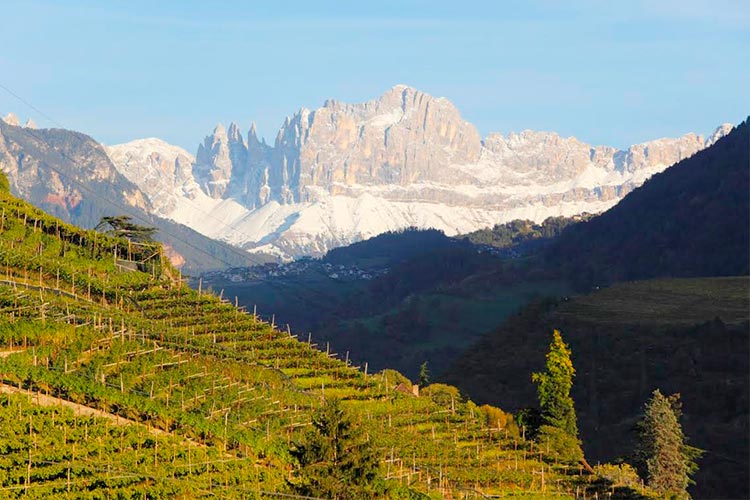
At the region’s northernmost tip, abutting the Swiss border, lies remote Valtellina. This type of wine country is, for me, the most fascinating to investigate. Like Alto Adige or Valle D’Aosta, the natural perch of these hamlets, the way they’re carved into treacherously steep mountainsides, separated not only from the rest of Italy, but the entire world, by nature itself, makes them stand out. Though culture is influenced by both Italians to the South, and, in this case, Switzerland’s Germanic heritage to the North, their innate isolation imparts its very own rugged identity to people, place, and, of course, wine.
There is no mechanical farming here; the steep, rocky slopes, ensure that. It’s said their sight alone is enough to make one’s knees buckle, and dangerous landslides are not out of the question. Though it is a sub-alpine climate – St. Moritz is closer than Milan, meaning wines with low concentration and bristling acidity are the norm – there’s also intense sunlight, so much so that agave and prickly pear have been known to mingle among vines.
The main red grape here is Nebbiolo. That’s right, the very same noble variety of the Piedmont, of King Barolo and Queen Barbaresco. How it came to be in these far reaches is unclear, but it thrives just the same, albeit differently. The dried roses, tar and cherry fruit, tannin and acidity are all still there, but it’s a more feminine, nervous package.
For Valtellina Superiore, the DOCG, of which this wine is, 90% Nebbiolo, referred to locally as Chiavennasca, is required (versus 80% in the DOC), with the rest either other local grapes such as Rossola and Brugnola or internationals like Merlot and Pinot Nero (Noir). Within Superiore, the finest wines are thought to come from four identified vineyards, sometimes referred to, unofficially, as the Grand Crus of Valtellina: Grumello (from where this wine hails), Sassella, Inferno and Valgella. Grumello’s vineyards are the least steep of the four, with more actual soil, so these wines tend to deliver the most approachable, fruit-forward flavor.
This particular Grumello is reticent at first, tight on the nose, the type of wine that absent-minded sippers will discount without a second thought as uninteresting. Patient, careful observers, however, will be rewarded with complexity and beauty. It starts out fruity, showing red apples (almost Riesling-like for a moment!), plums, sweet & sour cherry and orange peel. With air, it becomes more savory, with tobacco, Asian spice, dust & dirt, smoke, earth and mushrooms. In other words, there’s quite a bit going on here.
This could work well as a warm-weather red for immediate drinking (as with most Nebbiolo, give it some air). Though the sneaky tannins shouldn’t be overlooked, they’ll actually play nicely against grilled meats, while the bright, tangy fruit will keep things lively without bogging down the palate. That said, this’ll also lay down for another 3-5 years. Either way, food is a requirement for maximum enjoyment.
For Barolo and Barbaresco lovers who haven’t tried this version of the fog-friendly grape, this is an absolute must. Let’s be clear though – it’s not going to stand up to the greats of Piedmont. It’s merely another face of Nebbiolo that should be experienced, especially at this price.
For those yet to encounter the enigma that is Nebbiolo, perhaps price or cellar time has been a barrier. Now’s your chance. Should it be the wine you judge all varietal wines by? Absolutely not. It does, however, give a glimpse into what the grape has to offer – an elegance which belies hidden power and depth.
Happy travels.
#ItalianFWT
This post was featured in the #ItalianFWT group’s February 2017 topic: Nebbiolo Beyond the Bs. Here are links to the other featured posts:
It was nearing the end of an exhausting afternoon at VinItaly & Slow Wine USA, the annual NYC spinoff of Italy’s legendarily massive flagship wine festival, and my cushy train seat and a voyage home beckoned. My palate and mind were weary, fatigued by too many tastes, despite having only made a dent in the full program. With taste buds reeling from the massive tannin wall of some too-young Barolo poured straight from the bottle, I searched for a better finale.
Meandering towards the exit, I spotted Stefano Almondo, a winemaker’s son whose scruffy charm was accentuated by his dirty blonde beard. More importantly, the bottle of Arneis perched in front of him. “Hit me with some of that,” I pleaded. He poured. A wave of crystalline cleanliness washed over my tongue, bright and alive. My buds awoke, restored and renewed. “Phew!” I sighed. “That really hit the spot.” Almondo’s smile emerged slowly, growing into an ear-to-ear number that emphasized his wine’s personality. He then uttered, in a thickly-accented Italian brogue, one single word that I’ll always remember: “Frrr-eshness.”
Though the detailed history of Arneis is disputed, most historians accept evidence of it from the 15th century in Piedmont. The grape was originally utilized as blending foil to the tannic beast Nebbiolo, so much so that it has occasionally been dubbed “white Barolo.” Rumors suggest it may have been planted alongside Nebbiolo vines because its sweet scent would attract snack-seeking birds, who in turn would forgo the more valuable red grapes. As production of 100% Nebbiolo wines became more fashionable, however, Arneis flirted with extinction, saved only by the perseverance of producers Bruno Giacosa and Vietti. Fortunately, the 1980s brought a renewed interest in whites from the region, leading to the more common vinification of Arneis as a varietal wine.
Literally the “little rascal”, Arneis is a tricky grape to grow due to naturally low acidity when fully ripe. As such, it fares best in cooler climates where maturation takes place over a longer period of time, allowing for wines that showcase both the telltale lush fruit as well as a crisp finish.
A finely-crafted Arneis may be the perfect bianco for red lovers, offering rich aromatics and explosive fruit, as refreshing as those bland, ubiquitous Italian whites without sacrificing taste. Because it can pack in the flavor, I like pairing Arneis with mid-weight foods, such as heartier chicken or fish dishes, and (not too spicy) Asian cuisine.
Tasting through a few bottles recently, I consistently encountered fruit flavors of pear and peach (of varying intensity levels), often augmented by fresh flowers and almonds. All were enjoyable, and any would would serve as a good introduction to the grape. My notes follow:
Monchiero Carbone ReCit Roero Arnies ($13.99)
Ripe, fruity notes leap from the glass, and continue to reign on the expressive palate. Though I typically think people serve whites too cold, this perks up with a chill; I’d store in the fridge and let it warm while serving. PLCB Chairman’s Selection buyer Steve Pollack called this the “perfect summer wine,” which is hard to dispute, especially considering the 12.5% ABV and delicious profile. Goes great with Chinese takeout.
Demarie Arneis Langhe DOC 2012 ($16.99)
Floral nose hints at melon. Palate fruits are moderated by herbs, saline and a sturdy dose of almond. Easygoing warm-weather wine to pair with oil-based pastas.
Ceretto Blange Roero Arneis 2010 ($22.99)
Nose displays herbal, resinous qualities. Typical Arnies fruits in a lighter, more elegant package lead to hints of toffee on the crisp finish. A lovely companion for al fresco happy hours or antipasto.
Bruno Giacosa Roero Arneis 2012 ($31.99)
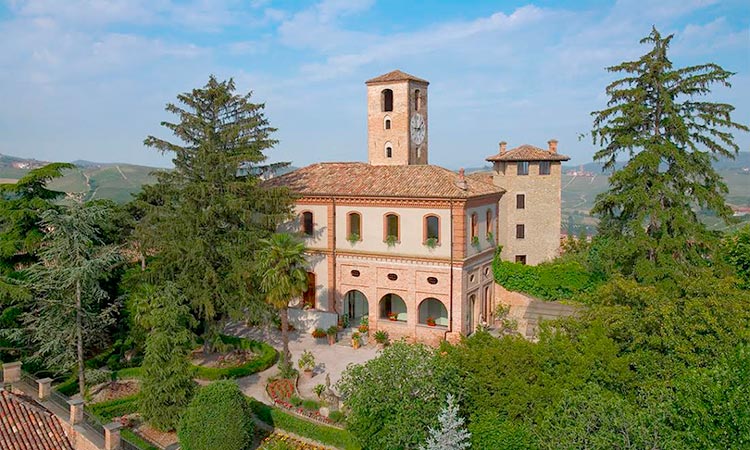
One of the grape’s saviors proves worthy. Tight nose reveals herbs and honeysuckle to careful observers. There’s even a hint of mushroom & smoke, almost like a red wine. On the palate, lush honey, peach and apple explode into the mid, and the long finish boasts pockets of herbs and amaretto. Both full-bodied and crisp. Try it with grilled or roasted chicken and Mediterranean herbs. Winery pictured above.
Giovanni Almondo Roero Arneis Vigna Sparse 2011 (tasted Feb 2013)
Freshness!
A comparative newcomer to the world wine scene, Umbria’s Sagrantino, a hugely tannic grape that features more polyphenols than any other vinefra, was mostly used for sweet passito wine until the 1970s. As modern winemaking technique evolved, a group of Montefalco-based winemakers began to tame this bitter and foreboding grape. Full-bodied, with an aromatic nose of herbs and earth, it features big cherry flavor and immense tannins that reward bottle aging and crave hearty food.
Not only difficult to vinify, Sagrantino is rare. Almost exclusively grown in Umbria, it’s only planted on 250 acres and produced by 25 or so wineries. As such, wines made from 100% Sagrantino, from the Sagrantino di Montefalco DOCG, have traditionally been on the more expensive side, even at the entry level. (A few years ago, it was almost impossible to find a bottle stateside under $30.)
For whatever reason, we’re starting to see more break that $20 barrier. In late 2012, the Chairman brought us Montechiara Sagrantino di Montefalco 2005, a nice example of the style at an even nicer price of $19.99. (Luis and I loaded up.) This winter, the Chairman struck again with a $17.99 bottle from Villa Mora, and the PLCB luxury buyer quickly countered with one from Terre de Trinci for $14.99.
Are these values too good to be true? The Villa Mora Sagrantino di Montefalco 2007, unfortunately, is a complete disappointment. Despite the great price, it is marred by off odors of synthetic rubber, blocking anything of interest in both the nose and palate. It’s the only Sagrantino I’ve ever tried (twice, for the record) that I did not like.
The $15 tariff on Terre de Trinci Sagrantino di Montefalco 2006 seems even more absurd, especially with the 2004 still available (in limited quantities) at $28.99. Having tried the ‘04 last winter, however, it’s clear this cooperative of small growers – whose website claims they were the first to vinify dry Sagrantino in the 1960s – can bring the goods. So why the price drop?
Who cares!?! For fifteen bucks, this is a scorching value. A very nicely made, typical Sagrantino, the nose brings classic notes of earth, anise, macchia and warm spice, with bold cherry fruit on the palate and a fiercely tannic finish. The mid-palate dips slightly, but for this price, it’s hard to complain. Go get ‘em before I do!
Drink now (decant at least 1 hour) or hold 3-5 years. Pair with winter stews or other hearty fare.
By now it should be evident Mike and I are always on the lookout for lesser known Italian varietals, those grapes that exist in long shadows cast by Barolo, Brunello, and all too many Chianti Classicos. Mike’s recent analysis of Lagrein shows how these offbeat wines are gradually altering American perceptions of what Italy has to offer, once you come to the fork in the wine trail and venture down the path less traveled.
There are hundreds of indigenous grapes that soldier on in obscurity, in most cases lending their singular and complementary characteristics to more recognizable varietals, or turning up in local blends. In the last twenty years or so, there has been a move by some winemakers toward preserving the history and individuality of these grapes by bottling them in purezza – on their own. The results have been uneven. For every Casavecchia or Susumaniello, there are a half dozen exhibits of experiments gone awry, wines that even the most ardent advocates of maintaining Italy’s vinous heritage find hard to champion.
Which brings us to Vespolina, a low yield grape that has to work overtime to achieve a level of ripeness to match its inherently high acidity – two factors that account for so few mono-varietal examples. It is notoriously temperamental, not surprising given recent DNA studies that establish it as an offspring of Nebbiolo. It’s the sort of grape that needs a specific set of natural conditions to be viable, such as those of the Alto Piemonte, in the foothills of the Novare mountain range. The ancient soils are laden with mineral salts and glacial deposits, and the diurnal temperature variances and long growing season allow Vespolina to develop manageable ripeness-acidity equilibrium.
The Monsecco estate in the Colline Novaresi DOC is run by the Zanetto family who have been producing a 100% Vespolina only since 2009. They also grow Nebbiolo, Uva Rara, and Croatina on their few acres, typical for the region. Their Monsecco Barbatasso Vespolina Colline Novaresi 2011 shows the grape’s high acidity and tannins that are soft but still mildly dry. Assertive on the entrance, the texture is a little rough, earthy, and peppery. A core of dusty dark cherries and berries join with minerals to form a wine somewhat atypical of Piemonte – ripe aromas that differ from the palate, perhaps the result of whatever natural balance the vintage was able to attain. This is an interesting wine that demands food (I know, redundant for an Italian red). Something hardy, or meaty, or protein-driven. At $19.99, it may not be some peoples’ idea of a bargain, but you could easily pay the same for a fair-to-middling Chianti and miss the experience of drinking on the wild side.
As we discussed in our piece on white wines of the Alto Adige (aka South Tyrol or Südtirol), this northernmost Italian region spent a long time within the Austro-Hungarian empire prior to WWI, and is still heavily influenced by that culture. (On wine labels, for example, German text often appears above or alongside the Italian, as many residents speak German natively.) Thus, given the opportunity to speak with Judith Unterholzner – who represents regional producers Terlano and Andriano – about wines made with Lagrein, a red grape grown almost exclusively here, my first question was whether the winemakers see it as Italian or Austrian. “Lagrein is much more Austrian than Italian in influence,” she told me. “But this is more due the impact of the mountains and the alpine microclimate than the culture.”
In other words, it’s all about terroir. Lagrein don’t care about wars, country borders, or any other man-made conflicts. It found a spot it likes, in a sometimes-unforgiving alpine climate, and it is thriving. In mountainous regions especially, there seems to be a strong bond between the climate and certain grapes, and Lagrein’s match with Alto Adige is no exception. We can come up with all sorts of other ways to describe terroir, but for me, that just about sums it up.
Judith Unterholzner with Terlano Lagrein
The grape, pronounced “lah-grine” (rhymes with wine), was traditionally used for blending – with the lighter Shiava, mostly – or as a rosato, due to its rugged, bitter nature, and only found its true calling in the early 1980s. “In the decades before,” says Unterholzner, “many consumers wanted lighter, easy-drinking red wines. Then there was an upswing in demand for structured red wines, and more oak influence… Lagrein fulfilled both requests, being full of character and developing fine spicy notes with oak aging. For locals of the region, this became our first serious red wine.”
Tasting through several Lagreins recently, I discovered a refreshing typicity, especially with the non-riserva wines (those aged in large oak casks or steel). Though each wine offered something different – a few featured earthy, rustic notes, for example – there were characteristics that clearly identified every bottle as Lagrein. Aromatically, a violet, floral bouquet recalls Syrah (a cousin), but only just. (La Cucina Italiana identifies this scent as brunelle, a local name for wild orchids found in the region.) On the palate, bright plums and and blackberries lead the way, with black tea and more violet – or brunelle – notes. As it finishes, there’s an almost soapy aspect we’ll call lavender, lest you think it punishment for foul language, which it is most certainly not.
Perhaps unsurprisingly, the riservas, or wines aged in small oak barrels – which can cost significantly more – tend to relinquish some of this typicity. Oak softens the floral nature of the aroma, and though spicy flavors on the palate can add intrigue, they also obstruct those special orchids & plums. Riservas are, of course, made for longer aging (10 years or so), but – and take this to heart coming from a lover of aged wine – I’m not sure, in this case, they offer more than the wines meant for everyday drinking.
Pairing-wise, Lagrein of course plays well with the foods of the region, including the legendary speck (smoked, cured ham), as well as beef or game stews. Polenta, mushrooms and root veggies are also common. I love it with fresh pork preparations too, such as grilled chops, roasted tenderloin, or stewed shoulder. Unterholzner suggests braised (in Lagrein, obviously) veal cheek on top of celery root puree.
Reviewing my tasting notes, a few things are obvious:
1) Lagrein quality is consistent. Any bottle that’s 15-20 bucks, is certain to be both delicious and representative of the region and variety. In fact, I’ve yet to try one in this price range that wasn’t good, with the exception of one bottle that was cooked. (Which was hardly Lagrein’s fault!)
2) There’s less certainty with riservas. Added winemaker intervention (mainly through oak) means that these wines may represent the region well, but could also taste like modern red wines of indeterminate origin. Of course I only tried two – one of which was on the younger side for a riserva – and though both were enjoyable, they were generally less appealing. (If anyone out there wants to prove this hypothesis wrong with a beautifully aged bottle, just tell me where and when…)
Without further ado, the notes:
Tiefenbrunner Turmhof Lagrein 2011 ($21)
Big fruit on the nose, alongside a touch of earth and smoke, as well as warm spice. Nice balance of freshness and funk. Good complexity, evolves in the glass. Rustic finish. (92 points)
Tramin Lagrein 2010 ($18) My favorite nose of the bunch. Moss, forest floor, leather, fruit. Leaps out of the glass. Palate decent too, but almost a letdown after the nose. Still, quite good. (92)
Abbazia di Novacella Lagrein 2009 ($20)
Classic flavors mixed with the modern touch of sweet warm mulling spice and tobacco. Good acidity, big tannins, and intriguing complexity. (91)
Peter Zemmer Lagrein 2010 ($18) The most typical of the group. This is the pure essence of Lagrein. Straightforward, with all the expected aromas and flavors. (91 points)
Azienda Agricola Balter Lagrein IGT 2010 ($18) Nice balance of earth, spice and herbs to go alongside the plum and fig. Smooth. (90)
Andriano Tor di Lupo Riserva 2010 ($40)
Classic Lagrein notes are there, but made more subtle by warm spice and tobacco. Hints of earth and tar on the nose, especially with air. Big tannins, bitter on the finish. Should improve with age. (89+)
St. Paul’s Lagrein Gries 2010 ($21)
Rich, dense fruits with a discernable chocolate/cocoa element. Would benefit from air and/or little time. (88)
Terlano Lagrein Porphyr 2006 ($50)
The least Lagrein-like personality, perhaps due to overdone oak. Dark fruits, lots of warm spice, some fleeting earth. Not bad, but nothing special for the price. (87)
 There was a time in the recent past when it was unimaginable that Italian wines such as Perricone, Verduzzo and Petit Arvine would one day be found in the PLCB system. (We’re all familiar with the Chiantis, Pinot Grigios and others that commandeered the shelves.) Supply was reacting to a demand for recognizable wines that reflected and satisfied casual drinkers’ understanding of what Italy had to offer. As consumers have become more knowledgeable and willing to expand their comfort zone, interest in heretofore obscure and exotic varietals has undergone a commensurate growth.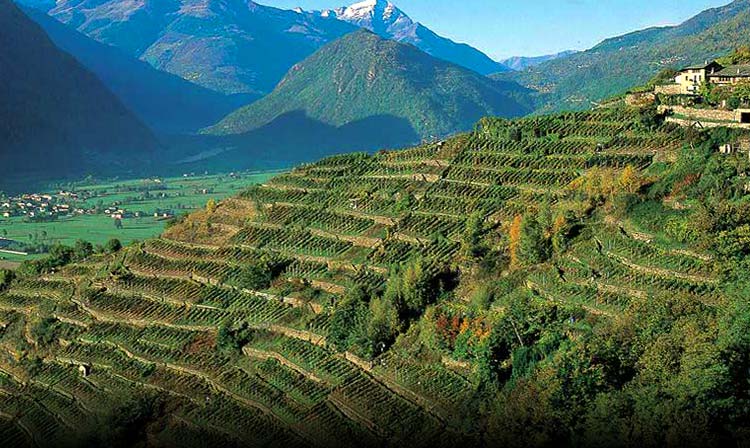

 Monchiero Carbone ReCit Roero Arnies ($13.99)
 By now it should be evident