I recently wrote a report for Palate Press about my trip to the Scacciadiavoli winery in Montefalco, Umbria, Italy. Read it here.
A Light Lunch at Scacciadiavoli
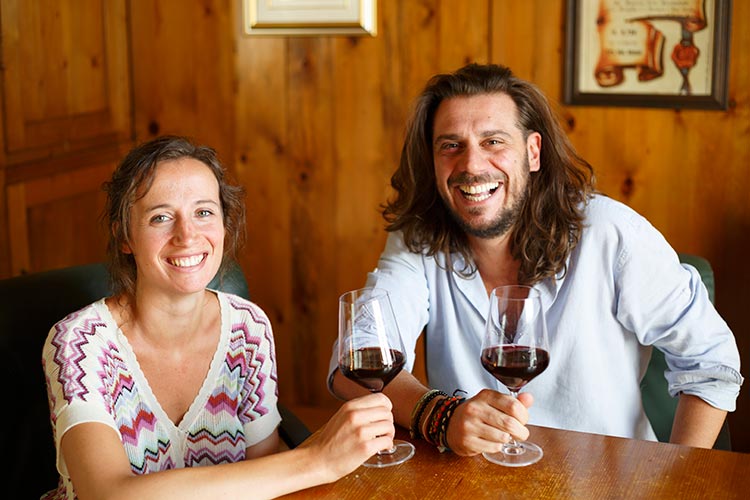
I recently wrote a report for Palate Press about my trip to the Scacciadiavoli winery in Montefalco, Umbria, Italy. Read it here.
Here are some of our favorite views from our recent trip to Montefalco, Umbria, Italy. Enjoy!


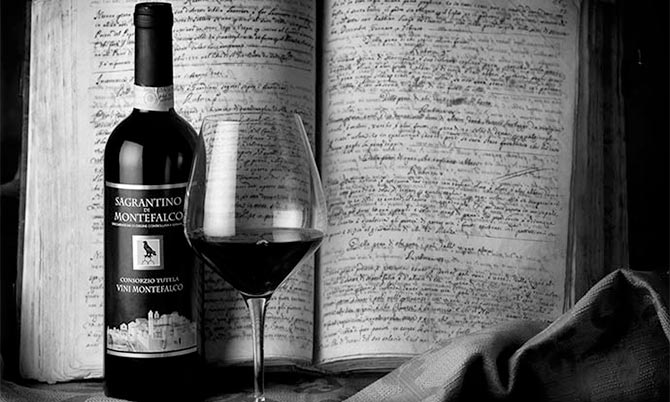
[parallax-scroll id=”6014″]
It’s July 20-something, and the relentless midsummer sun is bearing down on the Northeast US. Rosé Season is in full swing. It’s the time of year when my brooding, prized behemoths normally slumber safely in the dark, dusty confines of my cellar, awaiting the return of fall and temperatures more appropriate for their masculine wiles. Yet here I sit, in the company of one of the baddest dudes on the planet: the fabled Sagrantino di Montefalco. As its singular, rugged aroma wafts out of the glass, intermingling with the redolence of pork seared alongside generous doses of fennel pollen, garlic and sage, I begin to realize that, in spite of Mother Nature’s attempts to dissuade me, this may be one of the better decisions I’ve made in some time.
Regardless of season or context (and ignoring for a moment the cooling embraces of my brand new HVAC system), this is one extraordinary wine. I could claim it’s the bold flavors of dark cherry, pipe tobacco, warm spices, resinous pine tar, anise and mocha that set it apart, but winespeak won’t do it justice. There’s something here I can’t put my finger on, a unique, special, even majestic aspect that separates it from the rest.
Sharing this moment with me is Frank Cipparone, the former lead Italian instructor at Philly’s Wine School and a fellow Sagrantino lover. “I was once asked,” muses Frank, “if I could only choose to save one grape, which it would be. It was an easy choice: Sagrantino.” I ask him what sets this grape apart. “What defines it for me,” he replies, “is the balance of complexity and subtlety, power and grace. When you inhale the seductive, earthy aromas of a well-made Sagrantino, you know it can only be Italian. As it opens up from one sip to the next, it represents what any Italian wine should be – authentic, uncompromising, and true to its place of origin. Chianti may be Italy’s most famous wine,” he continues, “but Sagrantino is the real thing.”
Often called il cuore verde d’Italia (the green heart of Italy), Umbria is a landlocked region that sits almost dead-center on the boot, with a similar climate to Tuscany, spotted with hill towns and lush, fertile valleys, a wonderful locale for much of Italy’s finest olive oil, truffles, game meats and, of course, grapes. (Those who can live with being further from Florence will find far lower rental prices and less crowded streets too, but that’s another conversation.)
If Umbria is the heart, Montefalco is the beat, located in the center of the center, and though its wines are perhaps not as well known to casual drinkers as Orvieto’s crisp whites or the famed Lungarotti family of Torgiano, it holds the trump card: Sagrantino.
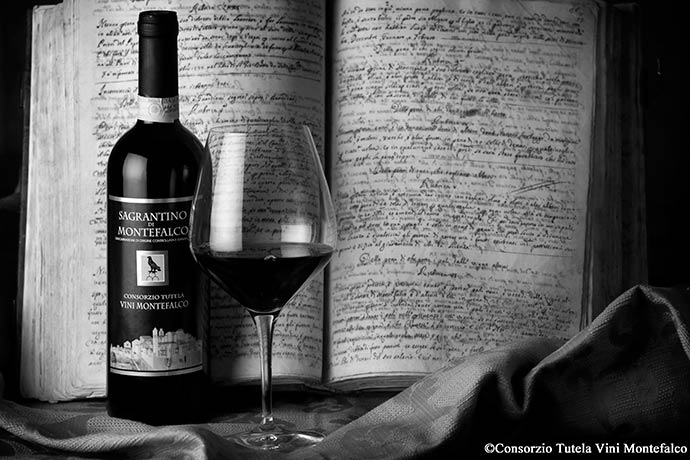
There’s a shroud of mystery over the origins of this grape; digging into to the topic will unearth tales of Pliny the Elder, St. Francis of Assisi, and the Saracens of Spain. Has it been here since the dawn of time? Does it matter? It’s here now, and it shines in this spot, above all others; a potent, rustic beauty for Umbria and Montefalco to claim as their own.
Much of Sagrantino’s unique personality is derived from its thick skins, which contain more polyphenols than any other vinefra (which in turn creates fiercely tannic wines). Historically, to combat this unrelenting bitterness, monks producing sacrament wine air-dried the fruit to concentrate sugars, then vinified it as sweet passito.
In the 1970s, as the grape neared extinction, a group of Montefalco-based winemakers began to experiment with dry Sagrantino, using modern techniques to tame the exuberant tannins. In particular, the success of the Arnaldo Caprai estate established worldwide interest in the grape and region, helping to create a DOC in 1979 and elevating the Sagrantino di Montefalco – wines made with 100% Sagrantino grapes – to DOCG status (the highest classification of Italian wine) in 1992.
In the 1990s – and even as recently as 5-7 years ago, to be honest – it was nearly unheard of to find a bottle of Sagrantino di Montefalco for less than $50, due to the grape’s rarity – only 250 acres were under vine in all of Montefalco. In the years since, however, the area has seen vast growth, nearing 2000 acres today. Between the years 2000 and 2008, Sagrantino production quadrupled, while the total surface area of DOCG vineyards has grown to 5 times its original size (although a reduction in the yield per hectare has also been implemented, to preserve quality).
Because of this expansion, as well as the addition of new producers, the market has opened for competition and allowed for more favorable consumer pricing. Always looking for these bottles myself, I’ve noticed lately that finding one under $20 – though still unlikely – isn’t the white whale it once was.
As such, it’s an exciting time to be a Sagrantino drinker. More competition, modern techniques, increased distribution and better pricing means it is easier to procure a great bottle of this wonderful wine than ever before.
[parallax-scroll id=”6018″]
My midsummer Umbrian adventure – in Pennsylvania – begins with the Montefalco Rosso DOC, a red made with mostly Sangiovese and just a small amount of Sagrantino. Interestingly, just few weeks ago (late June 2015), the Montefalco Consortium’s board of directors voted to change the blending rules for this wine, removing the requirement for a third grape while encouraging the use of more Sagrantino (up to 25% from the current max of 15). This prioritization of terroir over all else is a bold statement in today’s world of modern, homogeneous winemaking.
Since the wine I am drinking – Antonelli Montefalco Rosso – is from the 2010 vintage, it features the traditional blend of Sangiovese (70%), Sagrantino (15%), and, in this case, 15% Merlot. The strong foundation of Sangiovese makes for a wine that plays like other Central Italian reds: medium-bodied, fresh red fruits, hints of dirt and leather, food-friendly. The addition of Sagrantino, however – even just a little – adds a distinctly Umbrian robustness.
As I taste my nearly finished marinara sauce made from local tomatoes, I begin to worry that this particular heirloom variety might be too fruity for the Sagrantinian finish. And the wine has already been poured! Thankfully, the Sangiovese plays its role, staying light on its feet — and though tannins are certainly present, the firm acids from both Italian grapes play well off of the brightness of the sauce. This would clearly pair well with a wide variety of pastas, pizzas and similar first courses.
A few days later, a barbecue with friends brings out bottles of the Cantine Rialto Umbria Rosso 2012, another blend of Sangiovese, Sagrantino and Merlot, this time with Merlot in the lead role, thus its categorization as the more generic Umbria IGT, despite its obvious roots in Montefalco. This wine is perhaps the ultimate everyday Umbrian – Merlot delivering its soft, plum fruitiness up front, followed by Sagrantino mixing in a dash of its unmistakably spicy character on the finish. Finding a few bottles on sale for $8.99, it’s a no-brainer to stock up on for sausages hot off the grill, (and easy to open another when the last drop is poured).
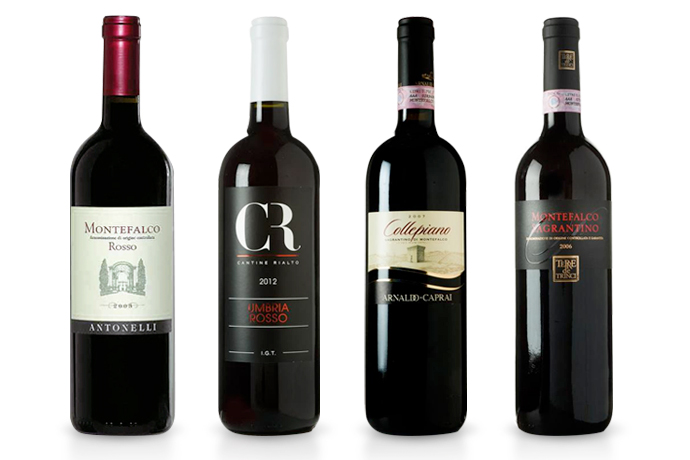
Throughout this discussion, I’ve been alluding to the weather, the food, and the weight of the wine, how this all comes into play with regards to when and where we drink it. Especially now that we are eating healthier as a society, it’s interesting to think about the big, bold wines and what foods they pair with. Do they always need a big, fatty hunk of beef? A few months back, I came across an article in Saveur magazine about Umbria, and was particularly intrigued to see pairing suggestion of Arnaldo Caprai Sagrantino di Montefalco Collepiano – a giant in the space – with pork tenderloin, an extremely lean meat. Could this actually work?
More importantly, is there something in particular about Sagrantino that makes it work? In Ian D’Agata’s awe-inspiring tome Native Wine Grapes of Italy, consulting winemaker Emiliano Falsini opines that Sagrantino skins, “despite their wealth of polyphenols… can be put through even long macerations, because the tannins are usually smooth and polished.” This is in contrast to other grapes, which Falsini notes risk “leaching out very dry astringent tannins” with longer macerations. (page 426, hardcover edition)
The recipe in question – Filetto di Maiale con Bacche di Ginepro (Pork with Juniper Berries) – relies heavily on regional herbs and spices, namely juniper, fennel, sage, rosemary & thyme. (There’s some pancetta or guanciale too, in fairness, but not that much.) I give the wine, a 2007, about 3 hours of air before dinner, and it opens nicely by the time food hits the table. There’s this element of medicinal herbs to Sagrantino – which might sound odd when written, but is actually quite brilliant in juice form – that a dish like this teases out oh-so-perfectly.
Wow.
A bite of that pork, with the juniper, fennel, herbs, and then the wine. It’s like a symphony, one unified movement, flowing together, continuing long after the bite or sip has concluded. Simply gorgeous.
And the tannins? Nicely polished indeed, with lots of chocolate on the finish. They certainly make no attempt to thwart my enjoyment of the meal.
Finally, my food and wine journey concludes back where it started – with tomato sauce, but, this time – because how could I not – there’s pork involved. A ragu, to be specific. I’ve pulled a lower-priced Sagrantino DOCG, the Terre de Trinci Sagrantino di Montefalco 2006, which I somehow scored for less than 15 bucks a couple years ago, and have been patiently storing since, slowly coaxing its subtle charms into being. It brings all the classic notes of earth, anise, macchia, warm spice and bold cherry fruit, and though perhaps not as complex as the Caprai, it emboldens the soul next to a plate of pasta made with love.
What else does a guy need?
All images exc bottles © Consorzio Tutela Vini Montefalco
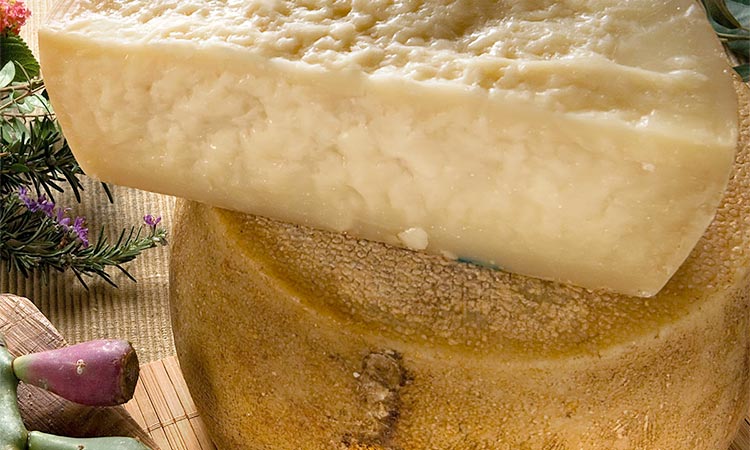
Perusing the cheese aisle of Carlino’s – one of my favorite local Italian Markets – I stopped dead in my tracks. My heart warmed, and tears nearly formed in my eyes. The item I sought – unknowingly on this particular visit – that was now staring back at me from the chilled cheese case was more than just any foodstuff. Within its aged crystals of lactose goodness there was history, culture, and most of all, family.
It was a hunk of mastorazio pecorino from Casa Madaio, a small cheese cave based near Salerno in Campania, in Southern Italy. That this hand-made pecorino is one of the finest specimens of the variety I’ve ever tasted is besides the point; you’ll obviously notice that I happen to share a cognome with this particular Italian azienda. Are we related? That I can’t say for sure, though I do know that the name Madaio is a relatively rare one, even in Italy, and my roots do run to Campania as well. The odds seem ever in our favor. And though I’ve been aware of them for some time now, this was the first time I’ve come across their products stateside. (It does look like they have launched an online shop – not sure if they ship to the USA.)
 Having secured my prized morsel, I of course needed some Campanian wine to match. Two current Chairman’s Selections fit the bill nicely:
Feudi di San Gregorio Lacryma Christi Rosso 2010 ($12.99)
My love for this DOC has been previously documented, so my local wine specialist describing this wine as “feral” only sealed the deal. It needs some time to open up – decanting is essential – but once it does, it is a beauty. The addition of some Aglianico adds heft to the typically lighter Piedirosso, though the classic violet and plum flavors are there. Smoke and tar also appear, as they should in any volcanic wine worth its lava.
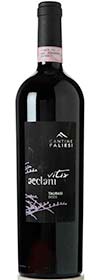
Cantine Faliesi Vitis Aeclani Taurasi DOCG 2009 ($17.99)
Frank suggested I give this one a shot, and I’m sure glad he did. It’s a big, bold Taurasi and a bargain-bin price… Nose of earth and tar, with dark cherry and anise notes on the palate. The oak influence is minimal and well-balanced. Though Steve Pollack suggests this is for the collectors, for me it’s drinking great now and I see little reason to wait, especially at this price (though I agree it should be decanted).
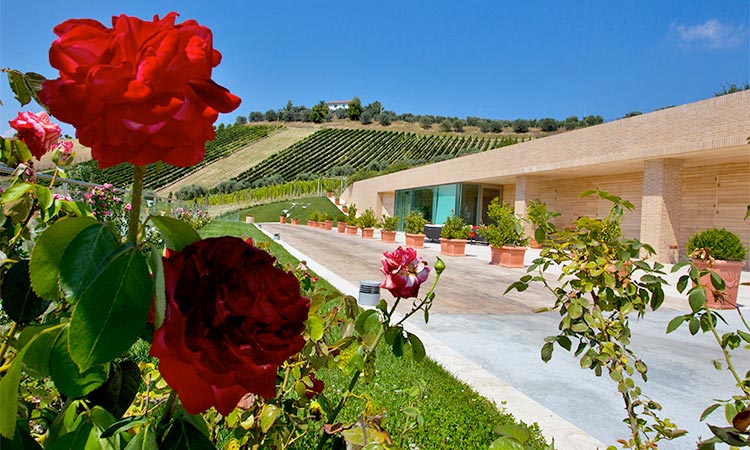
“Marche is like Tuscany 30 years ago,” Marco Scapagnini, the US rep for Domodimonti, tells me, as we speak on the phone recently. “It’s not polluted. It has small producers who make wines from their own grapes, without having to buy from other growers or areas.” This region, located north of Abruzzo and east of Umbria, certainly does hit all the marks as a prototypical undiscovered gem for wine lovers, food lovers and tourists alike, with its off-the-beaten-path status, high quality culinary production and beautiful scenery.
One thing Marche (pronounced Mar-kay) has that Tuscany doesn’t is the sea. Well, Tuscany has the sea, obviously, but not close to key wine growing areas Chianti, Montalcino and Montepulciano. In Marche, it’s right there. “There’s this perfect micro-climate with the low hills between the sea and the mountains,” says Scapagnini. “It creates a perfect balance between acidity and minerality in the wines.
Though there is a long history of grape growing and winemaking in Marche, Domodimonti is one of the newest producers in the region (though its vineyards date to the 1950s). Owner Francesco Bellini grew up here, but moved to the Montreal area to pursue a career in pharmaceuticals. After achieving breakthroughs with drugs to treat diseases such as HIV, Hepatitis C and Alzheimer’s, Bellini was able to cash in and achieve his dream of owning a vineyard near his home (because, as they say, the best way to make a small fortune in wine is to start with a large one).

The core philosophy behind Domodimonti is natural wine. Growing the grapes sustainably, with no chemicals or machines used in the vineyard. No sugars, acids or additives and minimal sulfites. This is Bellini’s passion, and drives every decision that’s made, from the way the winery is designed to the final wine in the bottle. This idea – natural wine – is actually a controversial issue in the wine industry, and I’d prefer to refrain from rehashing the debate here. But feel free to check out Domodimonti’s website for more details on their vineyard and winemaking practices.
Regardless of your stance on natural wine, the outcome of these decisions on the end product is obviously relevant. One might wonder, for example, if natural means rustic, especially with wines from Italy. In this case, it most certainly does not. These wines are quite modern, made with state-of-the-art equipment and big-name consultants. They’re not particularly earthy or savory, and definitely do not feature any dirty or bretty aromatics. They’re fruit-forward, pure, clean and well-balanced.
Truth be told, I have my reservations about the grape Montepulciano d’Abruzzo (not to be confused with the region Montepulciano in Tuscany, where they grow Sangiovese). I’ve had excellent renditions, but when it isn’t done well, it can be awful. Sure, you can say that about any grape, but whereas I typically find something to enjoy in mediocre Sangiovese, mediocre Montepulciano is often drain cleaner. (And there’s a lot of bad MdA out there.)
The reason I bring this up is that, when it comes to Montepulciano, Domodimonti is straight up killing it. School is in session Abruzzo, and you best be taking notes. As I said above, this is just a pure, clean expression of fruit – ripe, fresh, bright, great acidity, food friendly, lingering complexity and downright beauty.
If there’s a knock on Domodimonti wines, it’s cost – many premium wines from Marche still tend to come cheap, yet these are an obvious exception. However, three bottles – two of which feature Montepulciano – were recently given a significant discount by the PLCB, so grab ’em while you can!
Domodimonti Il Messia 2009 ($18.99, was $29.99)
A mix of Montepulciano and Merlot, the name means “The Messiah.” (Let’s not get too crazy.) The nose leads with well-integrated oak notes of caramel and vanilla, as well as hints of mushroom. On the palate, big blackberry flavor intermingles with herbal notes and the slightest waft of smoke. This wine is fresh, vibrant, easy to drink, and will pair with a variety of medium-hearty foods. I’d drink now (but can age a few years).
Domodimonti Solo Per Te 2010 ($31.99, was $49.99)
100% Montepulciano, means “Just For You.” Big cherry flavor, with notes of anise, herbs, a touch of tar on the nose and lingering cocoa on the finish. This wine has great structure – featuring bright acid and huge tannin, making it outstanding with hearty foods and an excellent candidate for cellaring.
Domodimonti Passione e Visione 2010 ($44.99, was $69.99)
100% Petit Verdot, name means “Passion and Vision.” This definitely feels like the oddball of the group – a Bordeaux blending grape, hardly ever used in a monovarietal bottling, even in BDX or California, from Marche? Actually, Petit Verdot is making a name for itself in Central Italy, mostly in Maremma and Lazio, so it then stands to reason that it could also thrive here.
I drank a rare 100% PV from California a few weeks ago, so I went into this expecting a bold, lush wine, but instead was greeted with something much more elegant. Medium-bodied, this wine is fresh and vibrant, with the telltale PV acidity, but not the piercing tannins. It’s smooth, plummy, and packed with violets on both the nose and palate. If anything, it could use a touch more ripeness (something I rarely say, but a common issue for this grape).
All that said, this is going to be a tough sell at this price point, considering the region and the grape. It’s a tasty wine, and surely one for those seeking rarities. With my money, however, I’d buy the other two first.
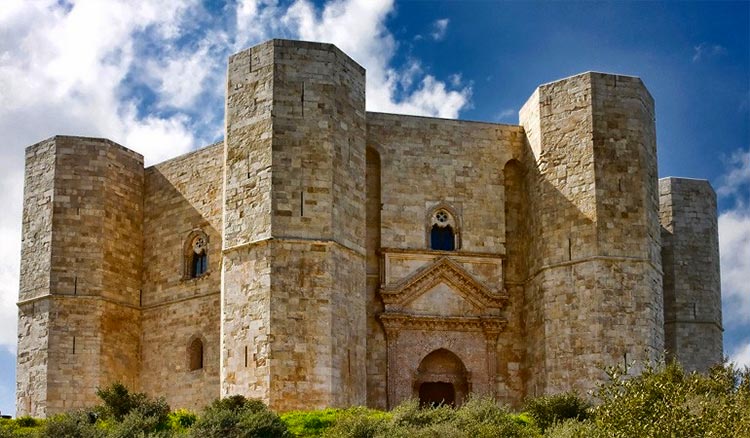
This was a tough one to call – funky and unique. Not for everyone, that’s for sure. But also something that’s off the beaten path, from a region – Puglia, and a grape – Nero di Troia, that one doesn’t typically find on the bargain shelves.
Here’s my experience with Rivera Il Falcone Castel del Monte Riserva 2008, quickly summarized: I initially tried a couple ounces at a wine tasting, and my first thought was that it was weird and wild. It featured that brambly herbal flavor some call macchia (or garrigue in France) that’s typical for this area of the world, plus tobacco, and fading cherry fruit.
 But the thing about these mass tastings, where you’re drinking wine after wine that is essentially the same, is that unique really stands out. I couldn’t help but wonder if this would hold up to a full bottle, over the course of a night. Would the oddness grate on me, after a full glass or two?
For $18, I figured it was worth a shot to find out. After decanting, the wine did open some: the sour cherry fruit became fuller, and overall it was more balanced. In the end, I’m glad I went for the full bottle, and enjoyed it to the end.
Will I buy more? Dunno. It’s still somewhat odd, and doesn’t hit my particular sweet spot. Might be a good gift though, a conversation starter, or something to feature at a dinner party.
All that said, I think you should buy a bottle too. In all likelihood, you’ll have a similar experience – and maybe, just maybe, it’ll hit your sweet spot. Of course, there’s also the chance you’ll hate it. For $18, however, it’s not that much of a gamble.