Warning: Undefined variable $url in /home/undiscov/public_html/undiscovereditaly/wp-content/plugins/twitter-facebook-google-plusone-share/tf_display.php on line 365

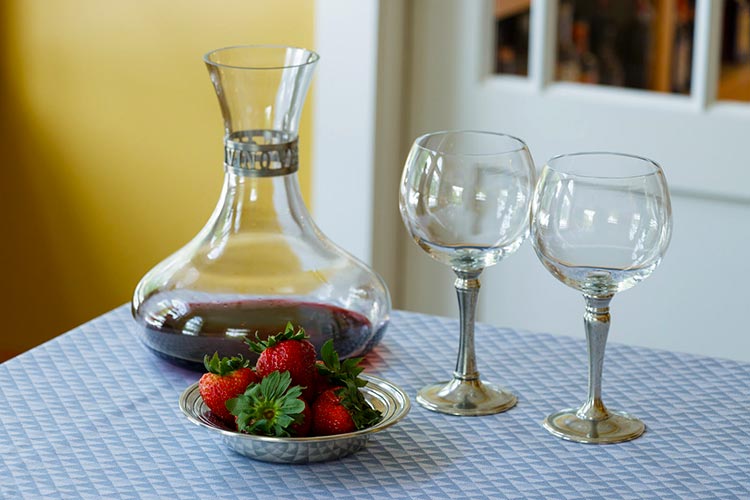
On Decanting

On Decanting

We’re sitting in the Còlpetrone tasting room when I ask the question. It’s a beautifully designed space – marble countertops, bright, open air feeling, thanks to the plentiful windows overlooking the Umbrian countryside, alongside various hues of natural wood. It echoes the modern, state-of-the-art feeling I got touring the winery’s backstage area, as if no expense was spared to show that this winery is with the times, on the cutting edge.

But back to my question. Even though I had already visited several wineries in the area, and this debate is often on my mind when discussing wine, for whatever reason I asked Còlpetrone’s Marco Castignani first. Maybe it was the huge flavors of the 2010 Sagrantino di Montefalco. Perhaps it was the fact that we were comparing a 2006 “Sacer” Sagrantino with the 2010, and the ’06 was, amazingly, tighter.

Do you typically decant these wines?

Marco chuckled. He’s got one of those infectious smiles, full of passion and enthusiasm that’s hard to evade. He shook his head, pensive. “I think…” he started. Then paused, still smiling. I could tell he was looking for a diplomatic way to respond. “This is a decanter,” he finally stated, holding up the glass. “I don’t think you need anything else.”

Fast-forward a few weeks; I’m back home in the US. The Montefalco Consortium is holding a virtual tasting via UStream. There are tweets and chats going on, people all over asking questions as the winemakers taste through and discuss various aspects of Sagrantino. Someone participating in the chat asks the question.

Do you recommend decanting?

It’s reasonable to ask. Pretty much anyone who does would decant Sagrantino, the most tannic of all grapes, especially when young, fierce and possibly unyielding. I’ve heard of people decanting them all day. But what do the winemakers do?

As soon as the question was asked, Marco’s smile emerged. He shook his head. I had to wonder if he was recalling our recent conversation. He looked to his right, however, seeking out a fellow participant to save him from having to, perhaps, repeat himself.

Liù Pambuffetti jumped in. She had a similar opinion – that it’s preferred to spend time with the wine as it evolves, in the glass. She discussed how much she enjoys following a wine over several days, seeing its progress, how it will evolve and open. The other winemakers at the table nodded in agreement. It’s a very winemakery answer.

That said, it doesn’t do a lot for the average consumer. Are we going to follow a wine for days, just to see how it evolves? Or are we popping it open to share with family and friends for dinner? Though the winemaker perspective makes sense, especially from someone who needs to know how a wine is evolving as it ages, in a way it avoids the real question:

If a bottle is going to be consumed in one sitting, should it be decanted?

There’s a reason I described the Còlpetrone winery the way I did, in the first paragraph. All throughout my Umbrian visit, I noticed how much the winemakers and wineries knew about the latest technology in winemaking. Some are more, shall we say, rustic than others, while some are slick and polished, but the winemakers themselves are all keenly aware of the latest tips and tricks, the proven ways to make the best wine from superior grapes.

When it comes to serving and drinking wine, on the other hand, Montefalco seems more conservative. Umbria in general is known as a place that’s slow to change, it being the only region in all of Italy that’s neither bordered by water nor another country. They do things the old way here. Which may be why everyone shuns those hoity-toity decanters.

I walked into a wine shop in the center of Montefalco, on a 90+ degree day in September. The room was not air conditioned. I noticed that the finest wines – the pricey Sagrantino, the older vintages, were all stored on top shelves, out of reach from grabby tourists. But how long have they been there, I couldn’t help but wonder, steaming in this heat? Though these temps were out of character for mid-September, it was just recently August, and July. This was the norm. And these brilliant wines were likely taking a beating.

Another night, we dined at one of the town’s finest restaurants. Housed in an old stone building, it seemed like the type of place that’d have a natural cellar perfect for wine storage. But our bottle of Sagrantino arrived warm to the touch, the product of another humid night and open flames in the kitchen.

Europeans sometimes shake their heads at Americans with all our wine refrigerators, but most of us don’t have old, naturally controlled cellars to take advantage of. We should all be able to agree, however – thanks to UC Davis studies, among others − that wine ages far faster in warmer temperatures, and that it just doesn’t taste as good when it’s served warm.

Does this have anything to do with decanting? Maybe it’s conceptually the same, the old way versus the new way. In this case, however, there’s no definitive study that proves the worth of decanting (or lack thereof), so instead the debate rages on, in tasting rooms, message boards and blogs like this. I’m not sure I got any closer to an answer in Umbria.

Personally, I am a believer in decanting, especially for young, bold wines like Sagrantino. Though there isn’t any scientific backing, based on my own anecdotal evidence, it helps the wine open and develop more complexity.

But what do I know?

Do you decant? Let us know in the comments.

Featured image by Didriks

Northern Lights

Northern Lights

In the shadow of the Alps and sparsely populated, Valle d’Aosta has been described as Italy’s forgotten corner. French and Swiss cultural influences reinforce the perception among outsiders that it is even less Italian than Alto Adige, a seldom traveled outpost that attracts intrepid hikers, skiers, and culinary adventurers seeking a plate of ibex prosciutto.

There is little wine tourism, no well-marked strada del vino per se. The region ranks last in vineyard acres and volume produced, about 165,000 cases a year. There are single estates in Tuscany and Sicily that surpass that number. Nor is there much external demand for that small amount of wine that does cross provincial borders. Valle d’Aosta wine is not an oxymoron, but the words fail to register for most wine drinkers.

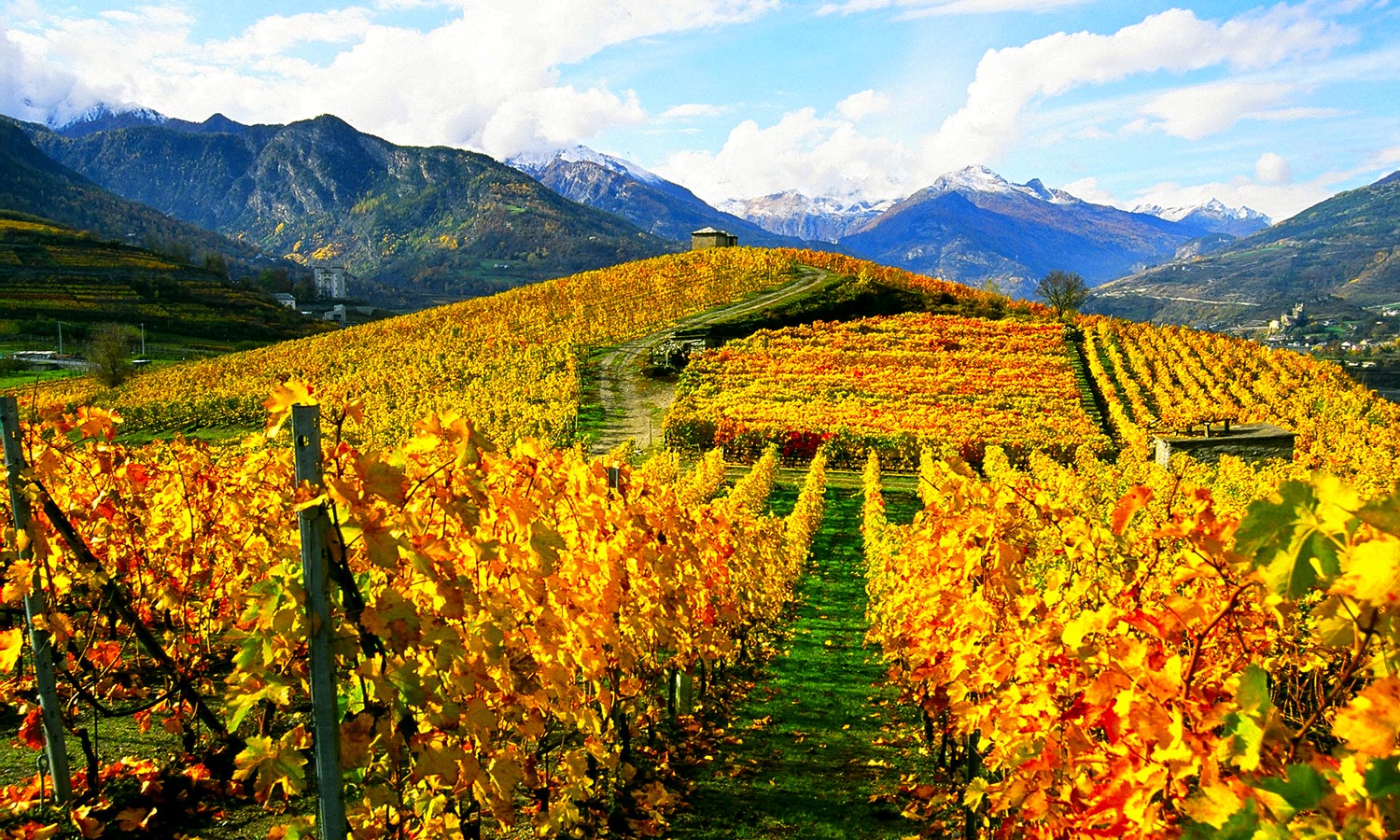
It is a place where vineyards cling tenaciously to terraced hillsides at altitudes ranging from 900-3900 feet. Conditions tax not only grapes but the determination and skill of winemakers coaxing Chardonnay, Nebbiolo and obscure local varietals from glacial soils. Every phase of viticulture requires intense manual labor. To avoid wind damage and absorb heat retained by the ancient stone walls that surround them, many vines are planted close to the ground in the pergola bassa manner.

Though 90% of Valdostana wine is red, it was a white singled out for high praise by the late Luigi Veronelli, regarded as a pioneering figure in Italian gastronomy and viniculture. Asked if only one grape could be saved from extinction, he surprisingly selected Blanc de Morgex (also called Prie Blanc; those unfamiliar are not in the minority). I posed the same question to a widely respected Tuscan winemaker, who averred that arriving at one answer was simply impossible. When I informed her of Veronelli’s choice, it elicited both a quizzical shrug as well as the admission that she had no knowledge of it.

Originally known as Prie, it is the oldest grape of record in Valle d’Aosta, and all of the sixty or so acres dedicated to it are DOC designated. It is the only grape able to withstand the cold air that descends on the communes of Morgex and LaSalle in early autumn, which explains its alternative labeling. And while I’m not inclined to second Veronelli’s testimonial, or even include it on a personal Mt. Rushmore of grapes, the two Prie wines I’ve come across are both distinctive and pure expressions of the Morgex-La Salle sub-zone.

The crystalline, almost watery color of Cave du Vin Blanc Vini Estremi is an indication of the aromatic lightness of pear, pineapple and spicy minerals. A blast of gum-chilling lemony acidity is as refreshing as diving into a mountain lake, and cleanses the palate for sharply defined flavors of mint, pear and apple. There’s also an unexpected, kinky hint of pine nuts. This dose of high altitude clarity and energy is like nothing I’ve encountered.

Ermes Pavese Blanc de Morgex et La Salle, on the other hand, offers slightly more color, a pale yellow. The nose exudes a mild earthiness, with a brief but curious vegetal scent mingling with flowers. Crisp white stone fruit becomes livelier from waves of mouth watering acidity that holds a bite of white pepper. Though not as direct or refreshing as the Cave du Vin Blanc, it still represents Prie from the Alta Valle with aplomb.

les-cretes3

Prie isn’t the only Valdostana white wine worth discovering. Petit Arvine has been grown since 1600 in the Valais of Switzerland and has fared well in the unfiltered sunlight of Aosta, at lower elevations than Prie. Discovering a bottle at a trattoria in Sorrento, on a long-ago trip to a far-more-southern locale, was an incongruous bit of good luck. I’d heard of the grape, but this was my first chance to try one, in this case from Constantino Charrere’s Les Cretes, one of the few commercial producers that can be found in America. This wine offers intense aromas and flavors of flowers, melons, pineapple and mandarin, yet there’s a mild surge of salinity toward the end for balance. I’d describe it as zesty, light and flinty, with a little more body than Prie yet without the eye-popping acidity.

Fast forward a decade to my next encounter with Petit Arvine, this time a 2011 from La Crotta di Vegneron. It could not be more different then the Les Cretes, possibly because it came from lower lying vineyards near Chambave. Despite the expected charge of acidity, this version is warm and inviting, with a texture that’s tart at first but evolves into a lush, mouth-coating blend of exotic melons, apricot, citrus and herbs. A balancing and cleansing dose of minerals perks up the long aftertaste.

A review of Valle d’Aosta wine without mention of the legendary Ezio Voyat of Chambave would be a disservice. I was lucky enough to taste Voyat’s final vintage of “La Gazella” — named for his daughter, an Olympic track star — in 2003, just before he died. Unlike Chambave Muscat Fletri, the region’s version of passito, Voyet vinifies this 100% Moscato Bianco vino di tavola bone dry. Featuring the same crisp acidity of the other whites, it’s also somehow fuller and more round. This results in a cider-like sensation that suggests apples dipped in a mineral bath.

Unusual, yes, but not unexpected in Italy’s northwest frontier.

Images via Les Cretes

Crazy Good Wines on Mount Etna

Crazy Good Wines on Mount Etna

Writers (such as myself) love to discover characters in the wine industry we can deem “crazy.” In a good way, of course. Crazy like a wine savant. And though I’ve yet to meet Frank Cornelissen, all accounts suggest that he may just be the prototypical wine crazyman, a guy who couldn’t do what he does if he was normal. This, of course, has resulted in Cornellissen becoming somewhat of a cult figure in the industry.

In the excellent book Palmento – which includes stories from the author’s time in Sicily, and is a must for any Italian wine lover – Robert Camuto writes:

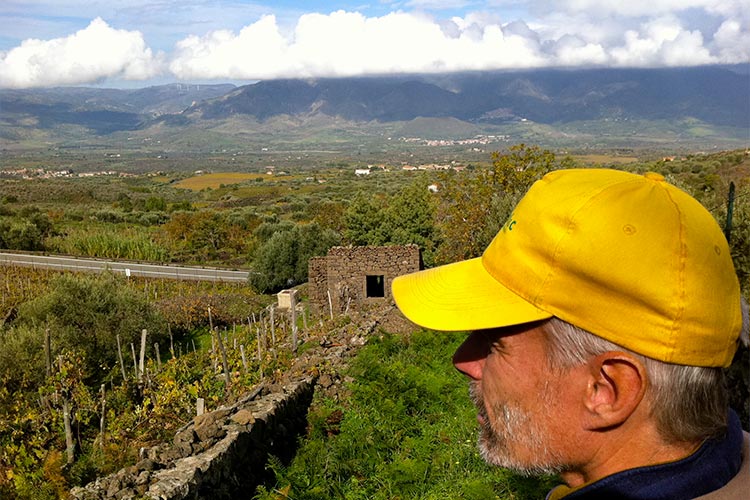
Cornelissen was the first winemaker I visited because I suspected he might be close to insane – in every positive sense of the word. Why else would a middle-aged northern European choose to plant himself [on Mt. Etna in Sicily] and make wine from vineyards that had been neglected or abandoned by the locals for most of a century? Why else would anyone choose to scratch out a life with little help on land so perilously placed within spitting distance of one of the world’s most active volcanoes?

Cornelissen has gained some notoriety for his minimalist approach to grape growing, notably his refusal to use sulfur or copper sulfate to treat the vines, to the point that Wine Spectator’s Matt Kramer commented that his “‘no nothing’ approach makes biodynamic agriculture, with its various homeopathic sprays and fetishistic composting, seem downright interventionist.” (Kramer’s piece on the vintner is also worth a read, for those interested in a deeper backstory.)

In his early days especially, this created some weird results. Cornelisson himself admitted (to Camuto) that he’s made some “off wines.” Kramer called his 2007 Munjebel #4 White “awful.” Considering, though, that the guy moved across Europe with hardly any experience, is this surprising?

Nowadays, he seems to have gotten past those early days of big mistakes and is creating consistently excellent wines. They may not be for everyone, of course, but certainly those who seek out the interesting and different should try them at least once.


frank-cornelissen-rosso-contadino-11Seemingly harder and harder to find in today’s wine world is the red that’s both elegant and complex. Light, yet nuanced. It seems that, so often, bigger is seen as better, and many wine makers have adjusted as such. Even as the pendulum has begun to swing towards more balanced styles, medium-bodied is about the best one can often do.
Enter Frank Cornelissen Rosso del Contadino Terre Siciliane No. 11. I tasted this alongside two other reds − Cornelissen’s Munjebel 2013 and Munjebel CS 2013 − which are both big, brawny beasts, and at first, the Contadino seemed simple. Especially when I first tasted the Munjebel, which exploded out of the bottle with aromas of mulled spice, mulch, chocolate and plums, just raring to go, the Contadino was overpowered.

The longer I spent with the Contadino, however, the more excited I got. This is a subtle, elegant, and profound wine. Deceptively complex. Perfect for lighter foods. There’s a ton going on here: red cherries and plums, mandarin orange, roses, five spice, tobacco, smoke, and a hint of pepper on the finish.

I found it a stellar pairing for dishes featuring tomato and eggplant, but it seems versatile enough to stand up to mild spice, proteins from hearty seafood to mid-weight meats and everything in between.

I don’t mean to take anything away from the Munjebel and Munjebel CS; they just don’t seem as unique. They are serious wines that make no mistake as to why they are coveted worldwide. Deep and rich, featuring darker cherry and prune fruits, they manage to maintain elegance despite their immense alcohol content (label says 15%, but it must be more). As mentioned above, the regular Munjebel was roarin’ to go right out of the bottle, whereas the CS took some more time and air to show, and would probably do better with a few years on its side. That said, with food − especially, strangely, a pastrami sandwich with caraway seeds − the finish lasted seemingly forever.


#ItalianFWT
This post is part Italian Food, Wine & Travel’s volcanic wines theme. Below are the other posts from the group.

What’s Old is New (Regarding Chocolate)

What’s Old is New (Regarding Chocolate)

Warning: preg_match(): Compilation failed: invalid range in character class at offset 11 in /home/undiscov/public_html/undiscovereditaly/wp-content/plugins/wysija-newsletters/helpers/render_engine.php on line 526

Warning: preg_match(): Compilation failed: invalid range in character class at offset 11 in /home/undiscov/public_html/undiscovereditaly/wp-content/plugins/wysija-newsletters/helpers/render_engine.php on line 526

Warning: preg_match(): Compilation failed: invalid range in character class at offset 11 in /home/undiscov/public_html/undiscovereditaly/wp-content/plugins/wysija-newsletters/helpers/render_engine.php on line 526

Fatal error: Uncaught Exception: Template 'templates/form/web/widgets/#type.html' not found ! in /home/undiscov/public_html/undiscovereditaly/wp-content/plugins/wysija-newsletters/helpers/render_engine.php:723 Stack trace: #0 /home/undiscov/public_html/undiscovereditaly/wp-content/plugins/wysija-newsletters/helpers/render_engine.php(454): WYSIJA_help_render_engine->_loadTemplate() #1 /home/undiscov/public_html/undiscovereditaly/wp-content/plugins/wysija-newsletters/helpers/render_engine.php(169): WYSIJA_help_render_engine->_parse() #2 /home/undiscov/public_html/undiscovereditaly/wp-content/plugins/wysija-newsletters/helpers/form_engine.php(756): WYSIJA_help_render_engine->render() #3 /home/undiscov/public_html/undiscovereditaly/wp-content/plugins/wysija-newsletters/helpers/form_engine.php(638): WYSIJA_help_form_engine->render_web_body() #4 /home/undiscov/public_html/undiscovereditaly/wp-content/plugins/wysija-newsletters/views/front/widget_nl.php(160): WYSIJA_help_form_engine->render_web() #5 /home/undiscov/public_html/undiscovereditaly/wp-content/plugins/wysija-newsletters/widgets/wysija_nl.php(285): WYSIJA_view_front_widget_nl->display() #6 /home/undiscov/public_html/undiscovereditaly/wp-content/plugins/wysija-newsletters/helpers/front.php(256): WYSIJA_NL_Widget->widget() #7 /home/undiscov/public_html/undiscovereditaly/wp-includes/shortcodes.php(433): WYSIJA_help_front->scan_form_shortcode() #8 [internal function]: do_shortcode_tag() #9 /home/undiscov/public_html/undiscovereditaly/wp-includes/shortcodes.php(273): preg_replace_callback() #10 /home/undiscov/public_html/undiscovereditaly/wp-includes/class-wp-hook.php(324): do_shortcode() #11 /home/undiscov/public_html/undiscovereditaly/wp-includes/plugin.php(205): WP_Hook->apply_filters() #12 /home/undiscov/public_html/undiscovereditaly/wp-includes/post-template.php(256): apply_filters() #13 /home/undiscov/public_html/undiscovereditaly/wp-content/themes/accelerate/content-blog-large-image.php(40): the_content() #14 /home/undiscov/public_html/undiscovereditaly/wp-includes/template.php(812): require('/home/undiscov/...') #15 /home/undiscov/public_html/undiscovereditaly/wp-includes/template.php(745): load_template() #16 /home/undiscov/public_html/undiscovereditaly/wp-includes/general-template.php(206): locate_template() #17 /home/undiscov/public_html/undiscovereditaly/wp-content/themes/accelerate/home.php(22): get_template_part() #18 /home/undiscov/public_html/undiscovereditaly/wp-includes/template-loader.php(113): include('/home/undiscov/...') #19 /home/undiscov/public_html/undiscovereditaly/wp-blog-header.php(19): require_once('/home/undiscov/...') #20 /home/undiscov/public_html/undiscovereditaly/index.php(17): require('/home/undiscov/...') #21 {main} thrown in /home/undiscov/public_html/undiscovereditaly/wp-content/plugins/wysija-newsletters/helpers/render_engine.php on line 723