For most of her life, Virginie Saverys followed her predestined path: working in the family shipping business – one of Belgium’s most prominent – as a lawyer, brokering large mergers and acquisitions. Today she’s a leader in Italy’s biodynamic, sustainable wine movement. How did she go from there to here? It’s a story worthy of Diane Lane.
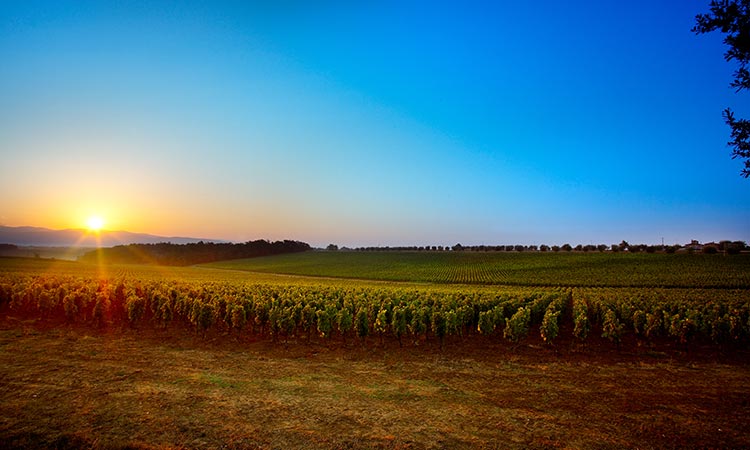
The first time I went to Italy I was 18, and I immediately fell in love with the country, the people and the language. As a matter of fact, during my student years I spent almost all my holidays in Italy… and once I was married with kids, I continued to visit because I had developed friends all over the country. That’s when I discovered Tuscany; I knew that one day in my life I would have something in this region.
Around 2003, we bought a ruin near Montalcino. We began to renovate but that of course takes time. In 2006, I resigned from my daily activities at my company because I was bored. So I quit, figuring something else would come my way. I definitely wasn’t planning to stay home and do nothing.
When the house in Tuscany was ready, we had a party and I invited friends of my partner’s from all over the world (it was his 50th birthday) as well as some Italians I knew. One person who came was the owner of Avignonesi. I remember, he was sitting to my right, talking about all the problems he and his brother were having, that they weren’t agreeing anymore. A few weeks later he called me and said his brother wants to sell his shares, which were 30%. I saw this as an investment in real estate mainly, because it was a small percentage, and I saw it as a way for me to learn about something that I’ve always liked, namely good wine.
So in spring 2007 we purchased 30%. Both my partner and I being lawyers, we made a very strict shareholders agreement, so despite being minority owners we had a lot of veto rights, etc.
Well it would not be Italy if, just a few months after we purchased, our partner was not respecting our end of the deal, and we had to go around the negotiating table again. Basically there was winery owned by Avignonesi in Puglia, but we agreed that winery would not be part of our share, because it was losing money, and we thought it was enough for us to focus on the problems in Tuscany. But the owners were not holding up that agreement. So we negotiated again, and left with 90%, the plain being that the current owner would stay on for another 5 years or so, time for him to pass on his knowledge to us on how to run a winery in Tuscany.
But that didn’t work out either… and, to make a long story short, in 2009 we found ourselves as sole owners of the winery. On day one a bunch of people with legacy knowledge left the company and we were now running this winery while basically knowing nothing about doing so. It certainly made for a fascinating first few years.
Fortunately we speak Italian, otherwise it would’ve been impossible. As would be expected, despite all the due diligence we had done – which was mostly on the financial side, not of the land, the soil the quality of the wines – it turned out we had been told a lot of lies.
Because the brothers had been fighting, they hadn’t been investing any money in the company, and both were very good at sucking out whatever they could for their own benefit. They were happy to buy new cars for themselves on the winery, but no new tractors, equipment etc. Though the brand was well established, it was going downhill due to lack of investment.
It was a huge effort for us to put Avignonesi back on track. Drastic changes were needed. But I am a very determined person, and when I want something I will do whatever is in my power to obtain it and have it the way I want it.”

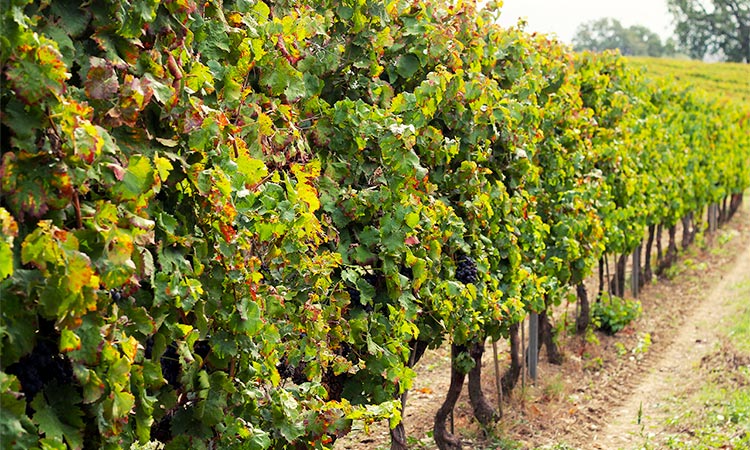
One of the very early decisions Saverys made was to move to organic viticulture, which essentially involved a reboot of the entire vineyard and all of its processes.
I’ve always tried to buy organic food, to live healthily, and when I saw how my tractor drivers and people in the fields had to dress to protect themselves, and when I saw how dead the soils were – like a moon landscape – I knew something needed to be done.
When you are a wine producer, you are not making an essential product for people, it is an item people like to have but do not need. And we owe it to this planet to make it better by not polluting it for no reason. It’s a question of respect for the land. I had this amazing chance to buy a beautiful property in Tuscany, and I felt I owed it to future generations, whoever will run this after I am long gone, to do things right.
The other very important element for me is the people who work for us. Again it is a question of respect. These people give the best of their years to Avignonesi, they work very long hours. I owe it to them to provide an environment that is as healthy as possible.
Last but not least, there’s the consumer who will be drinking our wine. We must show them respect as well, so they know what to expect from a bottle of Avignonesi, that there is no residue of pesticide in the wine.
Another key change was to move to 100% Sangiovese for Avignonesi’s Rosso and Vino Nobile di Montepulciano wines, a progressive choice for the region.
Around the year we took over, the Vino Nobile consortium decided to increase the percentage of other varietals allowed in VNdM from 20 to 30%. Basically this was a request from one of the larger producers who had too much Merlot in their vineyards, and rather than replant, they wanted to be allowed to use that. I thought this was a very stupid decision. The Brunello winemakers had just voted NOT to allow other grapes in their wine, something that was applauded by the industry and the press, and here we go in Montepulciano deciding to increase it to 30%.
It’s more of a challenge for the winemakers to make 100% Sangiovese, I know, especially in a bad year when the grapes can have trouble ripening. But I like challenges. Even in 2014, a cold and wet year, we have a very nice wine, with none of those vegetal green afternotes. If you work well in your vineyards and in your winery I think you can always make good Sangiovese. We do of course have different estates around the region that we can blend together, which is a great luxury.
After we decided to go 100% Sangiovese, others began to follow. If this trend continues, we can start to send a clearer message about our region’s wine profile. We have wonderful terroir that’s very different from Brunello and Chianti, so we can make our own unique expression of Sangiovese. And for me – of course I will say this, but – it is the brightest. the most elegant. Brunello is a man’s wine, rough. Vino Nobile, when well made, is a more delicate, elegant expression.
I want Avignonesi to play a leading role in putting VNdM to the place it belongs in the wine-loving community. There’s enormous potential here. It’s also a way to drink great Sangiovese at half the price of Brunello!

As an outsider, Saverys introduced a massive amount of change over a short period of time, an amazing accomplishment in such a change-averse place like Italy. I asked her about that experience.
People in general don’t like change, and Italians hate change more than any other nation in the world, so convincing them to do things differently is painstakingly difficult. On the other hand, I’ve spoken to other producers who are also going biodynamic and while they’ve reported having a very hard time convincing their workers to do this, I haven’t had a single problem. I’ve never heard my workers say they prefer how it was before.
The administration, the bureaucracy in Italy, however, seems out to kill every entrepreneur in this country, so I learned quickly that our improvements would take a long time. As one example, we need to build a logistics center where we’ll manage our bottling, packaging processes, as well as hold our aging cellars, etc. I started negotiating for this in July 2013, and was told it would take a few weeks to get the paperwork together, and, with a little bit of luck, the warehouse would be ready by harvest 2014. We signed the preliminary agreement to buy the land in April 2016! Almost 3 years later, and we still have to obtain a building permit, which they are now telling me will take 6 weeks.
There’s a nice expression in Italy – la speranza muore per ultimo – which means ‘hope dies last.’ They always believe. When their car maker says a car will arrive next week, they believe the salesman. Me, I understand the car will be there maybe in a month, if they’re lucky. Everything is like that. So the Italians who work for me, they believe! I keep saying guys, forget it, we won’t have that permit in 6 weeks. They say we’ll have it by the summer, and then we can start building. Me, I think if I have it by Christmas I’ll be happy.
It’s a wonderful country, of course. That’s why I am here. You just have to take the problems with the great things.
Looking forward, Avignonesi hopes to strengthen their position as a sustainability leader, and expand the brand to new regions and audiences.
I would love to reach the point where we will not need to use any copper or even sulfur in the vineyards. Since 2011, we’ve been experimenting with copper alternatives, and each year new products come out. So in a few years time I’d like to be able to say I am not using a single ounce of copper in the vineyards anymore. I think we will get there.
We’re also working on a second brand, that will be led by my daughter, aimed at a younger crowd. The branding will be more fun, and the wines straightforward. Still organic, well-made, dry wines, that’ll say ‘produced and bottled by Avignonesi’ on the label. But more for people that are just getting into wine, learning about it, want to drink the bottle they bought at the store right away.
Wines to Try

In general Avignonesi wines under Saverys have moved in a more modern direction, with emphasis on pure fruit, clean flavors and bright acidity. (Earlier vintages, especially of VNdM, show a more savory emphasis.) That said, they still can be characterized as definitively Tuscan, torch bearers of the new Montepulciano terroir.
Cantaloro
An easy-drinking, food-friendly wine made from “a blend of Italian and international varieties”. Great pizza and pasta quaff.
Rosso di Montepulciano
Saverys suggests drinking this lighter-bodied red slightly chilled, and matches its vibrant freshness with it with a wide variety of vegetarian cuisine, spicy fare, grilled fish, even oysters.
Vino Nobile di Montepulciano
Bold fruit flavors include notes of cherry and strawberry, with hints of leather and herbs as it opens. Smooth tannins pair with tingly acidity that should allow for aging.
Desiderio
Though there’s a wisp of tar in the aroma, this Merlot-based wine is all about fruit. Raspberries, dark cherries, plums and even blueberries all make an appearance, followed by notes of chocolate and paprika on the extended finish.


 #ItalianFWT