Warning: Undefined variable $url in /home/undiscov/public_html/undiscovereditaly/wp-content/plugins/twitter-facebook-google-plusone-share/tf_display.php on line 365

The White-Headed Stepchild

The White-Headed Stepchild

Reviewing my recent piece on Pinot Grigio’s lack of respect, Pinot Bianco might rightfully take issue with its cousin’s penchant for hogging the attention. While neither can boast widespread critical acclaim, at least the gray mutation of Pinot Noir is a best-seller. Bianco, on the other hand, is often relegated to background variety status.

Rarely grown in its native region of Burgundy, Pinot Blanc — as it’s called in most of the English-speaking world — has found more of a home in the Germanic regions of Alsace, Austria and throughout Germany. The majority of wines made here, as well as in the US in this style, are soft and round, sometimes off-dry in a way that might be described as Riesling Light. Jancis Robinson describes the grape as “useful rather than exciting,” as well as “gently rather than demandingly appealing,” having less character than the already tofu-like Chardonnay, as well as low body and acidity.

(I’ll wait while you rush out to buy some.)

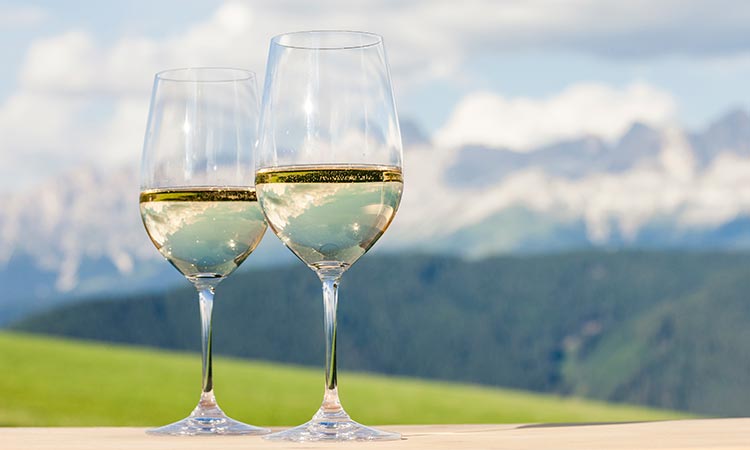
All that said, one can understand why my expectations are relatively low when given the opportunity to taste through a bunch of Bianco from Italy’s Alto Adige, perhaps the only region in the world where the grape is highly regarded.

The first bottle I pop, the Cantina Terlano Nova Domus 2011, absolutely explodes with complexity, including honey, melon, minerals and, most notably, herbs. Because this particular wine is a blend (60% Pinot Bianco, 30% Chardonnay, 10% Sauvignon Blanc) — despite the fact that it is mostly Bianco — I find myself initially attributing the big flavors to Chard (melon) and Sauv Blanc (herbs). Still, the immensity of herbal flavor is a head-scratcher, if there’s only a splash of Sauvignon.

nova-domus pinot bianco

As I delve further, moving on to pure varietal bottlings, I begin to realize that this herbal, mineral quality is actually derived from the Bianco itself. In wines such as the Elena Walch Pinot Bianco 2015, this quality is intense, powerfully rippling through every aspect of the fresh, vibrant wine.

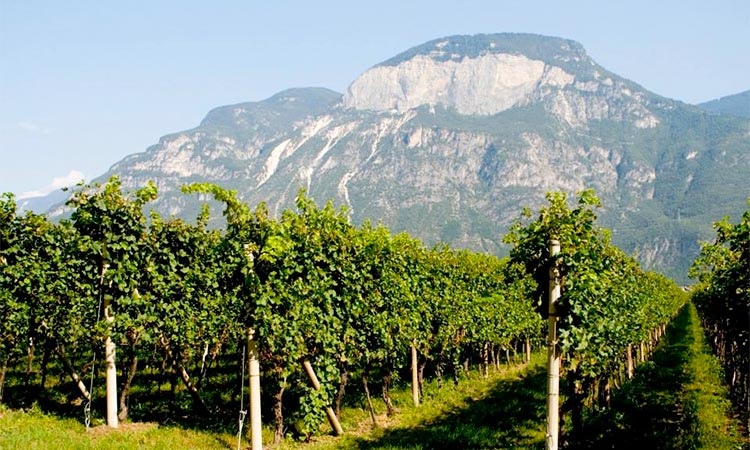
So what’s the deal here? How is this notoriously taciturn grape showing such exuberance and vitality? I turn to Cantina Terlano’s Judith Unterholzner for answers. “Especially when Pinot Bianco is cultivated in an Alpine climate, it can be surprisingly fleshy and rich in its herbal, honeyed yellow-fruit aromas and flavors,” she shares. In recent years, it turns out, the best Alto Adige winemakers have shifted their Bianco vines upward, moving from the valleys and lower slopes (which made more typical, tasteless wine) to upper elevations, starting at 1300 feet and running up to 2500. A reduction in yields as well as the introduction of guyot vine training (in addition to the traditional pergola method) has also helped make an impact.

In other words, much of the secret is location. “The unique aroma profile of our Pinot Bianco is due to the terroir of Terlano, which is responsible for scents of chamomile but also fresh flower meadows,” says Unterholzner. “The rich nose as well as the full and complex mouthfeel is markedly influenced by our eruptive soils, which also cause a powerful salty persistence.”

In the Alto Adige, there’s a seriousness regarding Bianco here that isn’t evident elsewhere. “Winemaking in Terlano traditionally involves the use of wooden casks,” continues Unterholzner. “Special emphasis is also placed on the sur lie method, with the wines often left to evolve on the yeast for years before being bottled, where they’re aged even further. The focus is on developing the complex secondary and tertiary aromas, which creates a specific character and complexity.”

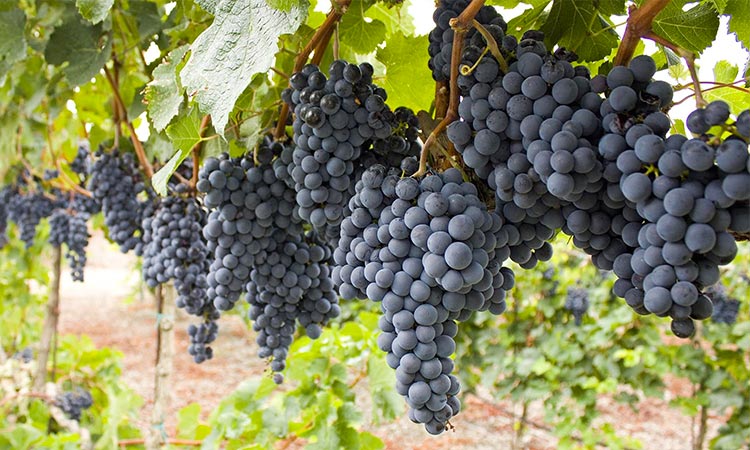
pinot-bianco-grapes
© Udo Bernhart

Wines for Aging

It’s also fascinating how tightly-wound these wines are when young. Huge acidity — which often isn’t the case with Pinot Bianco from elsewhere — as well as those aggressive herbal and saline notes. The aforementioned Terlano Nova Domus, though quite complex and nuanced already, seems to be holding back, even at 5 years old. Though it can be decanted and enjoyed now, the winery suggests drinking no earlier than 8 years from the vintage date.

St. Pauls Passion Pinot Bianco Riserva is another beast, the 2012 offering a dank, feral nose, herbs and rocks belying slumbering fruit. I’d love to try it again in 3-5 years. Cantina Andriano Finado, a 2011 bottle, begins to showcase the benefits of age, with notes of honey and tropical fruit emerging to balance out the savory flavors.

“The aging potential of our wines is due to a combination of the high mineral content of the soils, old vines growing in complete harmony, carefully managed vineyards with low yields per vine, and the rigorous selection of healthy and fully mature grapes,” continues Unterholzner. “At several tastings back to the foundational years, our whites have proved to be liquid time machines, leaving their mark in memory as the supreme expression of a mineral terroir that is unique in this world.”

terlano-pinot-bianco
© Udo Bernhart

The Happy Ending

With wines this complex and intriguing, it’s hard to not wonder why more winemakers aren’t taking Bianco seriously. “Other regions have not believed in Pinot Bianco as an expressive variety with the ability to age,” agrees Unterholzner. “Thus it is difficult to compare our mature whites with those from other regions.”

Then again, it may just be one of those romantic, idealistic stories. Pinot Bianco, a rogue from Burgundy, sets off in search of itself, and finds an unlikely home in the Dolomites. Hallmark Channel here we come.

“Pinot Bianco has always been one of our main varieties,” concludes Unterholzner. “It’s a powerful expression of the terroir that brings the grapes to maturity in Terlano. Delicate, and above all minerally, Pinot Bianco wines are very much our trademark and Terlano’s ambassadors of longevity.”
Gray Matters

Gray Matters

Pinot Grigio. One of the most well-known Italian grapes, it just might be the least respected among connoisseurs. This typically cheap white is, of course, inarguably one of the best-selling in the US, but rarely receives oenophile attention.

“It doesn’t really taste like anything,” says the wine specialist at my local store when I bring it up. This opinion is not a solitary one; it stems from the tide of bulk wine that flows out of the “delle Venezie” IGT (mostly Veneto and Trentino), made by wineries like Cavit, Bolla, and Mezzacorona. Pale and insipid, this juice can offer some freshness but not much else.

On the Esquire show Uncorked – which follows several Master Somm candidates as they prepare for their exam – one guy is shown rinsing with Grigio in place of brushing his teeth the morning of a blind tasting, so as not to throw off his palate.

At my local wine school, instructors suggest using Pinot Grigio to rinse the glass when transitioning to a new wine, as it will neither dilute the next pour like water nor affect the flavor like another wine. (The best rinse is actually the 2nd wine, but that’s another conversation.)

“Pinot Grigio is perceived by the market as a watery, super-light wine,”  Max di Lenardo of Friuli-Venezia Giulia’s Di Lenardo Vineyards confirms. “The grape has been successful, so now there are a lot of industrial wines that don’t taste like the real thing. In our region,” he continues, “we don’t have big cooperatives like this. We are a small area and almost all of our Pinot Grigio is family-owned, estate-bottled wine.”

Interestingly, Pinot Gris – the same grape, with French styling – receives none of the disrespect of its Italian twin. It’s quite highly regarded, in both Alsace and in Oregon. People rarely call it boring or plain; it can feature in some of the most exciting whites from those regions.

Despite carrying a healthy dose of skepticism for years, I recently find myself wondering if Grigio can ever match up to Gris. Is Italy’s version a lost cause, or can it actually be good?

My awakening begins with a bottle from Castelfeder in the Alto Adige that’s full-bodied and luscious, turning any and all previous notions of the Grige on their head. Of course, most of my experience up to this point has been of the Santa Margherita mold: well-known but not particularly good.

I start to seek wines made in the ramato-style – a copper-hued wine that’s been fermented briefly on its skins, imparting some of the color, flavor and tannin. Produced primarily in the Friuli-Venezia Giulia sub-region of Collio, they’re not only surprising in appearance but offer a completely different gustatory experience when compared to the stuff we all know and, er, don’t love.

Di Lenardo, who produces the ramato Gossip, says he enjoys vinifying a wine in this “special” way that the industrial cellars won’t, as well as helping to educate consumers that the Pinot Grigio grape is actually quite dark in color (Grigio means gray).

pinot grigio grapes

He also notes how this method can produce “bigger texture” as well as “distinctive aromatic power.” And while Gossip does feature varietally typical flavors of stone fruit and tart apple, there is absolutely more. Feral notes of hay and fuzzy peach showcase in the aroma, and a distinct bitter almond note coincides with the finish. Though softer than I’ve come to expect with Grigio, a nibble of tannin adds balance.

One of the finest ramato bottles I come across takes me out of Italy, across the border to Slovenia, specifically the region of Štajerska, which – although towards the eastern side of the country — is still as close to Collio as Verona. The winery Pullus (aka Ptujska Klet) has been around for a little bit, according to the label, which claims, no joke, “since 1239.” Regardless, they produce a killer ramato, lighter than Gossip but also sharper, redolent of strawberries and raspberries followed by a mineral and herb-tinged finish. With no disrespect meant to the surely wonderful folks of Štajerska, this is one fine Italian Pinot Grigio.

Though distinct, the ramato-style in and of itself neither equates to bigger or more serious. Take the wines of Fruili’s Attems. While their ramato offers up rose-like fruit alongside a touch of tannic dryness, the overall impression is gentle and elegant. Attems’ non-ramato Pinot Grigio – which is darker than plonk yet still a white wine – on the other hand, is rich and lush, showcasing deep fruitiness (tangerines!) alongside nutty complexity and mouthwatering salinity. Wow.

attems pinot grigio
Image via Attems FB page

Heading back up to the Alto Adige, Peter Zemmer Pinot Grigio is yet another standout. Perhaps the palest of the mentioned wines, it defies that with bold flavor. Huge herbal aromas act as an Alto Adige calling card, but opulent peach, pear and melon bring balance. Experiencing this abundant fruit’s coexistence with vibrant freshness, it’s hard to imagine this grape ever developing its reputation for blandness.

So why does it? Judith Unterholzner – who represents Alto Adige wineries Terlano and Andriano – suggests this phenomenon is mainly due to exaggerated yields. “Whenever producers fail to reduce quantities harvested per hectare to get higher quality primary fruit, Pinot Grigio cannot demonstrate its full potential,” she notes. “We cultivate our Pinot Grigio with the same production philosophy like all the other wine; by taking care of the vines. This creates a product of remarkable quality, balancing varietal typicity with the Alpine brightness our region is famous for.”

It also, of course, requires higher costs. “Low yields are the main reason for the high quality,” Unterholzer continues “which clearly has to have a certain price, since we invest on average 500 hours of manual work per hectare to get the best out of the vineyards.” Don’t fret, though. It’s still only about $20/bottle. Tough to compare on paper with Cavit at $8, perhaps… until the wines are tasted.

This story is, in the end, hardly surprising. Should we, for example, estimate the potential of California Cabernet by bottles of Woodbridge and Barefoot? Hardly. Nor should we judge Pinot Grigio based on bulk garbage.

Me, I began this quest intrigued yet skeptical about the potential of Pinot Grigio. Now here I sit, an unabashed fan. Are you finally ready to open your own mind?

Recommended Bottles:

  • Pullus Pinot Grigio
  • Di Lenardo Gossip Pinot Grigio Ramato
  • Attems Pinot Grigio & Pinot Grigio Ramato
  • Peter Zemmer Pinot Grigio
  • Castelfeder Pinot Grigio
  • Donna Alma Pinot Grigio Dolomiti

Top image via Castelfeder Facebook page.

#ItalianFWT
This post was featured in the July 2016 Italian Food, Wine & Travel group’s Twitter chat on orange wines. Check out a list of other posts from the group:

Pursuing Perricone

Pursuing Perricone

Encountering passionate evangelicals for a specific wine — as I did recently with Sicily’s Federico Lombardo di Monte Iato and Marilena Barbera — it’s easy to get caught up in their romantic ideals. Which is why, after my initial article on the origins and history of Perricone, I set out to find as much of the stuff as possible. Problem is, this particular wine is not exactly available in every Publix, Total Wine or package store. Finding some quality subjects, in this case, takes some hunting. I turned to man-about-wine Zach Morris, a former wine school colleague who — despite his newfound focus on coffee — I knew would be up for the challenge. And that he’d gladly support my sampling efforts.

What follows is the result of an afternoon spent getting to know this unique Sicilian native.

DeBartoli Rosso di Marco Terre Siciliane 2011

There’s a lot to like about this one, all warm, breezy and marked by fresh bursts of Mediterranean flavor. The ripe red fruit is a tad sappy, perhaps a product of the heat and lower elevations of southwest Sicily. Though somewhat refined and stylish, it manages to retain the grape’s herbal, rustic persona and features a mildly sour, earthy aftertaste that likely results from reductive, minimalist winemaking. Complex yet approachable, this has the goods to attract newbies to Perricone.

Feudo Montoni Vigna del Core Sicilia 2014

An easy contrast to the first; fuller, rounder, smoother. Our generic descriptors — complete, cohesive, seamless — are indicative of a well made, varietally faithful wine. The nose recalls an expensive, meaty Northern Rhône Syrah. Dark, fleshy fruit is more skin than pulpy flavor, but far from unpleasant. A noticeable lack of acidity keeps this from being refreshing, lending credence to an earlier observation that making a young, ripe Perricone may not be possible. Our verdict: developing, not ready for prime time but with enough going on to sense potential.

Caruso & Minini Sachia 2008

This may be what the last one will become when it grows up: beautiful, with ripe aromas and mature, sensory fullness. A nose of hot, dry Mediterranean aromatics segues into savory Syrah-like scents of dark fruit and game. The grape’s rough and tumble edginess hides in the background, subtly integrated with the added depth and complexity of age. Based on past experience with younger vintages of Sachia, this seems at or near its peak, a serious wine that can hold its own with any dusty, cellar-worthy prize.

Guccione “P” 2012

Could this be the archetype? Dark and intriguing, its allure challenges the drinker’s patience as it transforms in the glass, even after hours of decanting. Restraint is rewarded with an honest, old-school wine, a primal expression that speaks for itself. The aromatics ring true, a green herbal tang with underlying sanguine iron minerals and a subtle, terroir-driven macchia that balances savory with vegetal. This is a singular wine, feral but easy to dig, a result of great winemaking that showcases its uncompromising, assertive attitude. Revisiting it over three days, the evolving depth is remarkable, as is an unexpected vein of raisin and fig that’d fit right into a Valpolicella ripasso.

Firriato Ribeca 2011

A vibrant Perricone that could, like Rosso di Marco, have wide-ranging appeal. Fresh and inviting, it effortlessly combines varietal identity with power and tannic structure. Using the barrel to tone down some of its wilder nature doesn’t keep the nose from showing its skunky old-world aromas, a heady combo of scorched earth, cedar, curing tobacco and the full-bore meat and cooked game one often finds in — guess what? — Syrah. The intensity and purity of this fruit, however, elevates this lush and concentrated farmhouse wine without going too far.

Il Censo Njuro Terre Siciliane 2011

Awkward and clumsy, uncomfortable even, we find our one outlier. There’s a studied eccentricity a la Frank Cornellisen, a nerdiness more stimulating to the brain than the senses. Offensively sharp and herbal aromatics feature an astringent odor of drying geraniums and a briny, oily dose of canned cat food. (Ed note: Yum!) The mellower palate incorporates a dose of light sour cherries, alongside a lingering vinous sensation, as if it was still fermenting in the bottle. After some time, a second sampling shows riper fruit but is no less unsettling. Though it might appeal to the most adventurous drinkers, this one is certainly too strange to recommend as an intro to an otherwise lovely grape.

In the end, our session left us with the obvious conclusion that further Perricone “study groups” are sure to come. Among the dozens of rediscovered native grapes of Italy, it’s one I’m rooting for.

Featured image of De Bartoli Vineyards © Marco Belli.

Ferrara’s Tender Torte

Ferrara’s Tender Torte

I was researching a story on build-your-own pizza joints in the bustling college town of West Chester, PA., stuffed from cheese and dough but desperately needing a coffee fix. After typing “espresso west chester” into my phone, sure enough, a gelato joint beckoned from just around the corner, pouring local favorite La Colombe. (It was bitterly cold and I wasn’t hungry, but that doesn’t mean the idea of gelato wasn’t also tempting.)

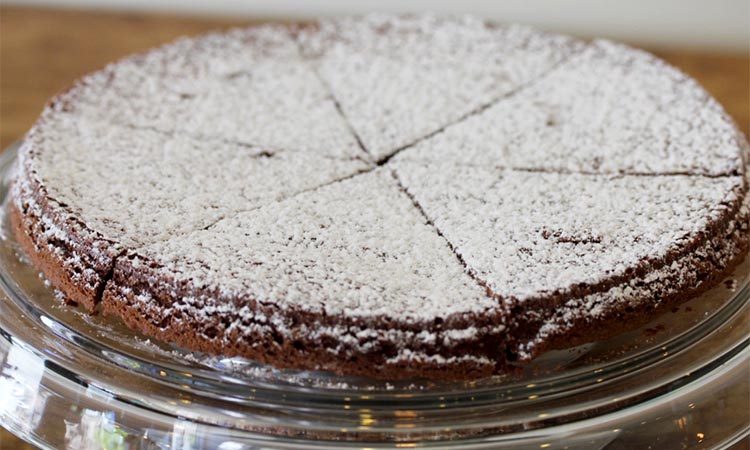
While waiting for my coffee, I perused the other sweets on offer at Gemelli, a self-described “dessert cafe”. And though the regular suspects were all there – cannoli, panna cotta, biscotti, etc. – what dominated my attention was the Torta Tenerina. A thin chocolate cake dusted with powdered sugar, it was noted as being a specialty of Vincenzo’s hometown (the baker, I presumed). After slugging my espresso, I procured a piece to go, taking care to keep its mascarpone drizzle cool until I could enjoy it later.

Truth be told, with regards to birthday-style cakes, I’m not a fan. Too sweet. Too airy. But Torta Tenerina isn’t like that at all. Perhaps closer to a brownie — if one had to find a comparison — the texture is unique. Literally “tender cake,” it somehow manages to taste rich and chocolatey while remaining soft and light.

torta-tenerina-closeup

I soon returned to Gemelli, this time with an appointment to get to know its owner, Vincenzo Tettamanti. Born and raised in Ferrara — a city of about 130K that lies an hour north of Bologna – he moved to the states in 2009 to be with his future wife, an American. Though initially a digital marketer (as he was in Italy), his daydreams lured him towards the gap between traditional Italian fare and Italian-American food, alongside a growing realization that he possessed both the knowledge and passion for building a more authentic experience in the Philly ‘burbs. “Around here, Italian dining is chicken parm, Alfredo pasta, Caesar salad,” he says, noting foods from disparate areas. “In Italy, it doesn’t work like that. Every region has its specialties.”

“I wasn’t ready for a full restaurant,” he continues. “Instead, I wanted to build a place that’s like something I’d find at home, where people come to hang out, have coffee, talk with friends. Walk into any piazza in Italy, there’ll be cafes with chairs out, serving gelato and pastries. That’s what we’re going for.”

gemelli-cinammon-biscotti

That said, Tettamanti’s philosophy is expansive enough to apply broadly. “In America, pizza and ice cream are junk food,” he says. “In Italy, that’s not the case. For pizza, as an example, there’s fresh mozzarella, dough that’s been rising all day so it is light and airy, and tomato sauce. That’s it. It’s a good meal.

What we make here, it’s the same thing. These are the ingredients: chocolate, sugar, butter. I don’t have bags of other stuff. Everything’s from scratch. Sure, there is sugar, maybe some mascarpone, but we prepare each item with fresh, whole ingredients, so they are not as bad for you. And I’m not just making that up because I sell it. It’s the Italian way.”

The gelato certainly is delicious. Tettamanti’s training and focus on quality above novelty shine through with every flavor. Even as one who tends to stick to the cioccolato, I can’t help but be tempted by the freshness of local goat cheese & raspberry or ricotta & fig varieties, for example.

gemelli-gelato

But let’s get back to the Torta Tenerina. It too is simple, with just a few ingredients. “I mean, it’s a chocolate torte,” Tettamanti jokes. “But it is also traditional and specific to Ferrara, and – especially because many Americans are used to the food of Southern Italy – it’s nice to showcase my region.”

The cake’s initial incarnation (under the name Torta Montenegrina) celebrated Elena Petrović, Princess of Montenegro, shortly after her fin-de-siècle wedding to Italian king Vittorio Emanuele III. While many of the queen’s new subjects referred to her as the “sweet wife with the tender heart,” the Ferrarese one-upped everyone else by producing a dessert to match. Languidly soft with a melty interior, some still call it Torta Tacolenta — “sticky cake” in the Ferrarese dialect — due to its proclivity to cling to lucky tasters’ palates.

My initial attempt at replicating Tettamanti’s technique was not particularly successful. Delicious, yes, but also dry and crumbly. I then made a few modifications to a common online recipe to get a moister, more flavorful version. In place of mascarpone cream, I served it alongside salted caramel gelato.


Mike’s Modified Tender Cake (Gluten-Free, if desired)

Ingredients:

  • 200 grams dark chocolate (~70%)
  • 65 g unsalted butter
  • 40 g extra virgin olive oil
  • 100 g sugar
  • 2 eggs, separated
  • 1 T white flour (or 1-2T almond flour)
  • 1 T cocoa powder
  • Sprinkle coarse sea salt on top (optional, before baking)
  • Sprinkle of powdered sugar (optional, after baking)

Process:

Preheat oven to 300F

Melt chocolate and butter together, over very low heat or a double-boiler. Take off heat and mix in EVOO.

tenerina-meltychoc

Beat egg yolks with sugar, then mix that with the chocolate.

Tettamanti adds almond flour next, keeping it gluten free. (Wheat flour is traditionally used, but as there’s only a small amount, it’s easy to substitute. You can also use some cocoa powder to amp up the chocolate flavor.)

After whipping the egg whites to stiff peaks, fold them gently into the batter to maintain the fluffy structure. (This is the most difficult and crucial step.)

tenerina-mixing

Put into a springform pan and bake for 25 minutes, and it’s done.

tenerina-bake

A sprinkle of powdered sugar adds visual appeal but isn’t necessary.

torta tenerinatorta tenerina

For more info on Vincenzo and his dessert cafe, visit http://www.gemelligelato.com/

Preserving Perricone

Preserving Perricone

There are many grapes that live as vineyard problem children. Those that demand a vintner’s understanding, nurturing and determination to endure, season after season. Like parents, growers and winemakers sense potential and beauty that isn’t skin deep. Some, such as Nebbbiolo and Pinot Noir, grow up to become superstars. Others wait patiently to be discovered, enjoyed by a passionate few, unknown to the vast majority, biding their time. Such is the case with Sicily’s Perricone.

I first tasted the grape — also known as Pignatello — six years ago in a small Sicilian town in the shadow of the Madonie Mountains. Though I was intrigued enough to seek out more, I found hardly enough stateside to build expertise. As such, I turned to two believers for further insight: Federico Lombardo di Monte Iato of Firriato, whose LinkedIn page dubs him a “Sicily Evangelist”, and Marilena Barbera of Cantine Barbera, who describes this unique varietal as the “deep and intense soul of West Sicily.”

Both brought me up to date on Perricone’s history, which reads like scores of other long-forgotten indigenous varietals. Initially grown as a blending grape (most notably in Marsala Rubino) for its high concentration of anthocyanins, important for tannic retention and aging, and resveratrol, a natural self-respondent to bacteria and funghi, it has only recently been given a starring role.

Barbera points out that “when there was almost no Nero d’Avola to the west, Perricone was the only grape that farmers could use to make red wines with intense body and longevity.” Many, according to Lombardo di Monte Iato, switched to Nero d’Avola in the latter part of the 20th century, as it was easier to grow and more generous in output. “Remember,” he adds, “grapes were sold by weight, so farmers needed to have guaranteed production.”

federico
Federico of Firriato

Even those invested in Perrricone acknowledge the difficulties in bringing it from vine to bottle. If the polyphenol content is elevated, it can be abrasive, or, in Barbera’s words, “give birth to rustic and sometimes grouchy wines, especially in fresh and rainy vintages.” Since it ripens late, changes in normal weather patterns can be disastrous. Timing the harvest is vital to ensure the acidity level stays intact.

Then there are the commercial challenges. “Perricone is difficult,” Barbera tells me. “It’s not very productive and it takes patience and experience. Its tannins and thick skin require time and attention during fermentation, and a long refining is compulsory in most vintages.” Producing fresh, fruity wines then, aimed to be sold and drunk young, is a virtual impossibility. “Making a wine that needs a minimum of three years before it becomes friendly,” Barbera continues, “is not an option for the big industrial wineries in West Sicily.

At present there are about 365 acres of Perricone on the island — an astounding decrease from 85,000 in the early 1900s — representing just 0.3% of Sicily’s grapes. Of that minuscule amount, 95% is used to make bulk wine. “It’s a real pity,” Barbera sighs. “We Sicilians lost confidence in our quality, and following the market’s passing fancies seemed the only way out. Many started to abandon indigenous grapes in favor of international varieties, a trend that continues. Even today there are producers who plant Pinot Noir, Syrah… They say that nobody knows Perricone, that it’s inconceivable to promote a wine with such a difficult name to pronounce.”

Firriato’s evangelist is equally optimistic. “It’s difficult because Italy in general, and Sicily in particular, has a lot of native vines,” he notes. “So it’s quite challenging to help consumers understand Perricone, to identify it as a quality grape that makes wonderful wine. This isn’t only a winemaking challenge, but a marketing one.”

It’s not all bad, of course. Perricone relishes western Sicily’s warmth and a long, dry growing season countered by a diurnal temperature range that enhances ripening and balance. The resulting wines are full bodied and darkly pigmented, with fairly high alcohol levels. Strong, sometimes austere tannins serve as the foundation for intense cherries, plums and dark berries mixed with green herbs and peppery spices. They may have a rustic, earthy edge when young, but will develop balance and finesse as they mature.

Marilena Barbera
Marilena Barbera in the vineyard.

“Perricone that you find today is made by small producers, people who love their vineyards and respect the personality of their grapes and terroir,” Barbera says. “These people will keep it alive. Though they might not have the money or organization for worldwide promotion, I’m confident things are moving in the right direction.”

“Perricone will be our signature grape for many years to come,” she concludes. “The small group of winemakers to which I proudly belong will continue to toil, with dignity and passion, to offer the best expressions of Perricone at every vintage.”

Small-batch Italian Wines? Smart!

Small-batch Italian Wines? Smart!

Warning: preg_match(): Compilation failed: invalid range in character class at offset 11 in /home/undiscov/public_html/undiscovereditaly/wp-content/plugins/wysija-newsletters/helpers/render_engine.php on line 526

Warning: preg_match(): Compilation failed: invalid range in character class at offset 11 in /home/undiscov/public_html/undiscovereditaly/wp-content/plugins/wysija-newsletters/helpers/render_engine.php on line 526

Warning: preg_match(): Compilation failed: invalid range in character class at offset 11 in /home/undiscov/public_html/undiscovereditaly/wp-content/plugins/wysija-newsletters/helpers/render_engine.php on line 526

Fatal error: Uncaught Exception: Template 'templates/form/web/widgets/#type.html' not found ! in /home/undiscov/public_html/undiscovereditaly/wp-content/plugins/wysija-newsletters/helpers/render_engine.php:723 Stack trace: #0 /home/undiscov/public_html/undiscovereditaly/wp-content/plugins/wysija-newsletters/helpers/render_engine.php(454): WYSIJA_help_render_engine->_loadTemplate() #1 /home/undiscov/public_html/undiscovereditaly/wp-content/plugins/wysija-newsletters/helpers/render_engine.php(169): WYSIJA_help_render_engine->_parse() #2 /home/undiscov/public_html/undiscovereditaly/wp-content/plugins/wysija-newsletters/helpers/form_engine.php(756): WYSIJA_help_render_engine->render() #3 /home/undiscov/public_html/undiscovereditaly/wp-content/plugins/wysija-newsletters/helpers/form_engine.php(638): WYSIJA_help_form_engine->render_web_body() #4 /home/undiscov/public_html/undiscovereditaly/wp-content/plugins/wysija-newsletters/views/front/widget_nl.php(160): WYSIJA_help_form_engine->render_web() #5 /home/undiscov/public_html/undiscovereditaly/wp-content/plugins/wysija-newsletters/widgets/wysija_nl.php(285): WYSIJA_view_front_widget_nl->display() #6 /home/undiscov/public_html/undiscovereditaly/wp-content/plugins/wysija-newsletters/helpers/front.php(256): WYSIJA_NL_Widget->widget() #7 /home/undiscov/public_html/undiscovereditaly/wp-includes/shortcodes.php(433): WYSIJA_help_front->scan_form_shortcode() #8 [internal function]: do_shortcode_tag() #9 /home/undiscov/public_html/undiscovereditaly/wp-includes/shortcodes.php(273): preg_replace_callback() #10 /home/undiscov/public_html/undiscovereditaly/wp-includes/class-wp-hook.php(324): do_shortcode() #11 /home/undiscov/public_html/undiscovereditaly/wp-includes/plugin.php(205): WP_Hook->apply_filters() #12 /home/undiscov/public_html/undiscovereditaly/wp-includes/post-template.php(256): apply_filters() #13 /home/undiscov/public_html/undiscovereditaly/wp-content/themes/accelerate/content-blog-large-image.php(40): the_content() #14 /home/undiscov/public_html/undiscovereditaly/wp-includes/template.php(812): require('/home/undiscov/...') #15 /home/undiscov/public_html/undiscovereditaly/wp-includes/template.php(745): load_template() #16 /home/undiscov/public_html/undiscovereditaly/wp-includes/general-template.php(206): locate_template() #17 /home/undiscov/public_html/undiscovereditaly/wp-content/themes/accelerate/home.php(22): get_template_part() #18 /home/undiscov/public_html/undiscovereditaly/wp-includes/template-loader.php(113): include('/home/undiscov/...') #19 /home/undiscov/public_html/undiscovereditaly/wp-blog-header.php(19): require_once('/home/undiscov/...') #20 /home/undiscov/public_html/undiscovereditaly/index.php(17): require('/home/undiscov/...') #21 {main} thrown in /home/undiscov/public_html/undiscovereditaly/wp-content/plugins/wysija-newsletters/helpers/render_engine.php on line 723